The CRNA Club Blog
Tips, guides, and real stories to help you on your path to becoming a CRNA.
Septic Shock Pathophysiology: Pressure, Flow and Fluid Response
Septic shock disrupts vascular tone, effective cardiac filling and sometimes heart function. A higher arterial pressure does not establish better flow through every organ. Interpret pressure beside cardiac output, mental status, skin perfusion, urine output and lactate trends, then reassess fluid responsiveness and the risk of congestion as conditions change.

Fluid Responsiveness: Does a Positive Passive Leg Raise Mean More Fluid?
A positive passive leg raise supports preload responsiveness when a valid, timely measurement shows stroke volume or cardiac output rising. It does not prove hypovolemia, establish a need for fluid or show fluid is safe. Separate the flow response from the reason to increase flow and the risk of congestion.
Blood Products Explained: Components and Transfusion Reactions
Red cells increase oxygen-carrying capacity, platelets support the initial hemostatic plug, plasma replaces multiple clotting factors and cryoprecipitate supplies concentrated fibrinogen with selected proteins. These products solve different deficits. A higher hemoglobin does not establish corrected bleeding, compatible plasma follows different ABO logic from red cells, and suspected transfusion reactions require immediate assessment.
Rapid Sequence Intubation: Oxygen Reserve and Falling Blood Pressure
Rapid sequence intubation changes breathing and circulation as induction, paralysis and positive-pressure ventilation begin. Induction sometimes reduces vascular tone or contractility, while positive pressure alters venous return and right ventricular loading. A technically easy tube placement does not prevent these effects. Confirm the airway and assess perfusion, ventilation and competing causes together.

ICP Waveform Interpretation: P1, P2, P3 and the Patient
P1, P2 and P3 name successive peaks within a readable intracranial pressure pulse. Mean pressure, pulse amplitude and shape describe different features. A more prominent P2 is an indirect clue about pressure-volume behavior, not a diagnosis or a direct compliance measurement. Interpret the waveform with the neurologic examination, trend and measurement setup.
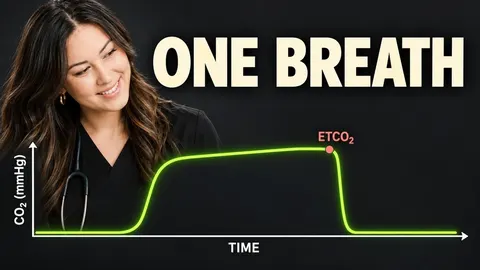
Capnography Waveform Interpretation: ETCO2 vs PaCO2
Capnography displays carbon dioxide in sampled respiratory gas. The waveform reflects carbon dioxide production, blood delivery to the lungs, ventilation and sampling conditions. End-tidal CO2 comes from the end of exhalation. Arterial PaCO2 comes from blood. Compare matched measurements rather than assuming a fixed difference or diagnosing a cause from one waveform shape.
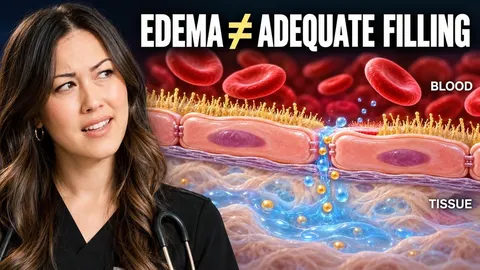
Sepsis Pathophysiology: From Immune Signals to Organ Dysfunction
Sepsis causes life-threatening organ dysfunction through a dysregulated response to infection. Immune and endothelial changes disrupt vascular permeability, tone and small-vessel blood distribution, while cellular metabolism also changes. Improved arterial pressure does not establish restored tissue exchange or organ recovery. Lactate adds information about the trajectory but does not identify a single mechanism.
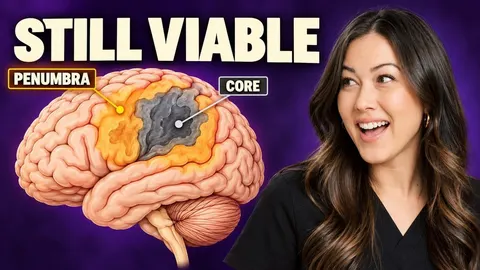
Ischemic Stroke Pathophysiology: Core, Penumbra and Perfusion
Ischemic stroke reduces blood delivery enough to threaten neuronal energy production and ion balance. Function sometimes fails while tissue remains viable. The core represents more established severe injury, while the penumbra is threatened tissue with potential for rescue in suitable circumstances. Imaging estimates, collateral flow, timing and the clinical assessment guide interpretation.
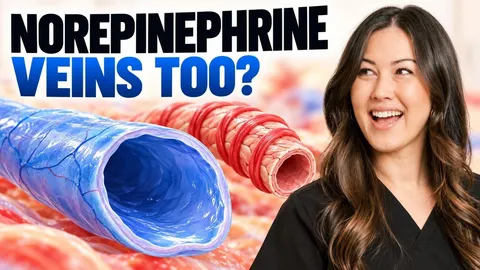
Norepinephrine Mechanism of Action: Receptors, Calcium and Heart Rate
Norepinephrine constricts vascular smooth muscle through alpha receptors and stimulates cardiac beta-1 receptors. Alpha-1 signaling releases intracellular calcium through Gq, phospholipase C and IP3. Beta-1 increases cAMP-dependent cardiac calcium handling. The arterial pressure rise also triggers a baroreflex that sometimes slows heart rate despite direct cardiac stimulation. Net cardiac output depends on the whole circulation.

Airway Anatomy and Equipment: LMA vs ETT and Laryngoscopes
A supraglottic airway such as an LMA sits above the vocal cords and connects ventilation to the laryngeal inlet. An endotracheal tube passes through the cords into the trachea. A laryngoscope provides a view to guide placement. Each device solves a different anatomical problem, and successful placement still requires confirmation of oxygenation, ventilation and position.
Four Types of Shock: Flow, Filling and Resistance
Hypovolemic shock begins with lost circulating volume, cardiogenic shock with inadequate cardiac pumping, distributive shock with abnormal vascular tone and distribution, and obstructive shock with mechanical interference to filling or forward flow. Their expected hemodynamic patterns overlap. Interpret flow, pressure and tissue findings together because patients sometimes have mixed or changing mechanisms.
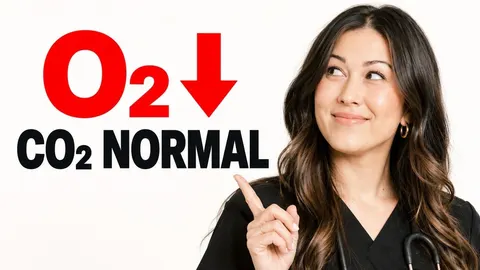
ARDS Pathophysiology: Shunt, Gas Exchange and Lung Compliance
ARDS involves inflammatory injury to the alveolar-capillary barrier. Protein-rich fluid and debris disrupt airspaces and surfactant, producing uneven aeration, low ventilation-perfusion regions and shunt. Blood passing poorly ventilated units lowers arterial oxygenation. Carbon dioxide clearance and overall respiratory-system compliance sometimes look less abnormal because they measure different features of the injured lung.
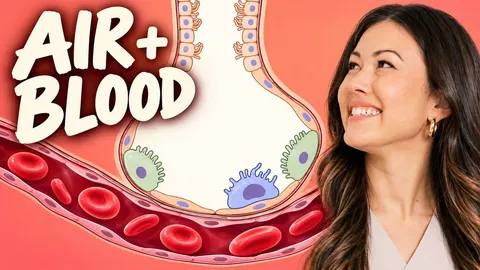
V/Q Mismatch Explained: Shunt vs Dead Space
V/Q compares alveolar ventilation with perfusion in a lung region. Low V/Q means too little ventilation relative to blood flow. Shunt means perfusion without ventilation. High V/Q means relatively more ventilation than perfusion, while alveolar dead space is ventilation without perfusion. Whole-patient gases reflect a mixture of regions rather than one isolated unit.
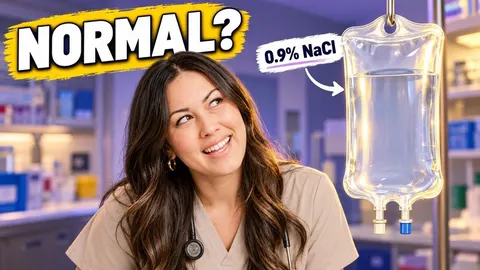
Normal Saline vs Lactated Ringer’s: ICU Fluids and Acid-Base Effects
Normal saline contains 154 mEq/L each of sodium and chloride. Lactated Ringer’s contains less chloride with potassium, calcium and lactate, according to the formulation. Large chloride loads favor hyperchloremic metabolic acidosis. Balanced-fluid chemistry does not establish superiority for every patient or outcome. Choose fluids for their indication, composition and the patient’s current physiology.
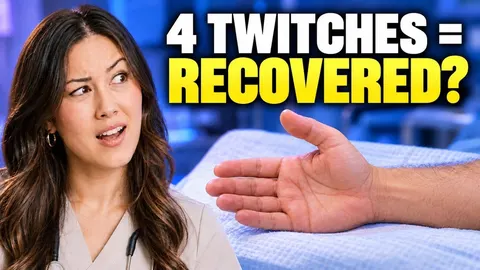
Train-of-Four Monitoring: Twitch Count vs TOF Ratio
A train-of-four count records how many muscle responses follow four equal nerve stimuli. The TOF ratio compares the fourth response with the first. Four detectable twitches still occur with substantial fade, so count does not establish recovery. Quantitative measurement, the tested nerve-muscle pair, signal quality and the drug history determine interpretation.
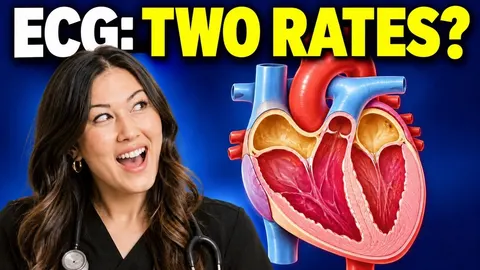
ECG Interpretation for ICU Nurses: Rate, Rhythm and QRS
Describe atrial and ventricular rates, regularity, atrial activity and its relationship to the QRS, intervals, and QRS width and shape before naming a rhythm. Check recording quality and the patient’s perfusion. An ECG records electrical activity. A matching heart rate, narrow QRS or familiar category does not establish adequate cardiac output or clinical stability.
Part-Time and Travel ICU Experience for CRNA School: Document Eligibility

NursingCAS CRNA Application Checklist: Transcripts to Submission
New CRNA Programs: Verify Accreditation Before You Commit

MSN or NP to CRNA: Entry Requirements, Experience & Transfer Credit

Military-Funded CRNA Training: Routes, Eligibility, and Service Obligations

How to Explain an ICU Patient in a CRNA Interview

CRNA Tuition vs. Cost of Attendance: Compare the Same Costs
CRNA School Scholarships: Funding Sources and Service Commitments
CRNA School Deposits and Withdrawal: A Written-Terms Checklist
CRNA School Clinical Rotations: Budget for Travel and Temporary Housing

CRNA Reapplicant Essay: Explain What Changed Between Cycles

CRNA Interview Study Plan for Nurses Working Shifts

CRNA Interview Prep Resources: Choose What You Need to Practice

How to Discuss a Clinical Mistake in a CRNA Interview
CRNA School Interview Thank-You Email and Follow-Up Guide
CRNA Interview Ethics Questions: A Patient-Safety Practice Guide
CRNA Application Deadlines: Plan the Dependencies Backward
Compare CRNA School Offers: Conditions, Costs and Clinical Logistics
Changing ICU Jobs Before CRNA Applications: A Decision Worksheet
Do CRNAs Need Physician Supervision? Opt-Out Rules Explained
For hospitals subject to the Medicare anesthesia condition of participation, the federal rule generally requires CRNA supervision by the operating practitioner or an immediately available anesthesiologist. A governor’s opt-out removes that federal CRNA supervision requirement in the state. State law and facility policies still determine the practice arrangement.

AANA State Meeting vs Annual Congress: Which Should Applicants Attend?
Choose a state nurse anesthesia meeting when your school research and professional interests are concentrated in one region. Consider AANA Annual Congress for broader education and connections across regions. Choose Mid-Year Assembly when your main goal is federal advocacy. Check the actual agenda, applicant registration and total cost before booking.
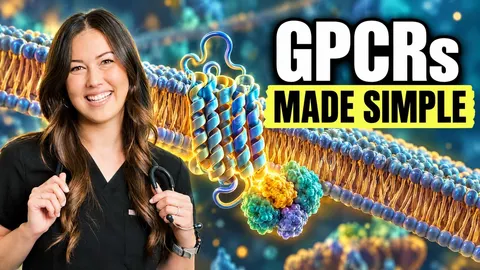
G Protein-Coupled Receptors: Gq, Gs and Gi Explained
G protein-coupled receptors receive a signal outside the cell and activate a G protein inside it. Gq usually activates phospholipase C and releases stored calcium through IP3. Gs stimulates adenylyl cyclase and increases cyclic AMP. Gi inhibits adenylyl cyclase, while its beta-gamma subunits also regulate ion channels. The proteins in the target tissue determine the final response.

CRNA School Transcript Analysis: GPA and Course Decisions
A CRNA school transcript review starts with cumulative, science and recent-credit GPAs, then examines the individual courses behind those averages. A new course should solve a specific problem: a prerequisite gap, an outdated course or a weak recent science record. Verify each program’s calculation and course policies before choosing a retake.
Heparin Mechanism of Action: How It Prevents Clots
Heparin accelerates antithrombin’s inhibition of activated clotting factors, particularly factor Xa and thrombin. This reduces new fibrin formation and limits clot extension. It does not dissolve an existing clot. Unfractionated heparin affects both Xa and thrombin, while low-molecular-weight heparin has proportionally greater anti-Xa activity. Bleeding and heparin-induced thrombocytopenia belong in the clinical explanation.
Adenosine Mechanism of Action: The AV-Nodal Pause
Adenosine briefly slows or blocks conduction through the atrioventricular node. Activating A1 receptors reduces cyclic AMP signaling and changes calcium and potassium movement. Interrupting conduction stops a reentry circuit which depends on the AV node, such as AVNRT. Its very short blood half-life explains rapid administration and a brief effect, rather than a general treatment for every tachycardia.
Amiodarone Mechanism of Action: Four-Class Effects
Amiodarone is classified mainly as a class III antiarrhythmic, but has effects resembling all four Vaughan Williams classes. It affects potassium, sodium and calcium channels and sympathetic signaling. These actions alter conduction and refractoriness. Explain the rhythm-specific clinical purpose alongside cardiac, pulmonary, thyroid and hepatic risks, especially with prolonged treatment.

Why Magnesium Helps Torsades With a Long QT
Torsades de pointes is polymorphic ventricular tachycardia associated with a prolonged QT interval. Delayed repolarization permits early afterdepolarizations which trigger ventricular activity. Magnesium treats recurrences in this setting even when the measured magnesium level is normal. Suppression of triggered activity is a proposed mechanism. Sustained polymorphic VT requires immediate unsynchronized shock. Magnesium addresses recurrence and does not replace that treatment.

WPW Syndrome: Why Pre-Excited AF Changes Treatment
Wolff-Parkinson-White involves an accessory electrical connection between atria and ventricles. It allows ventricular activation outside the usual AV-node route and also supports reentry rhythms. The dangerous distinction in this lesson is atrial fibrillation with pre-excitation, where AV-nodal blocking drugs risk very rapid conduction through the accessory pathway. Identify the actual rhythm before choosing treatment.

Diltiazem vs Amlodipine: Same Channel, Different Effects
Diltiazem and amlodipine both inhibit L-type calcium channels, but their tissue effects differ. Amlodipine, a dihydropyridine, predominantly relaxes vascular smooth muscle and lowers vascular resistance. Diltiazem, a nondihydropyridine, also slows AV-nodal conduction and has negative inotropic effects. The heart rate, rhythm, blood pressure and ventricular function change the meaning of that difference.
Nitroglycerin vs Nitroprusside: Preload and Afterload
Nitroglycerin and nitroprusside relax vascular smooth muscle through nitric-oxide signaling and increased cyclic GMP. Nitroglycerin’s venous effects predominate, reducing venous return and preload, although it also dilates arteries in a dose-related manner. Nitroprusside dilates arteries and veins more evenly, reducing afterload and preload. Their safety considerations also differ.

Pacemaker Modes Explained: VVI, AAI and DDD
Read a pacemaker mode one position at a time. The first identifies the paced chamber, the second the sensed chamber, and the third the response to a sensed event. A means atrium, V ventricle and D dual. The response is inhibited, triggered or dual. An R in the fourth position identifies rate modulation.

CRNA Application Deadlines: An 18-Month Timeline
Build your CRNA application timeline backward from your earliest program deadline. Sachi’s 18-month plan puts slow changes, including prerequisites and ICU experience, first. The following windows turn your experiences into application evidence, prepare documents and references, then verify submissions and begin interview practice.
Vasopressor Pharmacology for ICU Nurses
Vasoactive drugs change vascular tone, cardiac contraction or both. Norepinephrine, epinephrine, phenylephrine and vasopressin differ in receptor activity and hemodynamic effects. Dobutamine and milrinone primarily support contraction while also promoting vasodilation. Start with the patient’s pressure, flow and perfusion problem, then connect the drug’s mechanism to the response.
CRRT Explained: Modes, Settings and Alarms
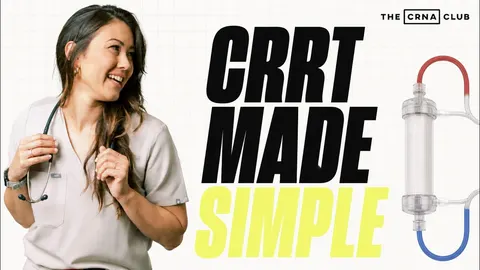
Continuous renal replacement therapy removes solutes and fluid gradually. CVVHD uses diffusion, CVVH uses convection, CVVHDF combines them, and SCUF primarily removes fluid. Understanding the transport mechanism and circuit location helps explain settings, effluent dose and pressure alarms. Assess patient instability separately from a circuit problem.

CRNA Resume Examples: What to Include and Cut
A CRNA school resume should make your academic preparation, ICU experience and strongest relevant contributions easy to find. Sachi recommends clear headings, reverse chronological order and a readable single-column format. Replace generic job duties with the patient populations, devices, medications and procedures you actually manage, then show your own contribution to leadership work.
Ventilator Modes Explained: AC/VC, SIMV and Pressure Support
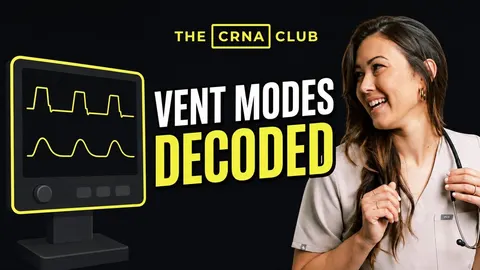
Ventilator modes describe how breaths begin, which variable the ventilator controls and how inspiration ends. In volume assist-control, supported breaths receive a set tidal volume while pressure varies. SIMV provides synchronized mandatory breaths with spontaneous breathing between them. Pressure support assists patient-triggered breaths, so tidal volume depends on effort and respiratory mechanics.
Hemodynamics Explained: Preload, Afterload and Perfusion
Hemodynamics connects filling, contraction, vascular resistance and forward blood flow. Preload describes ventricular stretch before contraction. Afterload describes the load opposing ejection. Contractility affects the strength of contraction. Blood pressure reflects the interaction of flow and resistance, so assess perfusion and oxygen delivery alongside the monitor values.
Precedex vs Propofol: ICU Sedation Differences
Propofol and dexmedetomidine create different sedation states. Propofol strengthens GABA-A signaling and supports rapidly titratable hypnosis, with risks including hypotension and respiratory depression. Dexmedetomidine activates alpha-2 receptors and reduces sympathetic activity, supporting more arousable sedation while also causing bradycardia and hypotension. Choose the comparison around the sedation goal and patient physiology.
CRNA Prerequisites: Courses, Grades and Retake Decisions
CRNA prerequisites vary by program. Check the required subject, credits, lab, grade, course age and accepted format for every target school. Then separately review your science record for academic weaknesses. Meeting a course requirement and demonstrating strong recent academic performance are related decisions with different purposes.
CRNA Resume Blueprint: Format and Section Order
Sachi’s resume blueprint focuses on section order and the space on your first page. Use a compact header, clear credentials and reverse chronological education. Describe ICU responsibilities in specific terms and give leadership or anesthesia-related experience enough space to show its substance. Follow each program’s requested format over a general template.
CRNA Personal Statement: Tell a Relevant Story
A CRNA personal statement should answer the program’s prompt with specific, truthful experiences and reflection. A story earns its place when it supports the point you need to make. Use your resume for the factual inventory, then use the essay to explain what an experience changed in your understanding, preparation or decision to pursue anesthesia.
CRNA Prerequisites and Timeline: How Early to Start
Build the application timeline around your transcript, target program requirements and tasks needing months. Sachi connects science retakes, GRE decisions, certification preparation and document work so they fit a realistic calendar. A year of preparation is a starting idea, while an 18-to 24-month runway gives more space when courses or experience need development.
CRNA Application Preparation: Three Mistakes to Avoid
This application lesson addresses starting too late, focusing on ICU labels instead of the whole application, and underestimating the resume and essay. Build enough time for work needing months, document the substance of your ICU experience, and revise the written application so it explains your preparation clearly.

How Hard Is CRNA School? Workload and Preparation
CRNA school combines a large volume of material, detailed scientific reasoning and demanding clinical preparation. The workload also changes family time, finances and daily routines. Sachi discusses these pressures so prospective students plan for academic study and practical support together, rather than judging readiness from motivation alone.
CRNA Application Professionalism: Emails and Open Houses
Professionalism during a CRNA application includes how you prepare for events, write emails and use shared meeting time. Sachi discusses professional communication, public-facing profiles, virtual participation and questions which show prior research. Treat these as practical preparation habits rather than universal rules about how a school makes admissions decisions.
CRNA School Rejection: Comparison and a Realistic Timeline
A rejection and another nurse’s acceptance do not give you the full explanation of either application. In this encouragement episode, Sachi focuses on comparison, self-imposed deadlines and planning around the time you really have. Use the setback to review your application and build a realistic next cycle, while leaving room for recovery.
CRNA Interview Questions: Motivation and Emotional Intelligence
Sachi reviews recurring personal and emotional-intelligence questions in CRNA interviews, starting with why you want to become a CRNA. Prepare real examples showing how you communicate, respond to difficulty and reflect on your own work. Know your motivation and the program, then practice an answer with enough detail to support the point.
How Many CRNA Schools Should You Apply To?
The right number of CRNA school applications depends on program fit and your ability to submit strong, complete work. Sachi discusses widening a school list while protecting essay quality, recommendation logistics and your time. Use the recording’s application-count examples as perspective, then build the list from your actual requirements, finances and options.
CRNA School GPA Requirements: Minimums and Competitiveness
A minimum GPA and a competitive academic record answer different questions. A 3.0 is a common public eligibility benchmark, while stronger academic evidence includes science performance and recent graded work. Sachi explains the different GPAs programs use and why the overall average alone leaves out information needed for an academic plan.
CRNA Interview Mistakes: Reasoning, Rambling and Confidence
Sachi identifies three interview habits to address: hiding your thought process, rambling after you have answered, and presenting confidence as entitlement to a seat. Practice explaining what you know accurately, answering the question directly and stopping when the point is complete. Honest limits strengthen an answer more than guessing at a detail.
CRNA Interview Vasopressors: Receptors and Cellular Mechanisms
To explain a vasoactive drug, connect the patient’s problem with the receptor, intracellular signal and hemodynamic effect. This older lesson compares adrenergic pathways, vasopressin and inodilators. Read the corrections above the player before watching: several recorded statements require qualification, including vasopressin’s cardiac effects, hormone deficiency and epinephrine-related lactate.
Understand the CRNA Role Before Applying
Before applying, understand the work of a CRNA, the profession’s place in healthcare and the issues shaping practice. Shadowing helps you connect these topics with actual patient care. Sachi compares the anesthesia role with other advanced nursing paths and encourages professional involvement so the decision is informed by more than the job title.
CRNA Application Blind Spots: Evidence Beyond GPA
An application blind spot is a part of your preparation the submitted evidence does not explain well. Sachi asks you to examine academic readiness, critical-care experience and leadership rather than relying on one GPA. Review both what you have done and how the resume, essay and references make that work understandable.
Four Areas to Review in Your CRNA Application
Sachi’s application review examines academics, critical-care experience, professional development and anesthesia-related experience. Use these areas to organize evidence and identify the next useful action. The review is a planning tool, rather than an admissions scoring formula or a promise of acceptance.
Research CRNA Programs: Faculty, Clinical Sites and Policies
School research should extend beyond the city and university name. Sachi discusses faculty, simulation resources, clinical-site arrangements and progression policies she wishes she had examined more closely. Compare the published details with your learning needs, household and support system before deciding a program fits.
CRNA Application Strategies: Events, Open Houses and Classes
Sachi discusses three ways to learn more about anesthesia training: professional meetings, conversations with faculty or students, and observing a class when a program permits it. These contacts help you ask better questions and assess fit. Participate respectfully and follow each program’s process instead of expecting networking to substitute for a strong application.
Five CRNA Resume Mistakes: Format, Repetition and Order
This resume review focuses on design-heavy templates, repetitive material, chronological order and an oversized header. Keep the layout professional and make relevant evidence easy to skim. Use the page for specific experience instead of repeating generic nursing duties, and check the final file against the program’s instructions.
How to Meet CRNA Faculty and Learn About Programs
Program events and professional meetings offer ways to learn about CRNA training through direct conversation. Sachi encourages applicants to move beyond old online threads and ask informed questions of faculty, CRNAs and students. Choose contacts relevant to your interests and respect event and program boundaries.

Are You Ready to Apply to CRNA School?
Feeling uncertain does not by itself tell you whether you are ready to apply. Sachi looks at clinical understanding, interest in further learning and evidence of teaching or leadership, alongside the program’s requirements. Assess your actual preparation and remaining gaps instead of waiting for complete confidence.
CRNA Application Lessons: Shadowing, Research and School Fit
In this 2023 reflection, Sachi describes preparation she would approach differently: more shadowing, research exposure, program conversations, earlier essays and deeper school research. The lasting value is the decision behind each action. Use current requirements and opportunities when applying these ideas to your own cycle.
Check Nursing Degree Accreditation Before a CRNA Application
Check both the institution awarding your degree and the nursing program’s accreditation, then verify what your target CRNA program accepts. These are separate layers. This older recording introduces the distinction, but its historical accreditor list and regional-versus-national shorthand need the current qualification provided on this page.
Make the Most of Your ICU Year Before CRNA School
Use your ICU experience period to develop clinical reasoning, contribute to the unit and plan the rest of the application. Sachi recommends maintaining a student mindset after orientation, seeking meaningful leadership opportunities and working backward from the eventual deadline. Clinical development and application preparation happen together.

Shadowing a CRNA: What to Do and Ask
A CRNA shadow day helps you observe the work and decide whether anesthesia fits your goals. Prepare for the facility’s requirements, ask questions at an appropriate time and watch the whole sequence of patient care. Reflect on the role and decisions afterward, then document the experience as your target programs require.
Sachi’s Journey From ICU Nursing to CRNA School
Sachi shares her own path from nursing school in Hawaii to ICU work and nurse anesthesia training. The recording describes relocation, clinical learning and the preparation behind her decision. Use her experience as one personal account of the journey, while building your own plan from current program requirements and your circumstances.
Your First CRNA Application Step: Review Every Transcript
Requesting your college transcripts gives you a concrete starting point for a CRNA application plan. Calculate the GPAs relevant to your target schools and inspect the courses behind them. Sachi explains why a remembered nursing GPA is not enough to identify prerequisites, academic gaps or programs which consider recent coursework.
Front-Loaded vs Integrated CRNA Programs
Front-loaded CRNA curricula concentrate more didactic work before major clinical training, while integrated curricula overlap classroom and clinical learning earlier. The best fit depends on the actual sequence, your learning habits and clinical-site logistics. Sachi explains the tradeoffs and her preference, with current program curricula supplying the final details.
CRNA Resume Editing: Prioritize Evidence and Cut Repetition
Sachi’s three editing priorities are to keep strong evidence visible, reduce repetition and remove generic filler. Review what a reader learns from each line of your resume. Use the space for your actual contributions, and preserve the differences between jobs rather than repeating the same duty list throughout the document.
Unit Leadership Projects for a CRNA Application
A unit project adds useful application evidence when it addresses a real need and you are able to explain your contribution. Sachi discusses checklists, educational tools and anesthesia-related learning as examples. Choose a feasible project with appropriate clinical review, then document the work and actual results rather than treating a new resource as proof it improved outcomes.
CRNA School Interview Ventilator Questions: First Checks
Work through CRNA school interview ventilator questions on high pressure alarms, peak versus plateau, leaks, and gas exchange.
CRNA School Interview Shock Questions: Read the Patient First
Practice CRNA school interview shock questions with worked cases on hypovolemic, cardiogenic, distributive, and obstructive shock.

CRNA School Interview Pharmacology: Explain the Why
Work through CRNA school interview pharmacology questions on ICU drugs. Explain the mechanism, expected effect, and clinical limitation.
CRNA School Interview Pathophysiology: 6 Worked Cases
Practice 6 CRNA school interview pathophysiology cases on shock, ARDS, and DKA. Explain mechanisms and findings aloud.

CRNA School Interview Math Questions: 8 to Work Out Loud
Practice 8 CRNA school interview math questions with worked conversions, concentrations, unit cancellation, and answer checks.

CRNA School Interview ABG Questions: Explain Each Step
Practice CRNA school interview ABG questions with three worked cases, compensation checks, and a way to explain your answer out loud.

CRNA Mock Interview Feedback: What Should You Practice Next?
Got CRNA mock interview feedback? Use the question notes and weak topics to build a focused study session and retest the answer aloud.

CRNA Interview: What Do You Say When You Don''t Know?
Blank on a CRNA interview question? Learn what to say when you know part of the answer, need a moment, or have no answer yet.
CRNA Interview Vasopressor Questions: Can You Explain the Why?
Practice CRNA interview vasopressor questions with worked reasoning for norepinephrine, phenylephrine, vasopressin, and a falling blood pressure.
CRNA Interview Questions by ICU: What Should You Review?
Find CRNA interview questions to practice from your own ICU experience, including CVICU, MICU, trauma/SICU, and neuro ICU examples.
CRNA Gifts: What to Buy for CRNAs and SRNAs
The best CRNA gifts buy back time or money. Here's what to get an accepted student, an SRNA in didactic versus clinical year, a new grad staring at loans, and a practicing CRNA who already has four mugs.
What to Do First for CRNA School: Your First 5 Moves
Request your transcripts first, then calculate your GPA, then decide retakes. Academic is 25% of your ReadyScore and Certifications only 10%, which is why grades come before letters after your name.
Can You Work During CRNA School? What 154 Programs Say
Only 25 of the 154 accredited CRNA programs in our database say students are able to work, and 123 say no in writing. Here's what that yes actually means, and how people fund 36 months without a paycheck.
How Many Shadow Hours for CRNA School? The Real Number
Aim for 30 to 40 shadow hours. Only 55 of the 154 accredited programs in our database require shadowing at all, and almost none publish an hour count.
What Counts as ICU Experience for CRNA School?
PICU is accepted at 114 of our 154 accredited programs, burn and neuro and trauma at 110, NICU at 87, the ER at 11. Here's the unit-by-unit table, and what to do if your unit lands in the no column or the quiet one.
ADN GPA vs BSN GPA for CRNA School: Who Counts What
Most CRNA programs blend your ADN and BSN grades into one cumulative GPA. A smaller group only counts your last 60 credits, which can quietly erase an older associate degree. Here's how to tell them apart.
How to Calculate Science GPA for CRNA School: A Worked Example
76 of the 154 accredited CRNA programs calculate a separate science GPA. Which courses go in the bucket, how a W, a retake and a P/F are handled, and a worked example you can copy.
CRNA Clinical Interview Questions: Explain Your Reasoning
Conflict, ethics, and a crashing patient. Those 3 buckets cover almost every clinical scenario question a CRNA program will throw at you, and committees score the same 3 things every time.
Tell Me About Yourself: CRNA Interview Answer Worksheet
The committee already has your transcripts, your GPA their way, and your references. So "tell me about yourself" is not a request to restate the file. Here's the four-beat, 90-second answer and the order that makes the next question one you want.

Why Do You Want to Be a CRNA? Build Your Interview Answer
The "why CRNA" answer that works has three parts: the moment you saw anesthesia, why it isn't the NP route, and why this program. Salary isn't one of them.
Is One Year of ICU Experience Enough for CRNA School?
120 of our 154 accredited programs let you apply at one year of ICU. Whether that year is enough to actually get in depends on your unit and your transcript, not the calendar.

CRNA Interview Invitations and Waitlists: What to Do Next
Only 9 of the 154 accredited CRNA programs run rolling admissions, so weeks of silence after you submit is the norm. What invite timing, save the date emails, and a waitlist really mean.
Professional Organizations for CRNA Applicants: Join These 3
Memberships are 10% of your ReadyScore and in-person events are another 13%. Here are the three organizations to join, in what order, and how to actually use a state meeting.
When to Take the GRE for CRNA School (Check This First)
109 of 154 accredited CRNA programs do not require the GRE. If yours does, sit it 3 to 4 months before your earliest deadline so a retake still fits.

Where to Take Prerequisites for CRNA School: Get the Course Approved
Of 154 accredited CRNA programs, 28 say biochem or organic can replace general chemistry, 7 say it cannot, and 119 say nothing. Here is how to find out which one your program is before you pay for the class.
Do Prerequisites Expire for CRNA School? Check the Actual Rule
Only 30 of the 154 accredited programs we track publish a prerequisite expiration date. Here is what the silence from the other 124 actually means for that old science class.
NursingCAS GPA Calculator: Check Your CRNA Application GPA
There is no single CRNA school GPA. Programs calculate four, they disagree about which matters, and NursingCAS counts both attempts of any class you retook.
Which Science Classes Should You Retake for CRNA School?
The retake question has a real answer once you know two things: the grade you earned and how old the class is. Here is the decision rule, plus why leveling up beats repeating.
Research a CRNA Program and Choose Questions for Your Interview
The fastest way to stand out is knowing things about that specific program other candidates do not. Here is exactly what to look up and how to use it.
What to Wear, Bring, and Watch on a CRNA Shadow Day
You have the shadow day scheduled. Here is what to wear, what to bring, and what to actually watch once you are in the OR.
OR Terms to Know Before Your First CRNA Shadow Day
Walking into an OR the first time feels like a foreign country. Here is the anesthesia vocabulary that lets you follow along.
How to Structure CRNA Interview Answers That Land
Interviewers hear dozens of rehearsed answers. The candidates who stand out tell a story with a structure. Here is the one I teach.
Which Nursing Certifications Help Your CRNA Application?
If your GPA is 3.4 or below, certifications are one of the best ways to strengthen your application. Here is which one fits your ICU.
CRNA Programs Without the GRE (And Who Still Requires It)
Most programs have dropped it. But 40 still require the GRE, and some waive it based on your GPA. Check before you spend four months studying.
Unit Projects That Strengthen a CRNA Application
A leadership project on your unit does two jobs at once: it helps your coworkers and it shows a committee you already think about anesthesia.
CRNA vs Anesthesiologist Assistant: What Is the Difference?
Both work in the anesthesia care team, but the training routes, licensure, and where each can practise are genuinely different.
How to Describe Your ICU Experience on a CRNA Resume
Everyone applying has charge experience and vasoactive drips. Standing out is not about what you did. It is how you say what you did.
The 6 CRNA School Essay Prompts (And How to Answer Each)
Programs word it differently, but almost every CRNA essay prompt is one of six questions. Prepare those and nothing surprises you.
What Critical Care Experience Do CRNA Programs Require?
The name on your unit door matters far less than the acuity of your patients. Here is the competency list programs are actually measuring you against.
What Is the Best ICU Experience for CRNA School?
Choosing your ICU is one of the highest-stakes decisions you make as an applicant. Here is how to compare two offers on what actually counts.
Nurses Were the First Anesthesia Providers: CRNA History
Nurses were administering anesthesia in the United States before anesthesiology existed as a physician specialty. Here is the history, and why interviewers care.
CRNA Personal Statement Examples: Annotated Revisions
The real essay prompts 123 programs publish, what word count you are actually working with, and two annotated opening paragraphs showing the difference between telling and showing.

CRNA School Resume Examples: A Fictional Applicant CV
Real before-and-after CRNA resume bullets, the section order that works, and why 38 of 154 programs formally require a resume while the rest read one anyway.

CRNA Recommendation Examples: Build a Factual Request Packet
Two annotated CRNA letter of recommendation examples, a copy-paste template you can hand your manager, and the specific details that separate a strong letter from a generic one.

CRNA Shadowing Form and Log: Template, Hours & Verification
A shadowing log template you can copy today, what a verification form needs to include, and the 57 of 154 programs that formally require shadowing hours.
ICU Learning Plan for New Grads: Week-by-Week Guide
A week-by-week ICU learning plan for new grad nurses, from monitors and basic drips to vasopressors, vents, and CRRT, built toward CRNA school readiness.
Rejected From CRNA School? Build a Reapplication Improvement Plan
Getting rejected from CRNA school is common, not a verdict. Here's the step-by-step plan for finding the specific gap that held your application back and reapplying stronger.
Should You Become a CRNA? A Career-Fit and Shadowing Worksheet
A data-backed self-assessment for deciding whether to become a CRNA, weighing the real salary against the real cost and time investment, not just motivational platitudes.
ICU Report: Bad vs Good Examples for Every System
Real bad-vs-good ICU report examples for neuro, cardiac, respiratory, renal, and GI, plus a systems-based structure that translates straight to CRNA anesthesia handoffs.
Travel Nurse vs CRNA Salary: The Real 20-Year Numbers
A real 20-year earnings model comparing travel nurse pay to CRNA salary, built on BLS wage data and actual tuition numbers from 154 accredited programs.
13 Milestones Every CRNA Applicant Hits (And How to Prep)
The 13 concrete milestones every CRNA applicant hits between their first ICU shift and acceptance, with what good preparation looks like at each stage.
Swan-Ganz for CRNA Interviews: What Actually Gets Asked
Swan-Ganz catheter numbers taught as interview prep: normal hemodynamic values, common CVP myths, and how to structure a clinical answer under pressure.
Do You Need the CCRN for CRNA School? Requirements vs Strategy
Is CCRN required for CRNA school? Some programs require it, some recommend it, and some don't mention it. Here's how to decide if you should apply with or without it.
10 Reasons to Be a Nurse Anesthetist
From salary and autonomy to intellectual challenge and job security, here are 10 real reasons being a CRNA is worth the hard road to get there.
Should You Retake a B or C in a CRNA Prerequisite?
A C or B- in a CRNA prerequisite isn't automatic disqualification, but it's not nothing either. Here's how to decide whether to retake the class or explain it.

How Competitive Is CRNA School, Really?
CRNA school is competitive but not impossible. Real data from 154 accredited programs shows what it actually takes to get accepted.

CRNA Salary: How Much Do Nurse Anesthetists Make in 2026?
CRNAs earn a median salary of $236,590 per year. See 2026 salary data by state, setting, and experience level, plus how CRNA pay compares to RN salaries.

ICU vs. OR: The Same Drugs, Different World!
Think you know your vasopressors and sedatives? The OR flips everything you learned in the ICU. Here’s how common drugs change when you control every dose, every second.

How to Manage Online Classes While Being in the OR 50 Hours a Week
Balancing CRNA clinicals and online coursework? Learn time management tips from an SRNA who’s been there—how to stay ahead, stay sane, and still have a life outside the OR.

AANA Annual Congress Recap (From an SRNA Who Has Attended 3 Year Straight)
Thinking about attending the AANA Annual Congress? Here’s what every SRNA should know—costs, networking tips, must-see lectures, and why it’s more than just CE credits.

Key Features of CRNA Programs that I Wish I Knew When I Was Applying
The way a school looks on paper can be far from your in-person experience. I always advise people to speak to local students, nurses, even CRNAs, of their perceptions of the program and students currently attend. A school could look amazing through the website and even through their national rankings and people could have not so favorable experiences with them in real life. Word of mouth, of course, has to always be taken with a grain of salt but fielding firsthand experiences of a program can prove to be invaluable. Speaking to current students could give you more insight into what a program is like outside of just the numbers which are often not influenced by student experience. 1. Student Expectations & Support The capacity of a school and class numbers relative to faculty are important to consider. Is there mentorship between classes available? I’ve found that some of the best advice about making it through my specific program has come from upperclassmen. They have insight specific to a professor or class that you can not find on social media. Mastering the knowledge is one thing but also performing well is another that is better suited with a more direct counsel. Do students have advisors available or how are student concerns addressed? These are questions that you may want to ask to figure out the kind of support you will have through school from faculty. Programs will expect you to know what supports you have outside of school whether that be it family or friends but knowing the academic support you have is another thing. 2. Consider the Academic Calendar This is something I wish I would have considered early on. Is your program on a quarter, trimester, or semester system? How many classes do students take per academic block? Considering the amount of work, you’ll need to juggle is important and will impact your day to day scheduling in school. Taking 5 classes on a quarter system is much different than 5 classes on a semester schedule. It’s worth understanding this before committing to a program at least to anticipate what will be asked of you. Understanding the academic calendar and whether there are any breaks built in will also help you plan your time to rest and recharge. As you become a SRNA so much of your life becomes revolved around school, so any insight to plan your non-school related activities beforehand, the better! 3. Type & Quality of Clinical Placements How are clinical placements decided? What kinds of practice models are at these sites? How far do students on average travel for clinical? Commuting to clinical will become a huge part of your life once you start clinical rotations. Seeing as students are the first to arrive and last to leave, understanding how these placements are made could largely impact your experience to come. Our school tracks the number of miles we must commute and on our next rotation we get to travel closer to home. Also considering that the financial aspect of moving for clinical or commuting is often the sole responsibility of the student this could add another expense to your already sinking funds. Important to consider, to some people that matters more than to others, you just don’t want to be blindsided by the cost when the time comes. Are they mostly large academic centers or is there room for seeing CRNA independent practice? When it comes to the clinical portion of school this is building the foundation for your career. Not only are these learning opportunities, but as you get more familiar with sites, you’ll learn that the anesthesia culture varies per location and practice model. If your training only exposes, you to one practice model it will be hard to have the foundation to be a versatile CRNA once you graduate. The goal of anesthesia training is to give you enough exposure so you can learn where you’d like to work once you graduate. To build that self-concept adequate exposure to all varieties of cases, practice models and healthcare settings is needed. As a nurse anesthesia resident, you are constantly challenged and fully expected to rise to the opportunity. When you’re interviewing for schools, they are trying to sell you an education as well as you are trying to decide what is the right fit. To come to that conclusion, it is important to consider all things and be able to make a sound and educated decision. You would never want to regret such a large investment in your future. Knowing and being able to map out some of the unknowns of school will also help to ease your anxiety and make sure you have the right fit school for you. Good luck out there!

Hidden Heroes: Advice from the Partner of an SRNA
Dating someone in CRNA school isn’t easy—but with the right mindset, you can thrive as a couple. Learn three practical tips to stay connected and strong while your partner pursues their dream of becoming a CRNA.

Surviving CRNA School Together: Advice for Your Partner & Support System
CRNA school is tough—but you don’t have to go through it alone. Learn how to prepare your partner and support system with tips on communication, shared vision, and intentional time together to strengthen your relationships during this demanding journey.
Graduate School Federal Aid: How New Loan Caps Affect Your Education Financing
Big changes are coming to graduate school federal aid in 2026—loan caps, eliminated Grad PLUS loans, and stricter repayment options. If you’re applying to CRNA school, here’s how to plan your finances now to avoid surprises later.
Study Methods That Helped Me Thrive in CRNA School
From spaced repetition to the Pomodoro technique, discover four research-backed CRNA study strategies that will help you master complex concepts, avoid burnout, and stay ahead in anesthesia school.
From Distracted to Dialed-In: My ADHD Survival Guide for CRNA School
✨Starting CRNA school with ADHD? You’re probably wondering, “How the HECK am I gonna survive didactic..?”. If you’re like me, you might have been diagnosed…
Smart Money Moves for SRNAs: How to Protect Your Credit Score While in School With No Income
No income during CRNA school? Learn proven strategies for SRNAs to maintain a strong credit score—on-time payments, low utilization, 0% APR cards, and lender communication—so you graduate financially ready for your first big paycheck.

Tackling the SEE – Tips and Tricks for Every Learning Style
The Self-Evaluation Exam is no joke—it’s one of the hardest tests you’ll face in CRNA school. From APEX study guides to mock exams and spaced repetition, learn how to tailor your prep to your learning style and walk into test day with confidence.

What I Did Before CRNA School to Set Myself Up for Success
Just got accepted to CRNA school? Congrats! Before the chaos of clinicals and care plans begins, there’s a lot you can do now to set yourself up for success. From budgeting and insurance planning to learning new study strategies and investing in the right tech, this post covers everything I did before CRNA school to stay organized, sane, and ahead of the curve.

Professionalism For CRNA School: Don’t Make These Mistakes
Professionalism in CRNA school isn’t just about clean scrubs—it’s about how you show up, communicate, and earn trust in high-stress environments. In this guide, we break down what professionalism really means in nurse anesthesia, the common mistakes SRNAs make (and how to avoid them), and why these habits matter long after graduation. From clinicals to the classroom, your reputation starts now.

Things I Wish I Knew About the Clinical Phase of CRNA Training
The clinical phase of CRNA school is a whole new world—and nothing fully prepares you for it. From navigating tough preceptors and managing OR chaos to overcoming impostor syndrome and mastering time management, this post shares what every SRNA should know before stepping into the OR. Whether you're starting your first rotation or prepping for your final site, these real-world tips will help you thrive.

Lifestyle Hacks to Streamline Your Life In CRNA School
Between clinicals, exams, care plans, and 4 a.m. alarms, CRNA school is no joke. That’s why smart lifestyle systems are a must. In this post, I’m sharing the exact hacks that helped me stay sane, from batch-cooking and grocery delivery to calendar color-coding and frontloading schoolwork. These tips aren’t about perfection—they’re about surviving (and maybe even thriving) in CRNA school.

Am I Too Old for CRNA School? Finding Your Place Regardless of When You Start
Thinking about CRNA school but feeling behind because of your age? You’re not. From mid-20s ICU grads to 40-something career changers, this profession welcomes all paths. Backed by data from the NBCRNA, this blog unpacks what age most CRNAs start—and why your unique experience could actually be your biggest asset in the OR.

If I Started Clinical All Over Again, Here is What I’d Do Differently
Starting CRNA clinicals? Take it from a senior SRNA with 9 months of experience across ACT, CAT, and independent sites—there are a few things I really wish I had done from day one. From organizing your case logs and daily care plans to building a quick-reference sheet and clinical pearls doc, this post breaks down how to stay sane and set yourself up for long-term success in clinical.

Can I Become a CRNA with a Foreign Nursing Degree?
Can Foreign Nurses Become CRNAs in the U.S.? Yes—Here’s Exactly How If you’re an international nurse wondering “Can I become a CRNA with a foreign degree?”—the answer is yes. This comprehensive guide walks you through each step, from validating your nursing credentials and passing the TOEFL/IELTS to securing U.S. ICU experience and evaluating your transcript for CRNA prerequisites. Whether you're abroad or already stateside, learn what it takes to make the leap from foreign RN to U.S. CRNA.

What’s in My Clinical Bag
Starting CRNA clinicals? You’re going to need more than caffeine and courage. From pen recommendations that won’t smudge mid-charting to the anesthesia apps that’ll save your sanity, here are the clinical bag must-haves every SRNA should know about. Bonus: snack hacks, badge tips, and why I’ll never bring an expensive stethoscope again.

How to Survive the Didactic Phase of CRNA School: Real Tips from a Student Who’s Been There
CRNA school isn’t just hard—it’s a whole different way of life. SRNA Jordan dishes on the reality of the didactic phase, from juggling massive content loads to figuring out iPad note-taking and finally letting go of perfectionism. If you’re about to start CRNA school, these tips will help you prepare mentally and practically.

Things That Surprised Me About CRNA School That I Didn’t Expect (From an SRNA)
CRNA school is intense—but not in all the ways you’d expect. One SRNA breaks down the surprising truths they discovered: you can take days off, collaboration beats competition, and clinical is a totally different game. If you’re prepping for school, these honest insights will help you manage expectations and protect your mental health.

The Organized SRNA: Tools and Techniques for Staying Organized in CRNA School
Starting CRNA school can feel overwhelming, but the right strategies can set you up for success from day one. This guide shares essential tips for starting CRNA school, from using digital calendars for time management to leveraging study techniques like active recall and spaced repetition. Discover the best apps for clinical prep, stress management, and peer support to help you stay organized and focused. With a structured approach and the right mindset, you’ll be on your way to thriving in CRNA school!

Technology Survival Kit for CRNA Students: Essential Apps, Tools, and Resources
Navigating CRNA school is challenging, but the right tech tools can streamline your studies, boost productivity, and enhance clinical practice. From note-taking apps like Notability to AI-powered summarizers and clinical reference tools, this guide highlights essential tech for CRNA school success. Stay organized with task managers, optimize learning with flashcard apps, and leverage collaboration platforms to work efficiently with peers. Equip yourself with this technology survival kit and tackle CRNA school with confidence!
Thriving, Not Surviving: Avoiding Burnout as a CRNA Student
CRNA school burnout is real, but with the right strategies, you can shift from just surviving to truly thriving. This guide offers practical tips on time management, self-care, and building a strong support system to help you navigate the intense demands of CRNA school. Learn how to stay organized, prioritize your well-being, and lean on mentors and peers to keep burnout at bay. With the right balance, you’ll not only make it through but emerge as a stronger, more resilient future CRNA!
Stress-Free Moving: How to Navigate CRNA Clinical Rotations Every 3 Months
Moving for clinical can be a daunting experience. However, it doesn’t have to be! Follow these steps to make your clinical rotation housing and transition smooth and stress-free.

Heart of the Matter: How to Succeed in Your Cardiac Anesthesia Rotation – A Guide for SRNAs
Succeeding in your cardiac rotation for CRNA school requires preparation, adaptability, and strong teamwork. From mastering hemodynamics and pharmacology to developing technical skills like line placement and TEE interpretation, this guide provides essential strategies for excelling in cardiac anesthesia. Learn how to navigate complex cases, communicate effectively with your surgical team, and stay composed under pressure. With the right mindset and preparation, your cardiac rotation can be a transformative learning experience that builds confidence and expertise in this high-stakes specialty.

Simple Steps to Mental Wellness in CRNA School
CRNA school is demanding, but prioritizing your mental health can make all the difference in your success and well-being. From managing stress with quality time and daily movement to ensuring proper sleep and nutrition, small habits can create a big impact. This guide offers essential mental health CRNA school tips, including preventative care strategies to help you navigate challenges with resilience. By making mental wellness a daily practice, you’ll set yourself up for both academic success and long-term personal growth.

Mastering Your OB Clinical Rotation: Essential Tips for CRNA Students
Preparing for your OB clinical rotation in CRNA school can feel overwhelming, but with the right strategies, you’ll build confidence fast. From mastering epidurals and spinal blocks to handling emergencies like postpartum hemorrhage, this guide covers essential CRNA school OB tips to help you succeed. Learn how to communicate effectively with patients, collaborate with the OB team, and stay organized in high-pressure situations. With these expert insights, you’ll be ready to navigate your OB rotation like a pro!

From Overwhelmed to Focused: How to Choose the Right CRNA Program
Choosing CRNA programs can feel overwhelming, but focusing on key factors like location, curriculum structure, and clinical opportunities can help you find the perfect fit. Do you thrive in an integrated or front-loaded program? Prefer online flexibility or an in-person learning environment? This guide breaks down the essentials so you can confidently navigate your options and choose the right CRNA program for your goals.

My Thoughts on a Front-Loaded CRNA Program: An SRNA Perspective
I chose a Front-Loaded CRNA Program for very specific reasons! This structure allows students to focus on didactic coursework first, providing a strong foundation before stepping into clinicals. While it offers benefits like cost savings and flexibility for parents, it can also feel isolating due to limited in-person interaction. If you're considering a front-loaded CRNA program, weigh the pros and cons carefully to find the best fit for your lifestyle and learning preferences.
Understanding Your “Why” in CRNA School
Why CRNA? Understanding your "why" is the key to surviving and thriving in CRNA school. It’s what fuels your motivation through long clinical hours, intense studying, and inevitable challenges. Without a clear purpose, the journey can feel impossible—but when you know exactly why you're pursuing nurse anesthesia, you’ll have the discipline and resilience to push through. Ready to discover your own “why” and strengthen your CRNA school application? Click to learn how!

Connecting from Afar: Strategies for Succeeding in CRNA Distance Clinical Rotations
Want to know how to stay on top of your studies, budget smartly, and build connections even when you're far from home? From finding housing and navigating credentialing to staying connected and managing stress, there are ways to make these rotations smoother. Read to learn the top strategies for thriving in CRNA school clinicals—no matter where they take you!

An immigrant's journey to CRNA school
Applying to CRNA school as an immigrant can feel overwhelming, but it’s absolutely possible with determination and strategy. My journey from Sweden to the U.S. taught me that resilience matters more than a perfect GPA. Despite grading system differences and cultural adjustments, I navigated the process, secured interviews, and earned my spot in a CRNA program. If you're an immigrant CRNA school applicant, know that your background is not a limitation—it’s your strength.
CRNA Interview Formats: Virtual, In-Person, Group and MMI Preparation
Okay, you’ve already read about how to prepare for CRNA school interviews and run through a couple mock interviews with your friends and family. What…

How/Who to ask for Letters of Recommendation (and How to Stay Organized!)
Asking for letters of recommendation (LOR) can be daunting! Especially if you feel as though your unit *may not* support your decision to pursue higher…

Must-Haves Before Starting CRNA School: A Guide to Essential Tech, Books, and More
Your first semester of CRNA school will be intense—don’t get caught unprepared. Discover the must-have tools, tech, and clinical essentials for success.

How to Manage Online Classes for CRNA School and Staying Motivated
I remember being asked during my CRNA school interview, “how will you handle our online classes?” To be completely honest, at the time, I had…

CRNA School Challenges: Didactic vs. Clinical
Is didactic or clinical harder in CRNA school? The answer depends on your learning style and program structure. In this post, an Emory SRNA shares insights from an integrated CRNA program—exploring the predictable grind of coursework vs. the real-time challenges of clinicals. Learn how to navigate both without burning out.

Mastering Study Habits for CRNA School: Tips for SRNAs and RNs
CRNA school demands a whole new level of study discipline. From mastering time management to using active learning apps and building productive study groups, these SRNA study habits will help you stay focused and ahead of the curve. If you're planning to apply, it’s never too early to level up your learning strategy.

Budgeting for CRNA School: Key Tips for Managing Expenses
CRNA school is intense—and expensive. From tuition to unexpected clinical costs, budgeting smartly can reduce stress and keep you on track. Learn how to create a personalized CRNA school budget, prepare for hidden expenses, and avoid financial pitfalls with this step-by-step guide.

CRNA School Essentials: Must-Haves for Success
Starting CRNA school soon? Don’t go in unprepared. From building mental resilience to investing in key tech tools like an iPad with Notability and spaced-repetition apps like Anki, this guide shares the top must-haves for your first semester as an SRNA. Learn what it really takes to thrive in the early stages of nurse anesthesia school.
CRNA School Application Timeline: Plan Backward From Deadlines
Applying to CRNA school isn’t a quick process—but it’s 100% worth it. This step-by-step timeline reveals exactly how one nurse turned ICU experience, CCRN prep, and smart networking into multiple CRNA school acceptances. If you're feeling overwhelmed, this post will help you organize, plan, and stay motivated every step of the way.

Navigating Your First Day of Clinical
Starting your first clinical day as a nurse anesthesia student can be nerve-wracking. From night-before prep to in-the-moment strategies, here’s how to stay organized, make a strong impression, and set yourself up for success in the OR from day one.

Stress Management as an SRNA
Remember in your interview when you were asked, “How do you handle stress?” Did you answer honestly, because you’ve already built healthy strategies, or did…
How to Find CRNA Shadowing Opportunities: Requests & Approval
Struggling to find CRNA shadowing opportunities? You’re not alone—but there are ways to make it happen. This post walks you through non-traditional methods to land shadowing hours, even if your hospital doesn’t hire CRNAs or you’re keeping your goals private. Learn how to cold-email, leverage state associations, and make shadowing a standout part of your CRNA application.

4 Essential ICU Skills to Master Before Starting CRNA School
Strong ICU experience is essential for CRNA school. From mastering difficult IV access and ventilator management to EKG interpretation and team communication, these skills will set you up for success in clinical residency.

Do’s and Don’ts as a Newbie in the OR
Starting your first day of CRNA clinicals? Here’s what to expect, how to prepare, and key do’s and don’ts to help you succeed in the OR with confidence.

Why You Should Attend the AANA Annual Congress if You're Applying to CRNA School
Want to boost your CRNA school application? Attending the 2024 AANA Annual Congress gives you a behind-the-scenes look at the profession, direct access to program directors, and networking opportunities with CRNAs and SRNAs. Discover how this one event can give you a competitive edge and help you stand out in a crowded applicant pool.

Acing Your CRNA Interview: Mastering Emotional Intelligence (EQ) Questions
Preparing for your CRNA school interview? Here are the emotional intelligence questions you must prepare for. Spoiler alert- these can be harder than clinical questions, sometimes!

Top Professionalism Tips to Avoid Sabotaging Your CRNA School Application
Applying to CRNA school? Even small slip-ups—like casual emails, poor social media presence, or disorganized communication—can hurt your chances. Learn how to present yourself as the professional, prepared candidate programs are looking for.

Why We Love Being CRNAs: Insights and Inspiration for Aspiring CRNA Applicants
What makes CRNA work so rewarding? From critical care expertise to flexible careers and life-changing impact, CRNAs share why they love what they do.
How to Get Into CRNA School: Build Your Application Plan
A BSN, an RN license, a year or two of high-acuity ICU and a 3.0 gets you through the door at most CRNA programs. Here's what the 154 accredited programs actually require, and what separates the applications that get interviews.

Why You Should Start Planning for CRNA School One Year in Advance: A Step-by-Step Guide
From prerequisite courses and GRE prep to earning your CCRN and writing a standout personal statement, discover how early preparation can give you the edge in the competitive CRNA school admissions process.
CRNA School Requirements: 5 Must-Check Boxes for a stand out application
Applying to CRNA school is competitive, but in addition to meeting the CRNA school application requirements, there are some unspoken boxes you need to check.
Low GPA for CRNA School? Build a Targeted Academic Repair Plan
Applying to CRNA school with a low GPA? Here is what you need to know plus some tips on how to overcome your low GPA and still get accepted!
Questions to Ask a CRNA When Shadowing: A Practical Guide
Here are some things you need to know if you're shadowing a CRNA for your CRNA school application. There are certain questions you need to ask, and you definitely want to be prepared. Read along for our top tips to have a successful shadow experience!

Conquering the CRNA Application: 5 Mistakes to Avoid (and Get Accepted!)
Many CRNA school applicants unknowingly sabotage their chances. From over-fixating on ICU unit names to rushing the essay, here are the 5 biggest mistakes to avoid—and what to do instead.

From Nursing School to CRNA School: The Key Differences in the Application Process
Applying to CRNA school? The admissions process is tougher than ever, and standing out requires more than a strong GPA. From transcripts and references to leadership involvement and a polished personal statement, your CRNA application must show you’re ready for the rigor of a doctorate-level program. Learn how to shift your focus, highlight your strengths, and craft an essay that captures attention.

Advice to Applicants from SRNAs
From writing a standout essay to maximizing ICU experience and building faculty connections, discover what current CRNA students say truly matters in the application process.
Why You Won’t Get Into CRNA School
Sorry for the clickbait headline (sorta, haha), but there are some key avoidable mistakes that I see people making over and over again that…
Ready to Apply to CRNA School or Wait? An Evidence Worksheet
So you might be like many people and wonder when you're actually going to be ready or rather feel ready to apply to CRNA School. …

If I Was Applying to CRNA School Again, Here’s 5 Things I’d Do Differently
Thinking about CRNA school? Learn 5 smart strategies I wish I used—from early essay prep to program research—to boost your application and confidence.

How Hard Is CRNA School, Really? An Honest Answer
CRNA school is hard mostly because of volume and pace, not because the material is unlearnable. Here's what actually makes it hard, what the attrition data says, and what makes it survivable.
CRNA School Interview Questions – Free download!
CRNA School Interview Questions: 4 Must-Know Categories to Prepare For Landing a CRNA school interview is a major milestone—but are you truly ready for what they'll ask? This guide breaks down the 4 types of questions you’re guaranteed to face: emotional intelligence, pathophysiology, pharmacology, and “IDK” curveballs. We include real examples from actual CRNA interviews and tips on how to answer with confidence. Plus, access 75+ practice questions and expert interview prep tools to help you stand out.

3 Mistakes to Avoid on Your CRNA School Interview
Congratulations! You scored an interview at one of your choice CRNA programs. You should be proud of yourself, not many make it to this…
Shadowing a CRNA: Etiquette, Questions & Patient Privacy
Make the Most of Your CRNA Shadow Experience—Without Sabotaging Your Application Your shadow day could be the make-or-break moment for your CRNA school journey. Learn what seasoned CRNAs wish every applicant knew—when to speak up, what questions to ask, and how to avoid red-flag behaviors that could cost you. Plus, discover how our CRNA School Membership helps you stay organized and competitive.

Front-Loaded vs. Integrated, Which One Wins?
Choosing between a front-loaded or integrated CRNA program can feel overwhelming—especially with the recent shift to all-doctorate formats. This guide breaks down what each program style really means, the pros and cons of both, and why clinical experience, faculty support, and rotation sites often matter more than the structure itself.

5 Signs CRNA School is Right for You
Still on the fence wondering if going to CRNA school is right for you? I don’t blame you, it’s a big decision! Let’s talk about…

Has My Job Satisfaction Really Increased as a CRNA?
By the way, are you curious how competitive of a CRNA school applicant you are? Take the free quiz here! If you are sitting on…
Low GPA? Here’s What to Do to Make Your Resume Stand Out
We have seconds before our resume gets tossed into a pile, either the you get to move on or the no thank you pile.…

What CRNA Schools Are Really Looking for in an Applicant
You’re wondering how to get into CRNA school. Today, we’re going to go over 5 things that CRNA programs are really looking for in their…

8 Top CRNA Skills and Characteristics for CRNA school
Want to succeed in CRNA school and beyond? Discover the top 8 must-have CRNA characteristics that every future Certified Registered Nurse Anesthetist needs—from collaboration and adaptability to evidence-based decision-making. Whether you're prepping for your CRNA school interview or building your clinical skillset, these traits are what set top applicants apart.

5 Resume Tips For CRNA School Admissions (example included)
Here are your must-know CRNA school application resume tips, plus an example resume. Your resume needs to be showcase your skills, and your best assets. Here are the things you must include, let's go!
Is Becoming a CRNA Worth It
It's 6:45pm. The cursed time when inevitably all bad things happen, 15 minutes before shift change. Your patient who has been the MOST chill all day decides he wants to sundown and pull out his ETT. Crap.
No posts in this category yet.
Not sure if you're competitive enough?
Get personalized insights on your GPA, ICU experience, and credentials. See exactly what gaps to focus on to strengthen your application.