Are AACN practice questions enough to prepare for the CCRN?
Sachi, CRNA
CRNA
In This Article (10 sections)
- When are AACN practice questions useful?
- How do you decide whether questions alone are meeting your needs?
- What should you do when an AACN rationale still doesn’t make sense?
- How do you use questions without turning the bank into a memory exercise?
- Should you use every question before reviewing the content?
- What if your practice results differ across resources?
- What should you check about the exam itself?
- How do you choose the next study session after practice?
- Our Final Thoughts
- Take the Next Step
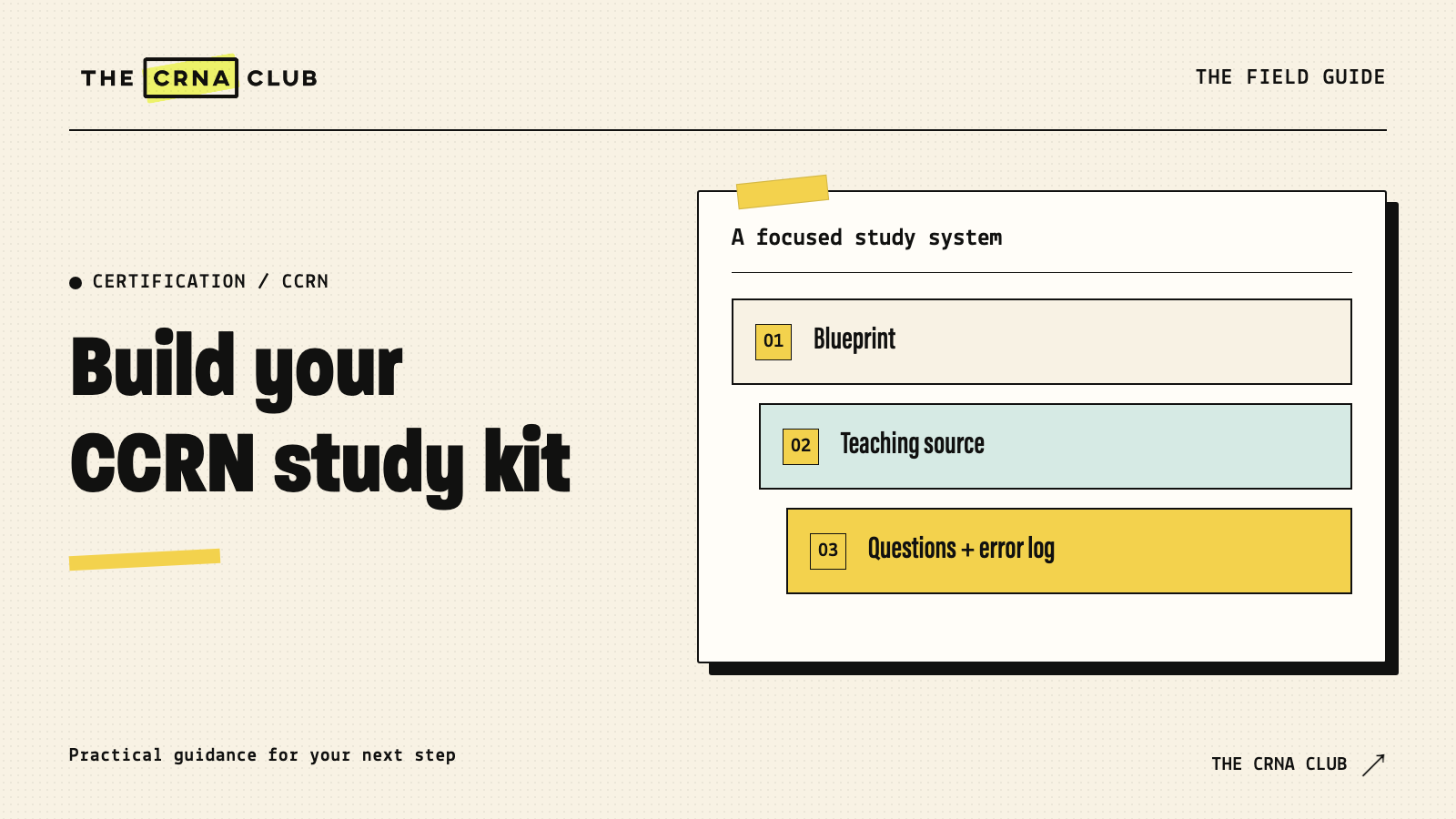
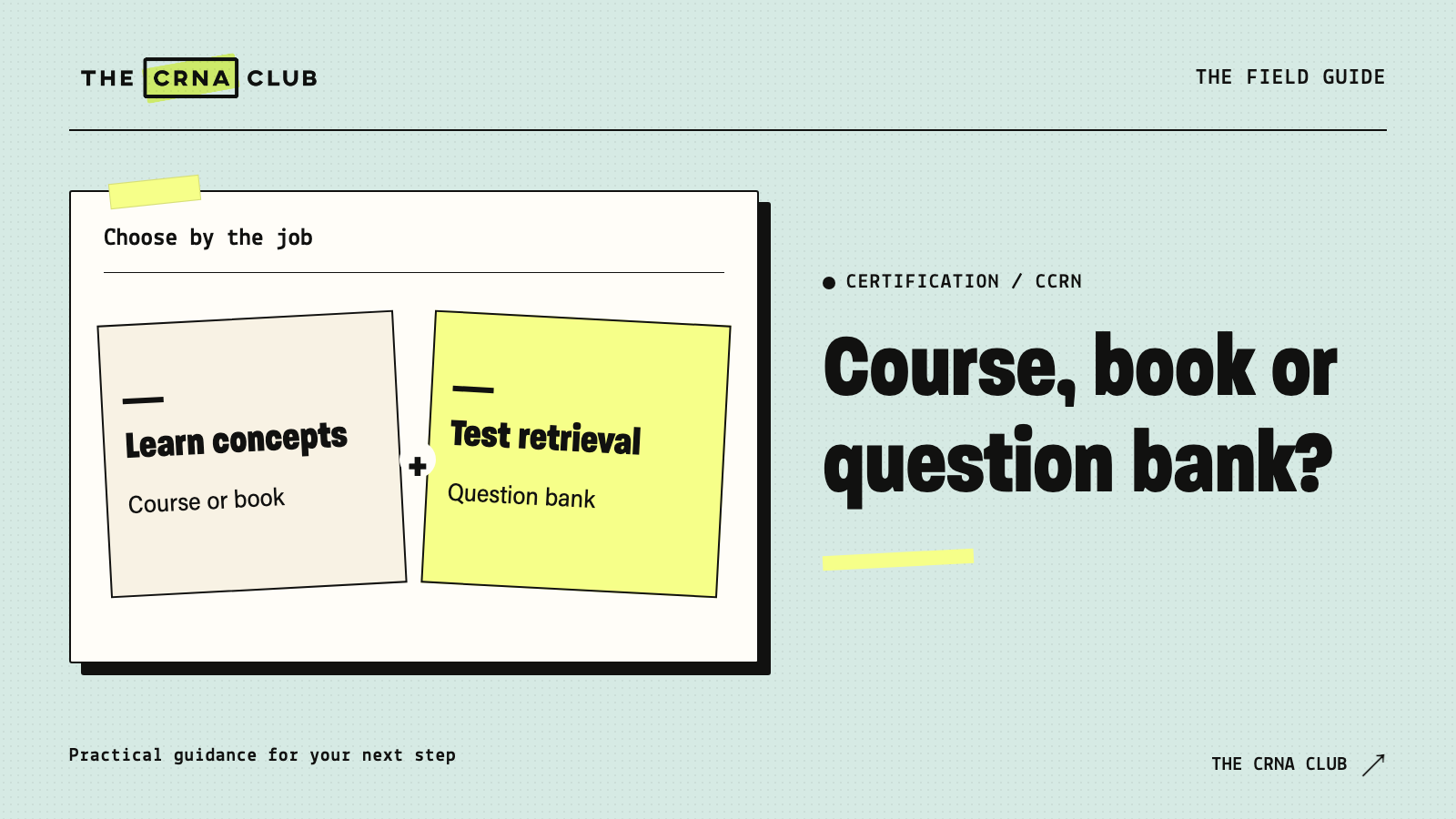
AACN practice questions help you find gaps, but questions alone won’t teach every topic you’re missing. If you keep reading a rationale and thinking, “I still don’t get why,” we suggest the video lessons in our CCRN Toolkit. Use the teaching to understand the concept, then return to practice.
Our toolkit includes a CCRN planner and practice questions too. You have somewhere to put the next lesson on your calendar instead of hoping another question set will explain it.
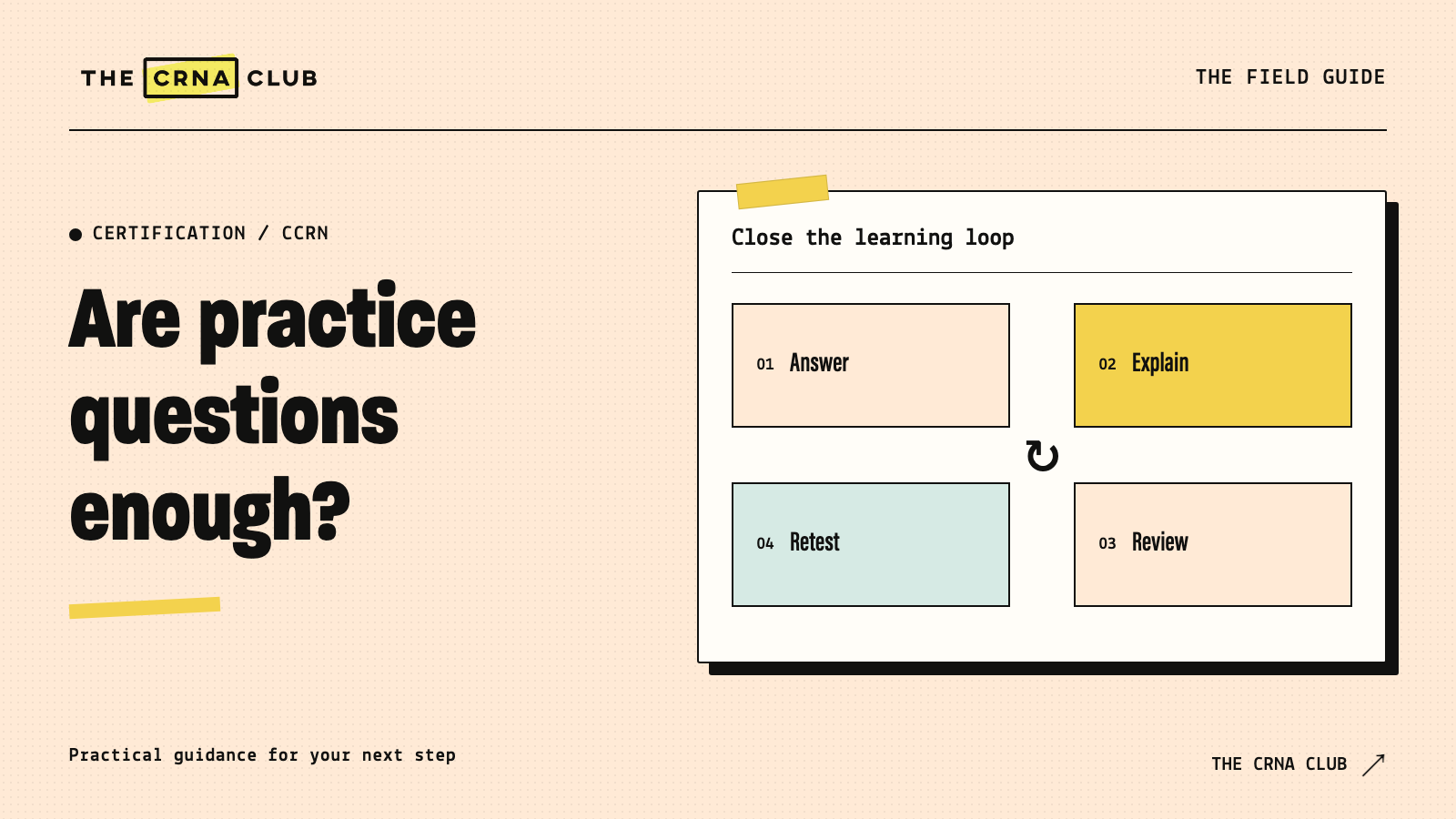
You don’t need to abandon useful AACN practice. Keep using it. The change is what you do after a missed question.
When are AACN practice questions useful?
Practice questions help you assess your knowledge and work through decisions. Their explanations provide feedback after an attempt. They also show where your next study session belongs. You get more from them when you examine why you chose an answer and then address the underlying issue before returning to practice.
AACN describes its practice questions as a way to identify strengths and areas for further study. The same guidance discusses references and review options. It doesn’t say completing a particular bank guarantees a passing examination result.
Say you miss a renal question because you don’t understand the process behind it. You read the answer and recognize the words. But when you close it, you still can’t explain why the patient findings fit. That’s the part to study before starting another set.
Go to the relevant renal lesson and work through the explanation. Then answer the question in your own words without the choices. Try a different example later. You want to know whether you understand the process when the wording changes.
How do you decide whether questions alone are meeting your needs?
After a practice session, choose several uncertain items and explain the relevant concept without the choices visible. Describe why the correct answer fits and which detail rules out the strongest alternative. If you repeatedly need the rationale to finish your explanation, schedule teaching on those topics.
Use this as a personal study check, not a validated readiness score. You are looking for patterns worth investigating.
-
You know the concept but misread timing: Slow down and practice identifying the task in the stem.
-
You recognize a term but cannot explain it: Read or watch a focused explanation, then retrieve it.
-
You explain the correct choice only after seeing it: Return later without the choices and explain the decision again.
-
You cannot distinguish two plausible options: Compare their indications, mechanisms or the missing discriminating finding.
-
You reason clearly through unfamiliar examples: Continue mixed practice and check coverage elsewhere.
The labels describe study needs. They don’t diagnose why you will pass or fail. Several problems might appear in the same session, and a small sample won’t tell you everything.
What should you do when an AACN rationale still doesn’t make sense?
Write the exact step you don’t understand, use the relevant lesson and then try a different question. Don’t keep rereading the same final answer. You need to see whether you explain the connection without the original choices, including when the numbers or patient details change.
Use this original hypothetical calculation exercise, not an AACN question: cardiac output is 4 liters per minute and body surface area is 2 square meters. What is cardiac index? You choose 4 because you treat output and index as the same number. The correct calculation is 4 divided by 2, giving 2 liters per minute per square meter.
That mistake gives you something specific to learn. Use our CCRN hemodynamics teaching, including PA Catheter and Hemodynamic Profiles, to review what the measurements represent. The relationship to check is cardiac index equals cardiac output divided by body surface area. Close the teaching and explain why body size belongs in that calculation.
| Your review card | What to write for this example |
|---|---|
| What you misunderstood | I used cardiac output as though it were already cardiac index |
| Corrected explanation | Divide output by body surface area and keep the unit: liters per minute per square meter |
| Check with the lesson closed | Explain why equal outputs need not give equal indices when body sizes differ |
| Fresh question later | Output is 6 liters per minute and body surface area is 2 square meters. Calculate the index and explain the unit |
For the fresh question, 6 divided by 2 gives 3 liters per minute per square meter. Explain the relationship before looking at that answer. These calculations check one concept. They don’t identify a clinical diagnosis or treatment from the result alone.
If you still can’t explain the denominator, return to that step or ask an educator about it. If you explain it clearly, move to a different example rather than repeatedly proving you remember the first answer. Put the next check in your toolkit planner.
Our hemodynamics and perfusion guide also helps with the broader pressure-and-flow foundation.
How do you use questions without turning the bank into a memory exercise?
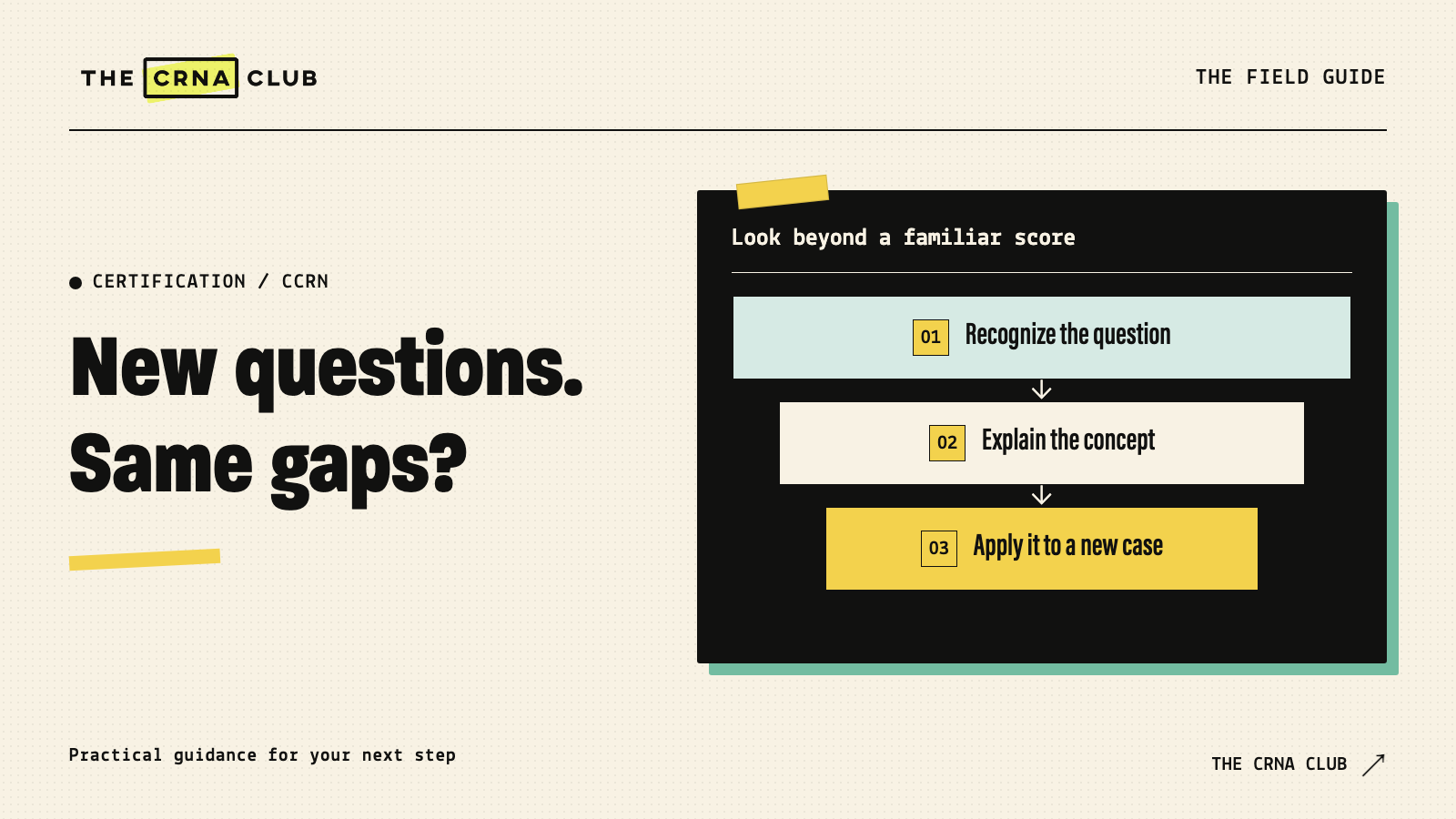
Separate attempts meant for learning from attempts meant to check your progress. During learning, revisit missed concepts and use explanations freely. During a progress check, use questions you haven’t recently reviewed and explain uncertain decisions before opening the answers. Record familiar and unfamiliar results separately.
Suppose you repeat a thirty-question set and move from eighteen correct to twenty-seven. That might reflect learning, answer memory or both. The number alone won’t separate them.
A week later, you attempt a fresh set covering related concepts. You explain your reasoning before reviewing. Several previously difficult connections now make sense, while one remains unclear. That second session gives you a more useful next task than another immediate attempt at the original thirty.
Don’t delete all repeated questions from your plan. They help with retrieval and correction. Label their purpose honestly so a familiar score doesn’t become your only reason to stop studying.
Should you use every question before reviewing the content?
You don’t need to exhaust a bank to earn permission to address a gap. Use enough diagnostic practice to identify a useful starting point, then alternate focused teaching with application. If you spend every available hour answering, the learning work keeps moving to a tomorrow you never schedule.
A hypothetical four-hour study week might include a short mixed diagnostic, a focused lesson on its largest gap, review of uncertain decisions and a later fresh check. The balance changes when you understand the material but need timing practice.
There isn’t one required question count or hour split for every nurse. Your clinical background, baseline knowledge and available time differ from the person whose plan you found online.
Also keep some practice available for later review. Completing everything early and repeating the same material for weeks makes it harder to interpret changes in performance.
What if your practice results differ across resources?
Different question sets cover different material and use different wording. Treat a discrepancy as something to investigate. Check whether the questions were fresh, how topics were distributed and whether your reasoning held up. Don’t average unrelated scores and call the result your predicted examination performance.
Two hypothetical sessions illustrate the problem. On Monday you repeat twenty familiar cardiac questions after reviewing their explanations. On Thursday you attempt forty unfamiliar mixed questions after a tiring workday. Comparing the percentages without those details tells you very little.
Write down the conditions beside each result: topic mix, familiarity, timed or untimed, and whether you reviewed explanations during the attempt. You don’t need an elaborate spreadsheet. Four short notes are enough to stop unlike sessions from looking identical.
If a clinical explanation appears inconsistent, check a current authoritative reference. A question bank’s answer key deserves scrutiny when it conflicts with current evidence. Guessing which source sounds more confident won’t resolve the issue.
What should you check about the exam itself?
Use the official handbook and applicable plan to check examination scope, format and policies. Your practice resource is a preparation tool. It doesn’t replace those documents or the eligibility requirements for the credential you intend to earn.
AACN’s certification FAQ links the relevant handbook and explains the population-specific credential structure. Make sure your resource matches your clinical population and examination, especially if a colleague recommends materials prepared for a different group.
Don’t build a plan around recalled examination questions. You want to understand the outline and practice applying that knowledge, not search for someone else’s remembered test items.
And if the reason you are rushing is a CRNA application deadline, check the program’s requirement directly. Our required-versus-recommended CCRN guide helps frame that separate decision.
How do you choose the next study session after practice?
End with one concrete assignment. “Do better on renal” leaves you staring at the same dashboard tomorrow. “Explain this process without answer choices, then check a new example” gives the next session a starting point.
Choose the gap with enough impact to justify your time, but keep coverage in view. Spending the whole week fixing one fascinating concept while ignoring several unfamiliar areas creates a different problem.
If questions keep showing the same gap, change the learning task. Try a clearer explanation, a diagram from memory or a discussion with an educator. Repeating an unsuccessful approach more quickly doesn’t tell you why it isn’t working.
Before closing the bank, write the next topic on your calendar. Make the assignment small enough to finish during the next available session.
If the explanations are the missing piece, try our CCRN review through the seven-day membership trial. Bring one topic you keep missing. Work through the lesson and then check whether a new practice question makes more sense. That’s a useful way to try the platform.
Our Final Thoughts
Keep your practice questions, but let them change what you study next. A repeated miss deserves an explanation and another try later. Finishing the bank feels good. Understanding a concept you couldn’t explain last week tells you what improved.
Take the Next Step
If practice keeps revealing concepts you need explained, explore the CCRN Toolkit. It combines CCRN review, a CCRN quiz bank and a CCRN planner. Use the teaching for the gaps you identify, then return to practice to check your understanding.