Can ICU experience replace studying for the CCRN?
Sachi, CRNA
CRNA
In This Article (11 sections)
- What does bedside experience contribute to studying?
- Why do experienced nurses still find unfamiliar content?
- How do you test your existing knowledge before choosing a review plan?
- What would two different preparation plans look like?
- Does knowing unit routines help with clinical questions?
- How do you use patient stories without relying on anecdotes as evidence?
- Does eligibility mean you are ready to test?
- How much review do you need when you already have experience?
- How does this fit with applying to CRNA school?
- Our Final Thoughts
- Take the Next Step
Your ICU experience helps with the CCRN, but check your knowledge before deciding to skip studying. You might explain familiar patients well and still find whole sections outside your usual assignments. Use the current outline and unfamiliar questions to find those areas.
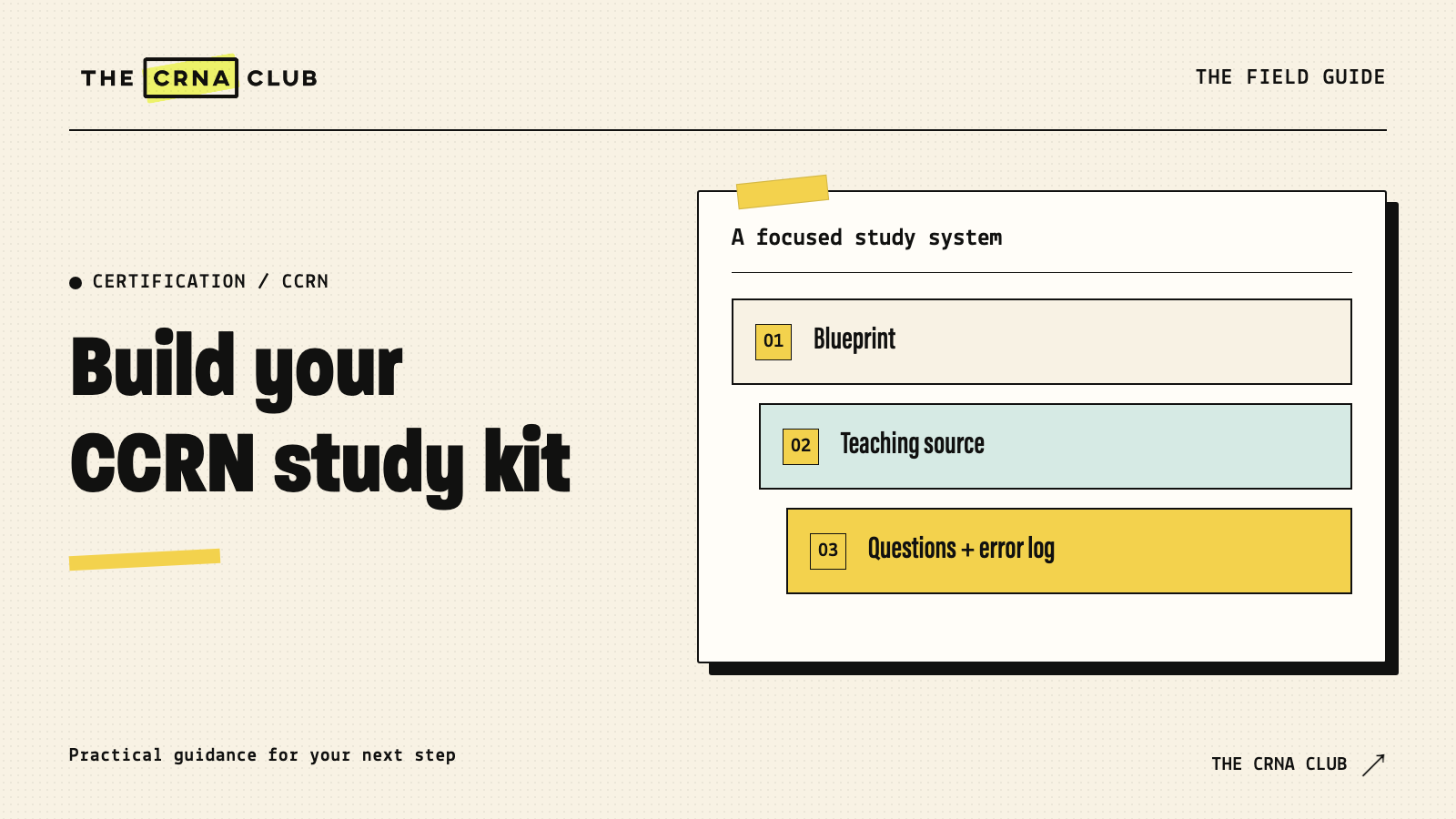
We suggest our CCRN Toolkit for the review you actually need. Use the video lessons for missing explanations, practice questions to check them, and the planner to fit focused study around work. You don’t have to start by relearning everything you already know.
You care for sick patients every week. So why does a question about a familiar condition still take so much thought? Sometimes you’re being asked to explain a step you’ve been doing automatically.
What does bedside experience contribute to studying?
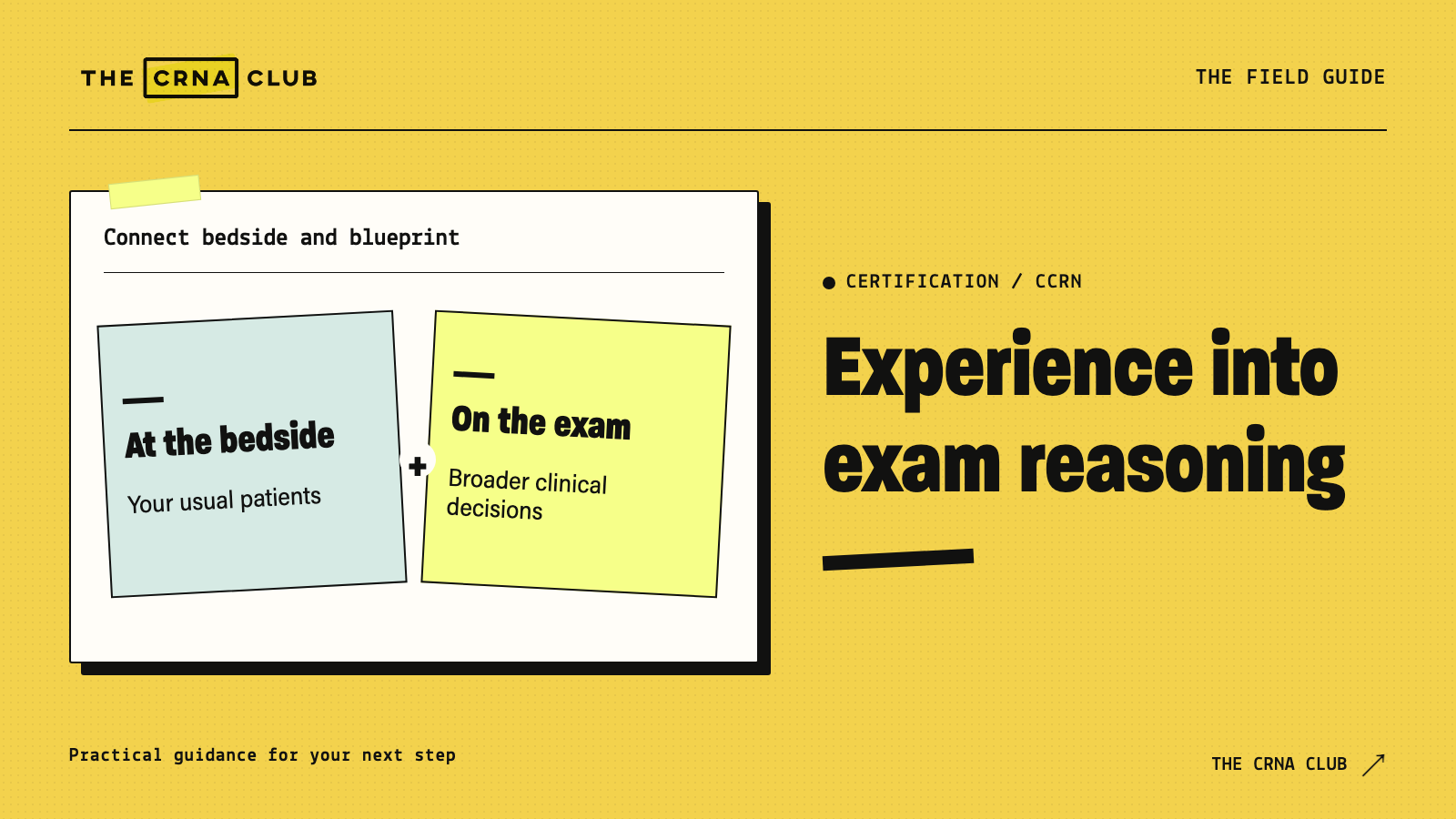
Bedside experience gives you real examples, context for findings and opportunities to connect decisions with a patient’s response. Use those examples actively when reviewing. Explain the reason behind a familiar choice, what information supported it and how a different finding would change your thinking.
A familiar routine is a useful starting point, but pause when your explanation becomes “that’s how we do it.” What problem does the action address? What information tells you it fits? What would make you reconsider?
Those questions turn experience into review material. You aren’t studying from zero. You are checking which connections you explain independently and which ones have become shorthand.
Our CCRN overview describes the broader examination context. Keep that scope beside your clinical examples so familiar work doesn’t become your only source of coverage.
Why do experienced nurses still find unfamiliar content?
No single patient mix exposes every nurse to every topic equally. Assignments, unit populations and roles shape what you see. Experience also changes over time, so something you encountered years ago deserves another explanation check before assuming it remains easy to retrieve.
AACN’s preparation guidance recommends self-assessment and review of problems you don’t see often. It gives you a practical reason to look beyond the diagnoses appearing most frequently on your own unit.
Consider two hypothetical nurses with the same number of ICU years. One has a narrow, specialized patient mix and deep experience in those conditions. The other sees a wider range but has less repeated exposure to a few complex situations. Their review needs overlap without being identical.
Counting years doesn’t identify those differences. A topic-by-topic check and unfamiliar practice give you a much clearer starting point.
How do you test your existing knowledge before choosing a review plan?
Choose a few topics across the AACN outline and explain them without notes. Then try unfamiliar questions. Write where your explanation gets unclear. That tells you which CCRN lessons to use first. Calling yourself experienced or inexperienced won’t give tomorrow’s session the same useful direction.
Try a personal review exercise. Select one familiar patient problem and one you rarely encounter. For each, write what changes in the patient, which findings support your interpretation and what information helps choose between plausible next steps.
Don’t grade yourself on polished wording. You are looking for missing connections. “I know the intervention but cannot explain the reason” is useful information.
Check your explanation against the relevant lesson or a clinical reference. If it holds up, move on and revisit it later. If you realize you’ve skipped a step, study that step. We suggest using your existing knowledge to focus the review, rather than treating every chapter as equally unfamiliar.
What would two different preparation plans look like?
Let the identified gaps shape the plan. An experienced nurse with clear explanations across much of the outline might prioritize targeted repair and unfamiliar practice. A nurse finding several broad unfamiliar areas needs more teaching time. Neither should copy a plan based only on someone else’s years in ICU.
-
Frequent exposure and a clear explanation: Use fresh application and periodic retrieval. Familiar work doesn’t guarantee every related answer.
-
Frequent exposure but a weak explanation: Review the mechanism behind the routine. More years alone won’t necessarily supply the missing reasoning.
-
Little exposure and little understanding: Start with focused teaching, then manageable practice. The subject isn’t automatically impossible without changing jobs.
-
Old exposure and uncertain recall: Check a current reference and practice retrieval. Past familiarity doesn’t establish current understanding.
-
Strong content but unclear question interpretation: Practice identifying the requested decision. You don’t need another full content course for every mistake.
These examples are a coaching aid. It doesn’t replace the official outline or claim to predict an examination result. Use it to select a specific activity for the time you have.
Does knowing unit routines help with clinical questions?
Routines help when you understand why they fit the clinical situation. Examination questions supply their own patient details and ask a particular task. Read that task carefully rather than assuming the most familiar action from your workplace is always the answer.
Say you recognize a diagnosis in a question and choose the action your unit uses often. Then you read the rationale and realize the question asked what to assess. You answered from the routine without checking the request. That tells you what to practice next.
Restate the question’s request before choosing. Another hour on the diagnosis won’t necessarily change that reading habit. If you understand the request but can’t explain a finding, that’s when you need the lesson. Work on the problem you actually found.
In another item, the nurse identifies the request correctly but cannot explain a relevant finding. That error needs teaching. Keeping those problems separate helps you use study time for the issue you actually have.
How do you use patient stories without relying on anecdotes as evidence?
Use a de-identified clinical example to practice explaining your reasoning, then check the clinical claims against current credible sources. An experience gives you something to discuss. It doesn’t establish a universal rule or override evidence simply because one patient’s course appeared to support it.
For study, remove identifying details and focus on the concept. Ask what information you had at the time, what else needed assessment and how you interpreted the response.
Be especially careful when a memorable outcome makes one approach feel universally correct. Patients differ, and the details of the teaching case still matter. Explain the relevant context rather than turning the story into a shortcut.
If you find a conflict between a familiar practice explanation and a current reference, investigate it. Bring the specific mechanism or decision to an educator. The goal is to understand the discrepancy, not win an argument between your unit and a book.
Does eligibility mean you are ready to test?
Eligibility establishes whether you meet the certification’s application requirements. It doesn’t establish complete knowledge of every examination topic. Check eligibility accurately, then assess preparation separately. Having qualifying hours gives you a basis to apply, while your explanations and practice help guide the study plan.
AACN’s adult CCRN page defines its current requirements. Use the official details for your role and pathway. Don’t assume every hour in an ICU position automatically has the same eligibility status.
Also avoid turning a calendar estimate into a promise. Overtime, role differences and patient acuity affect what qualifies. If your hours or duties are unclear, seek clarification before applying.
This distinction matters for CRNA planning too. A certification’s eligibility rules and a program’s required clinical experience aren’t interchangeable. Each question needs its own current policy check.
How much review do you need when you already have experience?
Use the work remaining, rather than a preset number of weeks, to guide the answer. Look at current coverage, independent explanations, unfamiliar application and realistic timing. Experienced nurses still need different amounts of review because their backgrounds and gaps differ.
Define a short initial study period and reassess after using it. Did the focused review close the gaps? Did fresh practice reveal broader needs? Do you have enough calendar time for those needs before your planned appointment?
Avoid two extremes: assuming experience removes all need for review, or starting an enormous course from the beginning without checking what you already understand. A diagnostic gives you a reason to choose between focused and broader teaching.
Try our CCRN teaching through the seven-day membership trial with one explanation your self-check found missing. Watch that lesson and then explain the idea yourself. You’ll see whether it helps with the part of the subject your experience hasn’t fully answered.
How does this fit with applying to CRNA school?
Use certification preparation to build clearer explanations of your clinical knowledge, while checking each program’s requirements directly. Passing an examination and describing your patient reasoning are related preparation tasks, but one doesn’t automatically complete the other.
Our CCRN application strategy article helps distinguish a program requirement from your broader plan. Don’t use someone else’s successful application story as proof of a universal credential policy.
Keep a short list of clinical topics you explain more clearly after review. Those are useful starting points when you later practice speaking through your reasoning for interviews.
Our Final Thoughts
Bring your experience into studying, then check the parts it doesn’t fully answer. You already have patient examples to think through. Give the unfamiliar areas and the half-explained familiar routines the teaching they need. Your plan should start with that honest assessment.
Take the Next Step
Use the CCRN Toolkit to build on your experience with focused video review and practice. If you’re ready to organize materials you already own, the free certification planner includes one lifetime free plan around your schedule.