DKA vs. HHS: How Do You Tell Them Apart?
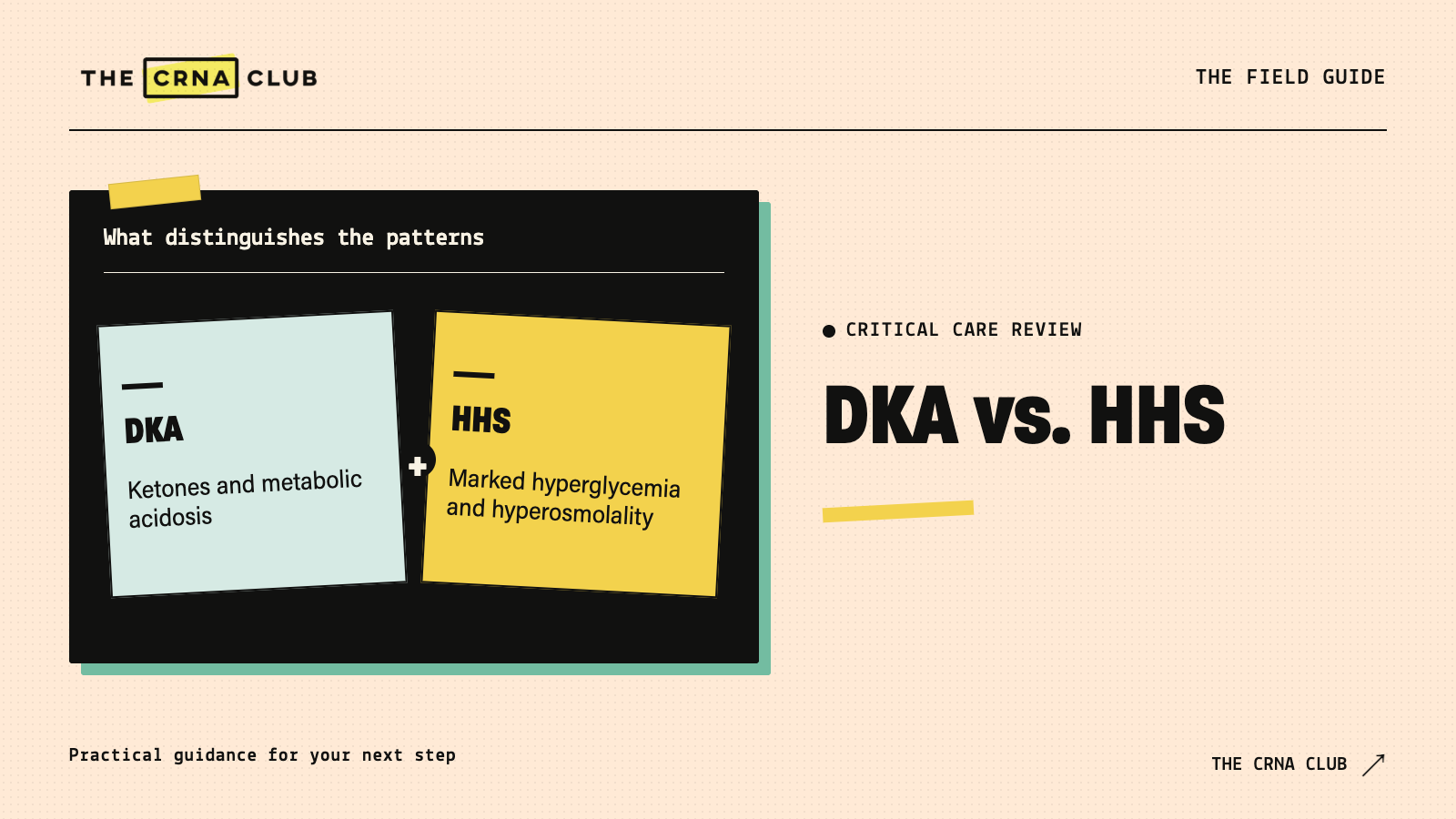
Diabetic ketoacidosis (DKA) centers on substantial ketone production and metabolic acidosis. Hyperglycemic hyperosmolar state (HHS) centers on severe hyperglycemia and hyperosmolality without significant ketoacidosis. Both involve inadequate effective insulin action, fluid losses and electrolyte problems. They also overlap, so a high glucose alone doesn’t tell you which crisis your patient has.
Sachi, CRNA
CRNA
In This Article (9 sections)
- Why does DKA produce ketones while HHS usually does not?
- What are the current adult diagnostic criteria?
- How do you tell the difference in a patient example?
- What if the glucose is not very high?
- Why do potassium and dextrose matter during treatment?
- Does a normal glucose or closed anion gap mean DKA has resolved?
- How would you answer this in a CRNA interview?
- Our Final Thoughts
- Build your endocrine study plan
If you’re preparing for the CCRN, we suggest the CCRN Toolkit to organize your endocrine review and work through lessons and practice questions. For the wider clinical library and interview tools, try The CRNA Club platform free for seven days.
Why does DKA produce ketones while HHS usually does not?
In DKA, insufficient insulin action and increased counterregulatory hormones promote fat breakdown. The liver produces ketone bodies, including beta-hydroxybutyrate. As these acids accumulate, bicarbonate falls and metabolic acidosis develops.
In HHS, enough insulin action generally remains to limit major ketone production, but glucose still rises substantially. Glucose in the urine draws water and electrolytes with it. Continued water loss contributes to hyperosmolality.
Don’t assign the diagnosis from diabetes type. DKA occurs in type 1 or type 2 diabetes, and presentations vary. The 2026 ADA hospital standards direct readers to the updated adult hyperglycemic-crisis consensus for detailed diagnosis and management.
What are the current adult diagnostic criteria?
The 2024 international consensus report requires all three DKA components:
- Diabetes or hyperglycemia: glucose at least 200 mg/dL, or a prior diabetes diagnosis regardless of the presenting glucose.
- Ketosis: beta-hydroxybutyrate at least 3.0 mmol/L, or urine ketones of 2+ or greater.
- Acidosis: pH below 7.3, bicarbonate below 18 mmol/L, or both.
For HHS, all four components are required:
- Glucose at least 600 mg/dL.
- Effective serum osmolality above 300 mOsm/kg, or total serum osmolality above 320 mOsm/kg.
- No significant ketonemia: beta-hydroxybutyrate below 3.0 mmol/L, or urine ketones below 2+.
- pH at least 7.3 and bicarbonate at least 15 mmol/L.
These are adult criteria. For a pediatric patient, use pediatric-specific guidance.
When you study, put glucose, ketones and acid-base status beside each other. We suggest using the CCRN Toolkit’s review and questions to practice interpreting a complete lab profile instead of memorizing “very high sugar equals HHS.”
How do you tell the difference in a patient example?
Compare these hypothetical adult presentations:
| Finding | Example A | Example B |
|---|---|---|
| Glucose | 280 mg/dL | 780 mg/dL |
| Beta-hydroxybutyrate | 5.0 mmol/L | 0.8 mmol/L |
| pH | 7.22 | 7.36 |
| Bicarbonate | 13 mmol/L | 22 mmol/L |
| Effective osmolality | Not provided | 322 mOsm/kg |
Example A meets the listed DKA criteria. The glucose exceeds 200, the ketone concentration exceeds 3.0, and there is metabolic acidosis. You don’t need glucose of 600 or more to recognize DKA.
Example B meets the listed HHS criteria. Severe hyperglycemia and hyperosmolality occur with beta-hydroxybutyrate below 3.0 and without the specified acidosis.
Now change Example B’s ketones to 5.0 and pH to 7.20. You need to recognize the combination of hyperosmolality and ketoacidosis. Calling it uncomplicated HHS would leave out a major part of the problem.
What if the glucose is not very high?
Consider euglycemic DKA when a patient has substantial ketones and acidosis despite a glucose below the usual hyperglycemic range. A history of diabetes and the other DKA criteria still matter.
SGLT2 inhibitor use is one associated circumstance. Reduced intake, pregnancy and other clinical situations also affect the presentation. Ask about medications and the recent history instead of ruling out DKA from glucose alone.
The 2026 ADA hyperglycemic-crisis guidance supports recognizing these crises from the clinical presentation and relevant testing. Deep breathing or nausea should lead you back to the full assessment, especially when the glucose looks less dramatic than expected.
Why do potassium and dextrose matter during treatment?
Serum potassium and total-body potassium answer different questions. Urinary losses deplete total-body potassium, while insulin deficiency and shifts between compartments affect the measured serum value. Starting insulin moves potassium into cells, so a falling glucose doesn’t mean the electrolyte risk is over.
Dextrose also has a purpose during DKA treatment. Glucose often improves before ketonemia and acidosis resolve. Adding dextrose at the appropriate stage permits continued insulin treatment while reducing hypoglycemia risk. The fluid composition and insulin plan still depend on the patient’s actual results and clinical state.
For your study notes, connect each treatment component to its purpose:
- Fluids address circulatory and water deficits.
- Potassium assessment and replacement address deficits and treatment-related shifts.
- Insulin addresses inadequate insulin action and suppresses ketone production.
- Dextrose supports continued insulin when glucose falls before the crisis resolves.
Check potassium before starting insulin. Significant hypokalemia requires potassium replacement and delays insulin under the treatment protocol. These points explain the components of care; the clinical protocol determines their timing and doses.
Does a normal glucose or closed anion gap mean DKA has resolved?
Glucose improvement alone is insufficient. The consensus defines DKA resolution using plasma ketones below 0.6 mmol/L and either venous pH at least 7.3 or bicarbonate at least 18 mmol/L. Glucose should ideally also be below 200 mg/dL.
It specifically advises against using the anion gap as the resolution criterion. For example, hyperchloremic acidosis after fluid treatment complicates interpretation. Urine ketones also lag behind changes in beta-hydroxybutyrate. Those details explain why one improving number doesn’t settle whether treatment is complete.
How would you answer this in a CRNA interview?
Use this original prompt: “Your patient’s glucose is now 180 mg/dL. Why might insulin still be needed?”
“I’d review whether ketoacidosis has resolved. Glucose often falls before the ketones and acidosis clear. Dextrose may be needed to permit continued insulin while avoiding hypoglycemia, and I’d keep following potassium because insulin shifts it into cells.”
We suggest practicing the mechanism and then a changed lab profile. For more reasoning practice, use our worked CRNA interview pathophysiology cases and the Mock Interview Lab.
Our Final Thoughts
When you see a high glucose, ask about ketones, pH and osmolality before naming the crisis. When glucose improves, ask what still needs to resolve. Those two habits move your explanation beyond a memorized comparison chart.
Build your endocrine study plan
Use the CCRN Toolkit to organize review and practice applying what you’ve learned. For clinical review alongside interview preparation, start the seven-day platform trial.