Do I need a CCRN review course, a book, a question bank, or all three?
Sachi, CRNA
CRNA
In This Article (10 sections)
- What does each format do well?
- How do you know whether you need a course?
- When is a book a sensible main resource?
- When should questions take up more of your study time?
- Do you need a CCRN course, a book or just more questions?
- How do you avoid paying twice for the same thing?
- How should you use two formats together?
- What about preparing for CRNA school at the same time?
- Our Final Thoughts
- Take the Next Step
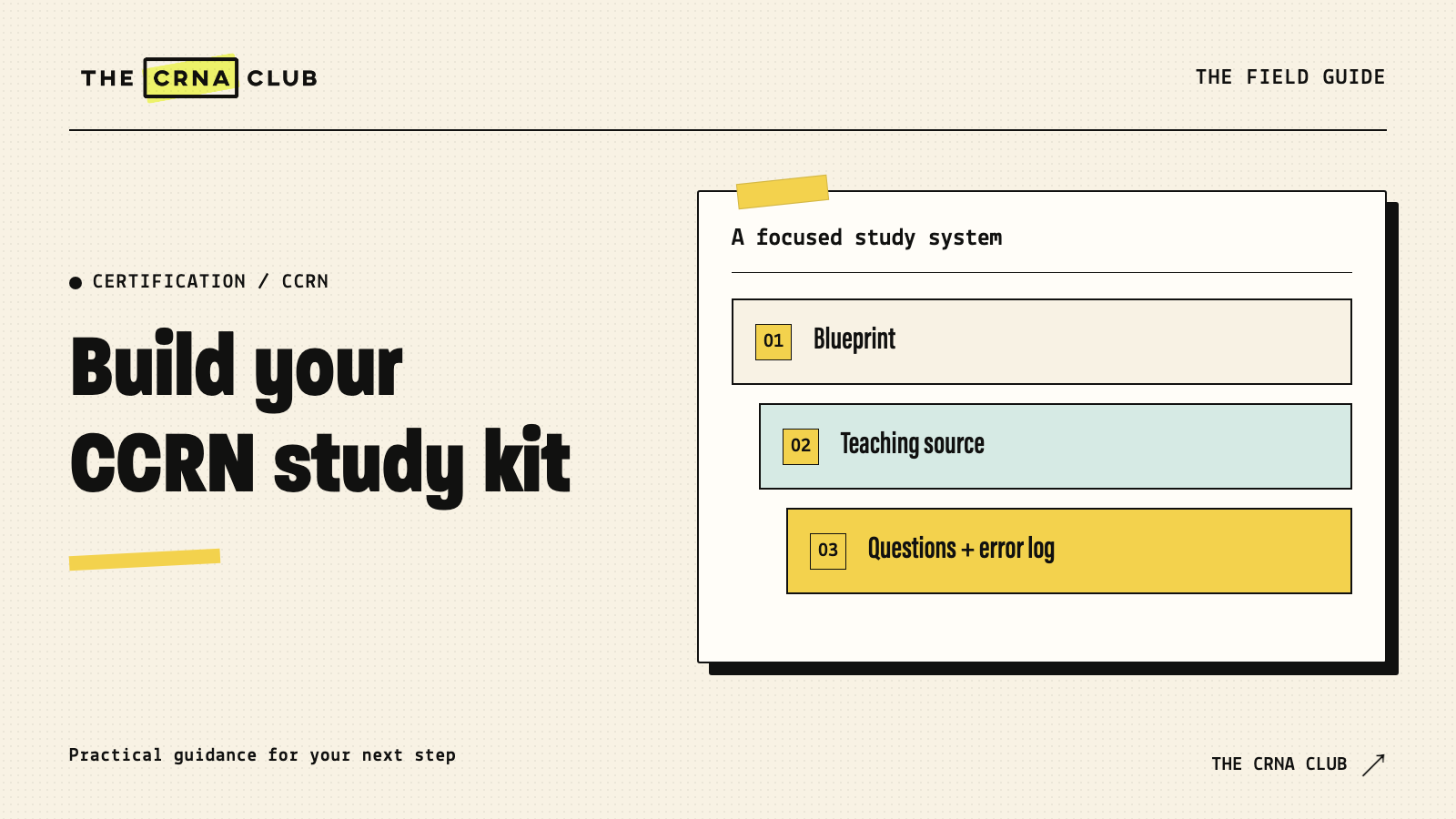
You don’t need to buy a CCRN course, a book and a separate question bank automatically. We suggest our CCRN Toolkit if you want video teaching, CCRN practice questions and a study planner together. Add a book when you want another explanation or a reference you prefer reading.
The choice depends on what happens when you study. Do you understand the lesson but struggle to apply it? You need practice. Are you reading the same rationale without understanding why? You need more teaching. Buying another format helps when it solves the problem you’re having.
Let’s look at when each format is useful, and how to put them together without spending your whole week reviewing the same topic three times.
What does each format do well?
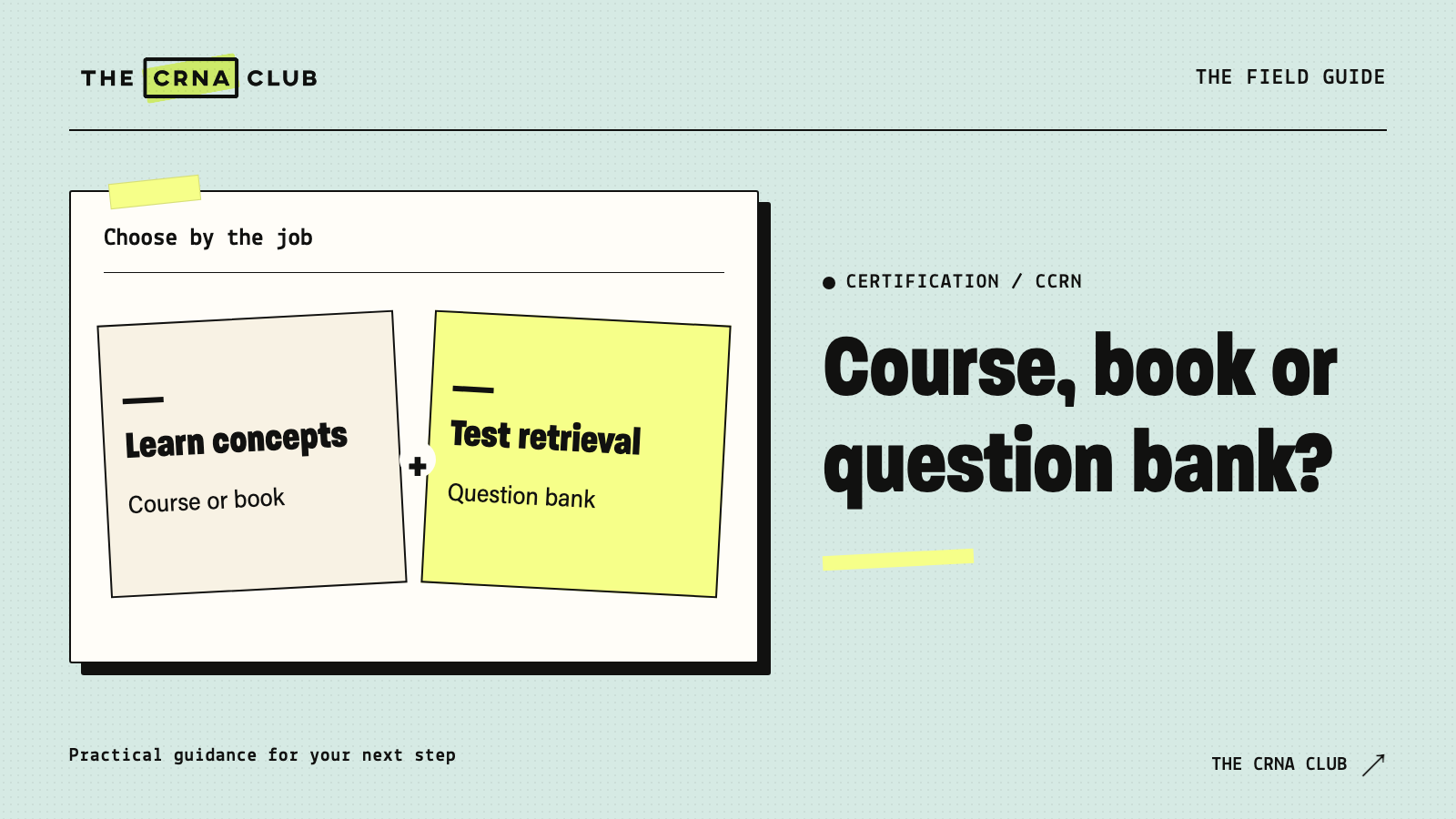
A book gives you an explanation you read and return to. A video course walks you through it. Practice questions ask you to use what you’ve learned. We include teaching and questions in the CCRN Toolkit because understanding an explanation and choosing an answer yourself are both part of preparation.
AACN’s CCRN preparation page discusses several options and makes clear a specific preparation product isn’t required for eligibility. You get to choose the approach. Start by checking whether you need more explanation, more practice or a workable sequence.
| Format | A good reason to choose it | A limitation to plan around |
|---|---|---|
| Review book, such as Barron’s Adult CCRN Exam Premium by Pat Juarez | You prefer reading explanations and using chapter questions | Close the book and explain the topic so reading also checks what you remember |
| Review course | You need explanations, demonstrations or a sequence you follow reliably | Watching without pausing for retrieval leaves understanding untested |
| Question bank, such as the toolkit questions or AACN practice questions | You need practice applying knowledge and identifying gaps | A short rationale isn’t always enough teaching for a subject you haven’t learned |
| Existing clinical reference | You need to investigate one specific mechanism or discrepancy | Reading an entire reference cover to cover rarely fits a focused exam calendar |
These are practical tradeoffs. They aren’t claims one format makes someone a better learner. Look at what you do with the material after opening it.
How do you know whether you need a course?
Use a course when hearing the explanation helps you understand something reading hasn’t cleared up. Say you recognize a hemodynamic pattern but can’t explain why the pressures change. Watch the relevant lesson, pause and explain each change yourself. You should finish with a clearer explanation, rather than another completed video on a checklist.
Try this with our CCRN review:
- Choose the topic you keep missing in practice.
- Before the lesson, write the question you want answered.
- Afterward, close it and sketch or explain the answer from memory.
- If you still can’t connect the findings, go back to that part.
The pause matters as much as pressing play.
If you already explain that topic clearly, move to unfamiliar practice instead of watching another hour because the presenter is easy to follow. Use the course for the part you need help understanding.
Before buying, ask how the course is organized, whether it addresses the relevant current blueprint, and whether you have a way to jump back to a missed topic. Also look at access length. A subscription ending halfway through your planned review creates a scheduling problem before you answer a single question.
When is a book a sensible main resource?
If you prefer a book, Barron’s Adult CCRN Exam Premium is one option to consider. Read the section for the topic you’re studying, work through its questions and review the explanations. Keep the current AACN outline beside it to check coverage. You don’t need a second video course simply because you also like reading.
Try a short experiment before committing to a large reading plan. Read a manageable section on an unfamiliar topic. Close the book. Write the main problem, what changes in the patient, and what information helps distinguish it from a similar problem.
Open the section again to check your explanation. If you missed the same connection twice, try another explanation or discuss it with an educator. Don’t spend the entire afternoon rewriting the paragraph more neatly.
A book also works well as a secondary reference. You might learn from a course and use selected pages to check something you missed in practice. Owning the book doesn’t obligate you to read every chapter before your examination.
Check the edition and coverage against the current plan. AACN’s November 2025 revision notice says existing materials remain useful. So an older edition deserves an audit, not an automatic trip to the trash.
When should questions take up more of your study time?
Increase practice when you have enough knowledge to attempt decisions and need to test how well you apply it. Keep space to review explanations and repair gaps. If nearly every question introduces material you don’t understand, return to focused teaching before pushing through another long set.
There isn’t a universal point in the calendar when everyone should stop reviewing and do questions exclusively. Use what happens during practice to guide the next session.
For example, a hypothetical nurse answers a mixed set and identifies several misses from the same unfamiliar area. Her next hour belongs partly to that topic. Another nurse understands the content but repeatedly misses a word indicating timing or priority. That nurse needs slower reading practice and reasoning review.
Both nurses need practice. They need different follow-up work.
Also review uncertain correct answers. If you chose an answer because it looked familiar, explain why it fits before marking the topic complete. A bank becomes less useful as a diagnostic when you remember the question’s wording and answer position.
Do you need a CCRN course, a book or just more questions?
Use this decision process before buying another format:
- Can you explain the topic with your material closed? If no, use teaching first. Keep your book if its explanation helps. Try the relevant video lesson when the page still leaves a connection unclear.
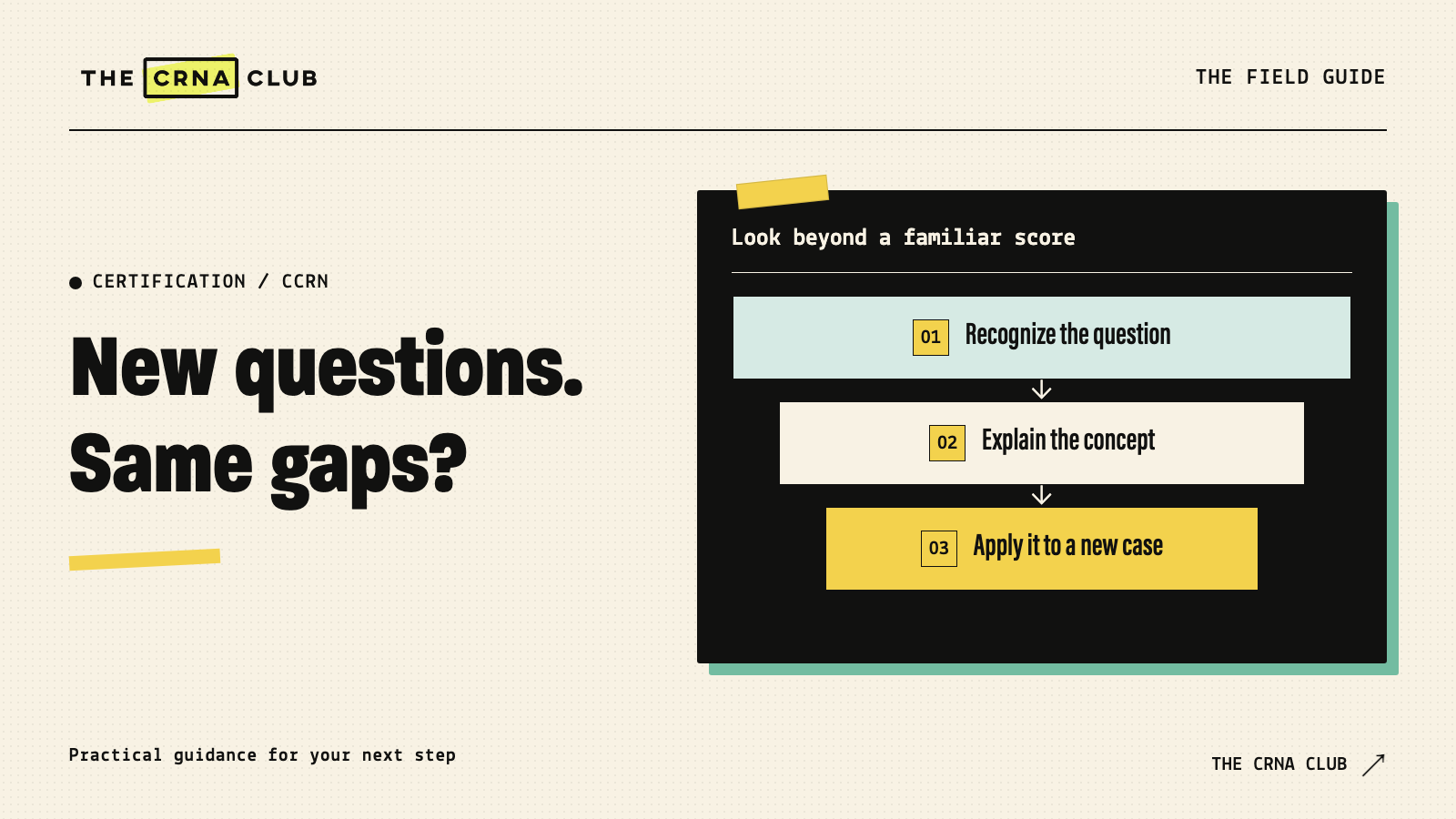
- Can you apply that explanation to an unfamiliar question? If no, examine the mistake. A missed detail needs a different fix from a mechanism you never learned. Use your existing questions and review their rationales before adding a bank.
- Do you have teaching and questions but no time assigned to review? Start with the calendar. Another course won’t create an off-day study block.
For a video-first setup, our CCRN Toolkit combines lessons, questions and a planner. For a reading-first setup, use the useful book and included practice you already own; add video only where it clears up the explanation. If both functions are working, the next purchase can wait.
Try one difficult topic through our seven-day membership trial if you’re deciding whether video teaching fits. Write your question before the lesson, explain it afterward, then check practice. Choose from what helped you learn, rather than a longer feature list.
How do you avoid paying twice for the same thing?
Before you buy a second resource, look at what you already have. Our toolkit includes a CCRN planner, video teaching and questions, so check those before adding separate subscriptions for the same things. If you have a book through work, use it to clear up a particular explanation. You don’t owe every resource a cover-to-cover review.
Check whether a course already includes a question bank. Find out whether the book has explanations or only answer keys. Look at whether two subscriptions use substantially overlapping materials. You don’t need to count individual questions perfectly, but you should understand what you are adding.
Also calculate the time cost. Suppose you have five study hours weekly. A second course requiring four hours of new video each week leaves almost no room to apply anything, review mistakes or revisit the first course.
A cheaper purchase you never use still costs money. A more expensive product isn’t automatically more complete or better suited to you. Choose around a task you need to finish.
How should you use two formats together?
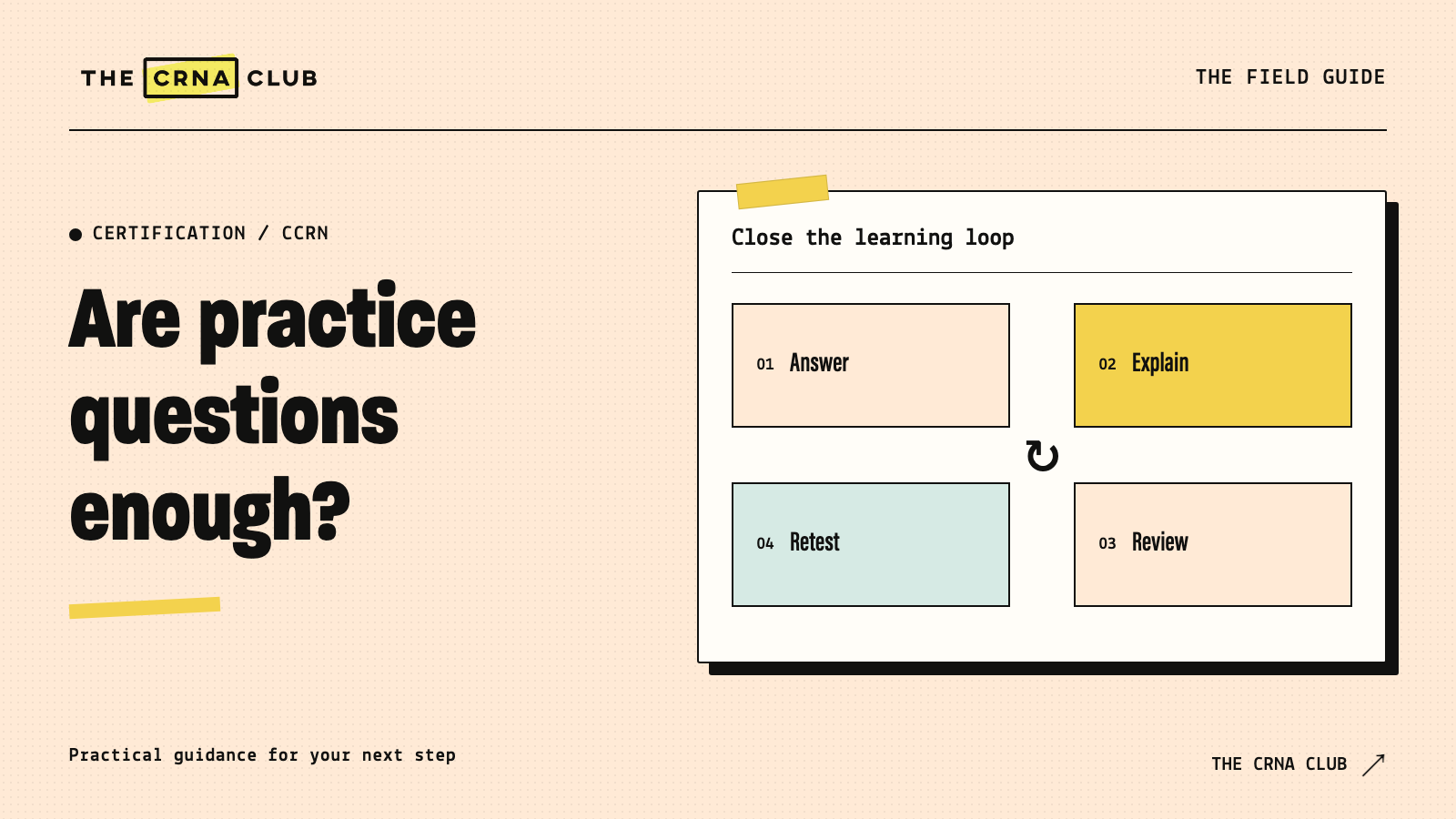
Use the formats together in one session. Try a few questions first. If you don’t understand the main idea, watch the relevant lesson or read that section of your book. Then explain it without looking. Later, try a different question so you find out whether you learned the idea or remembered the first example.
After a difficult lesson or book section, make a few flashcards from the points you still need to recall. Paper cards work, or use Anki if you prefer digital review. Write the answer in your own words and check it against the teaching before saving it. Then use a different practice question to check application.
For example, the book or video explains a measurement. Your card asks what it represents. A practice question then asks you to use it with other patient findings. Each step has a purpose. You don’t have to reread the whole chapter, replay every video and make cards for everything you already understand.
Avoid completing the same topic in three formats automatically. If you understand a lesson, explain it independently and apply it in new practice, move to the next need. Repetition deserves a purpose.
What about preparing for CRNA school at the same time?
Certification preparation and your application calendar need to fit together. If you are choosing between resources because the deadline feels close, check what your target program actually requires. Our CCRN application strategy article helps separate the credential decision from the material purchase.
A new review course won’t finish your essays or obtain a missing recommendation. Give each task a realistic place on the calendar. One manageable preparation approach beats a perfect-looking plan you abandon after the first heavy workweek.
We suggest keeping one main teaching source while you learn how to use it well. Add another explanation when you’re stuck, rather than restarting your preparation every time someone recommends a different book. That leaves more time for the practice and review you came here to do.
Our Final Thoughts
You need teaching you understand and practice you learn from. Those don’t have to come from three separate purchases. Start with an approach you will use this week, then add a resource if a specific gap remains.
Take the Next Step
Start with the CCRN Toolkit for video lessons, CCRN practice questions and a planner. Choose one topic you’re struggling with and use the lesson-to-practice process above. If you want to try the broader platform first, use the seven-day membership trial.