How can I reduce CCRN test anxiety without just doing more questions?
Sachi, CRNA
CRNA
In This Article (11 sections)
- How do you separate an academic gap from an anxiety concern?
- Why doesn’t doing more questions always make you feel better?
- What practice routine helps you understand the testing situation?
- What should you practice when a question feels difficult?
- How can you make the week before testing less chaotic?
- What if you’re anxious because you failed before?
- When should you ask for professional help?
- How do you keep CRNA school from becoming part of every practice question?
- What support fits the preparation problem you identified?
- Our Final Thoughts
- Take the Next Step
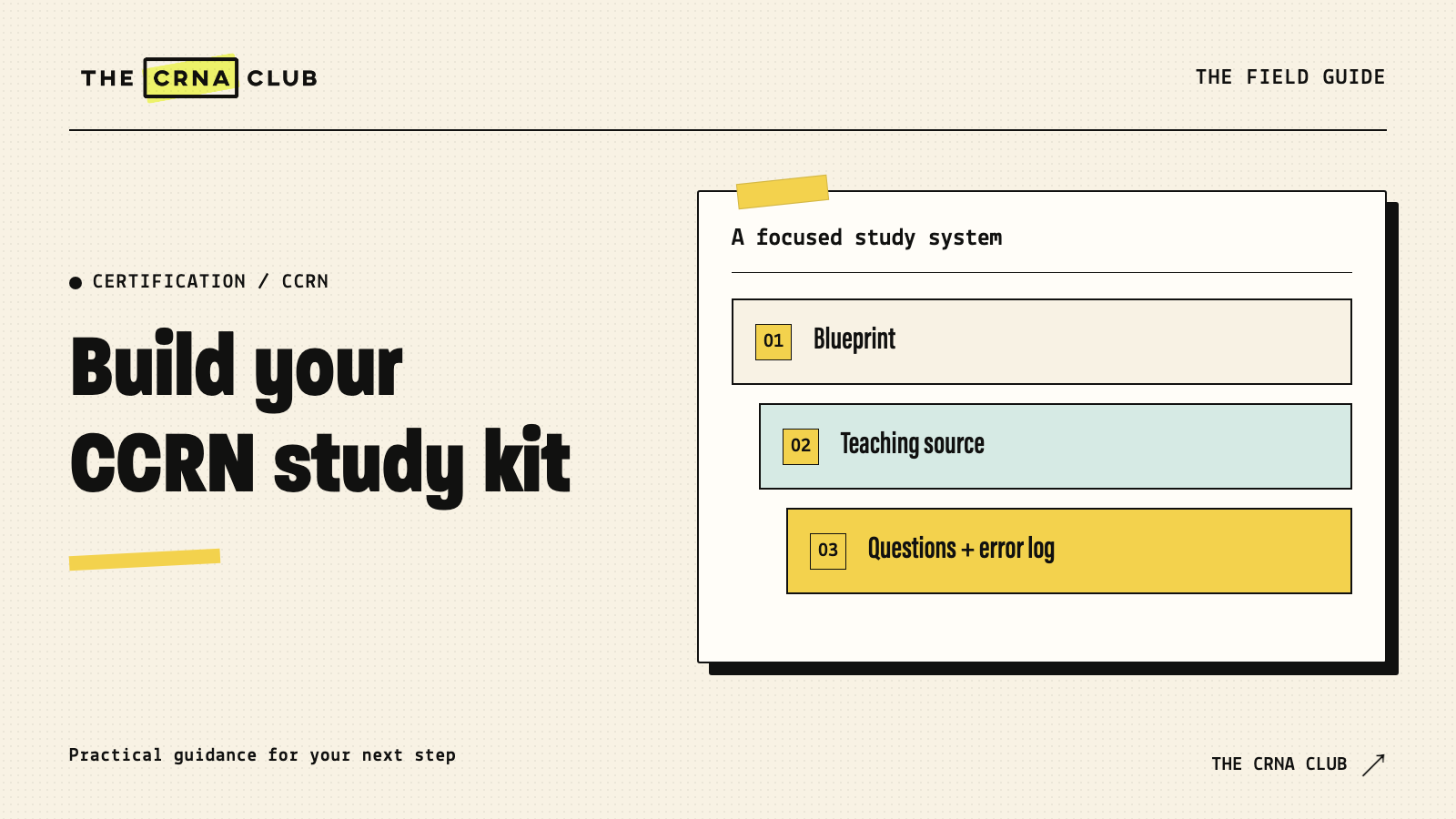
More CCRN questions help when you need practice or a clearer explanation. They don’t automatically settle the worry about what a failed exam would mean. Start by naming what’s difficult: the content, the testing process, your schedule or anxiety affecting life outside studying.
If the immediate problem is a scattered study plan, use our free certification planner. It gives you one lifetime free plan around your dates and workdays. If you need a concept explained, our CCRN Toolkit brings video lessons and questions beside the plan.
Those tools help with preparation. When worry interferes with sleep, work or daily activities, get support from a qualified health professional too. You don’t have to turn every kind of concern into another question set.
How do you separate an academic gap from an anxiety concern?
Write what happened and what you need next. “I don’t understand this concept” points toward teaching. “I understand it during review but worry constantly about failing” raises a different concern. Both sometimes occur together, so don’t assume every mistake proves anxiety or every anxious feeling proves inadequate knowledge.
A personal note might contain:
-
A topic was unfamiliar even without timing: What explanation do I need?
-
I rushed before identifying the task: What short reading routine will I practice?
-
I repeatedly reopened the same score: What decision was I trying to get from the number?
-
Worry interferes with sleep or ordinary tasks: What professional support do I need?
-
Test instructions remain unclear: Which official document answers the practical question?
This worksheet is for organizing observations. It doesn’t diagnose an anxiety disorder or determine treatment. If the concern extends beyond studying, bring it to an appropriate health professional.
Why doesn’t doing more questions always make you feel better?
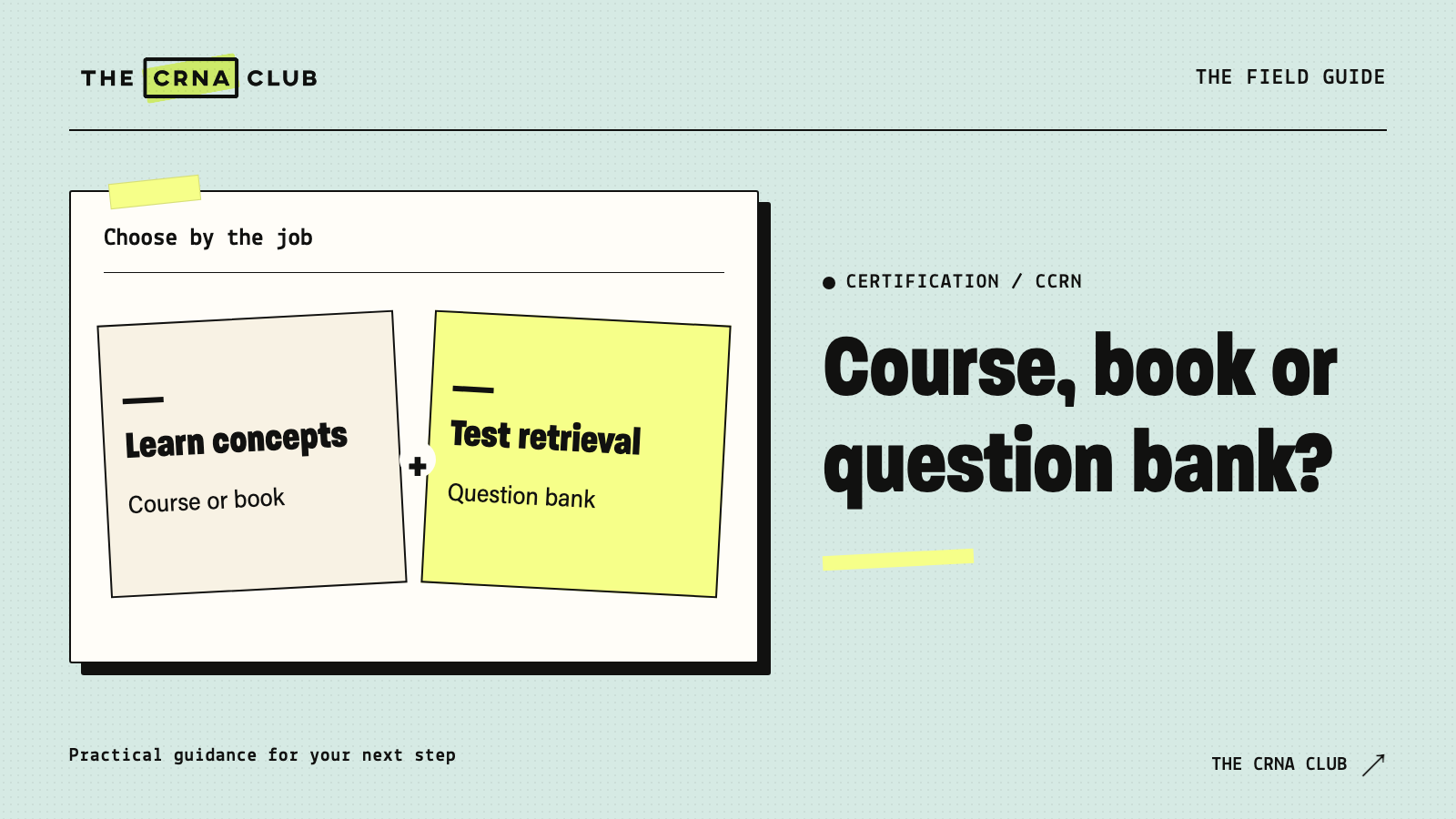
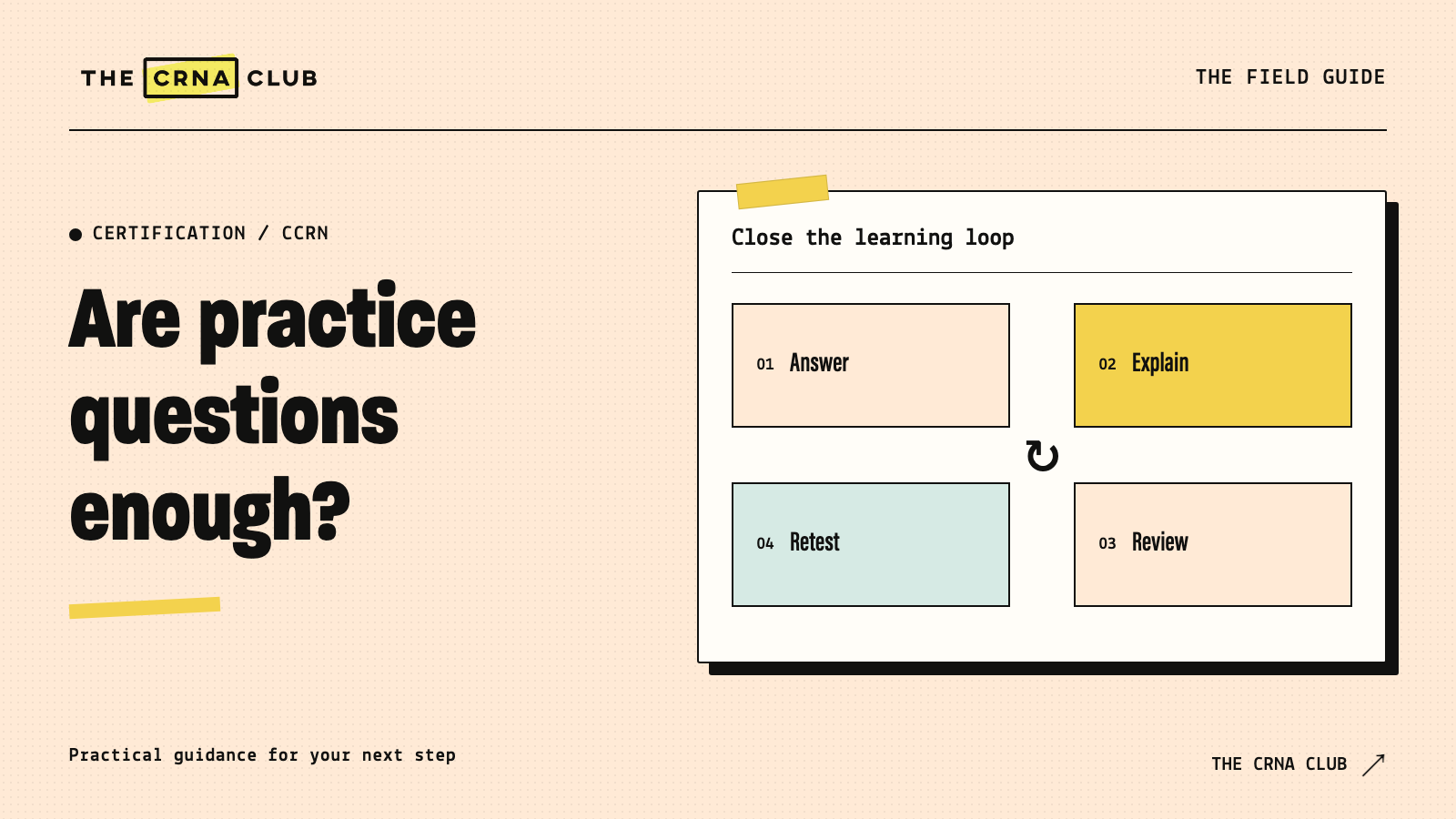
A question set addresses knowledge or practice needs when you review and learn from it. Repeated checking sometimes leaves the underlying worry unchanged, especially when you keep asking the score to promise an outcome. Decide what you want the session to teach you before opening the bank.
Say you repeat a familiar set because the score briefly makes you feel better. Later the worry returns, so you open it again. Ask what you wanted the number to answer. Did you need to check a concept, or were you hoping it would promise the exam will go well? Those need different responses.
Name the concern before choosing another session. If you don’t understand a topic, use the relevant lesson. If the appointment instructions are unclear, read them. If the worry keeps interrupting your life despite preparation, speak with someone qualified to help with that concern.
What practice routine helps you understand the testing situation?
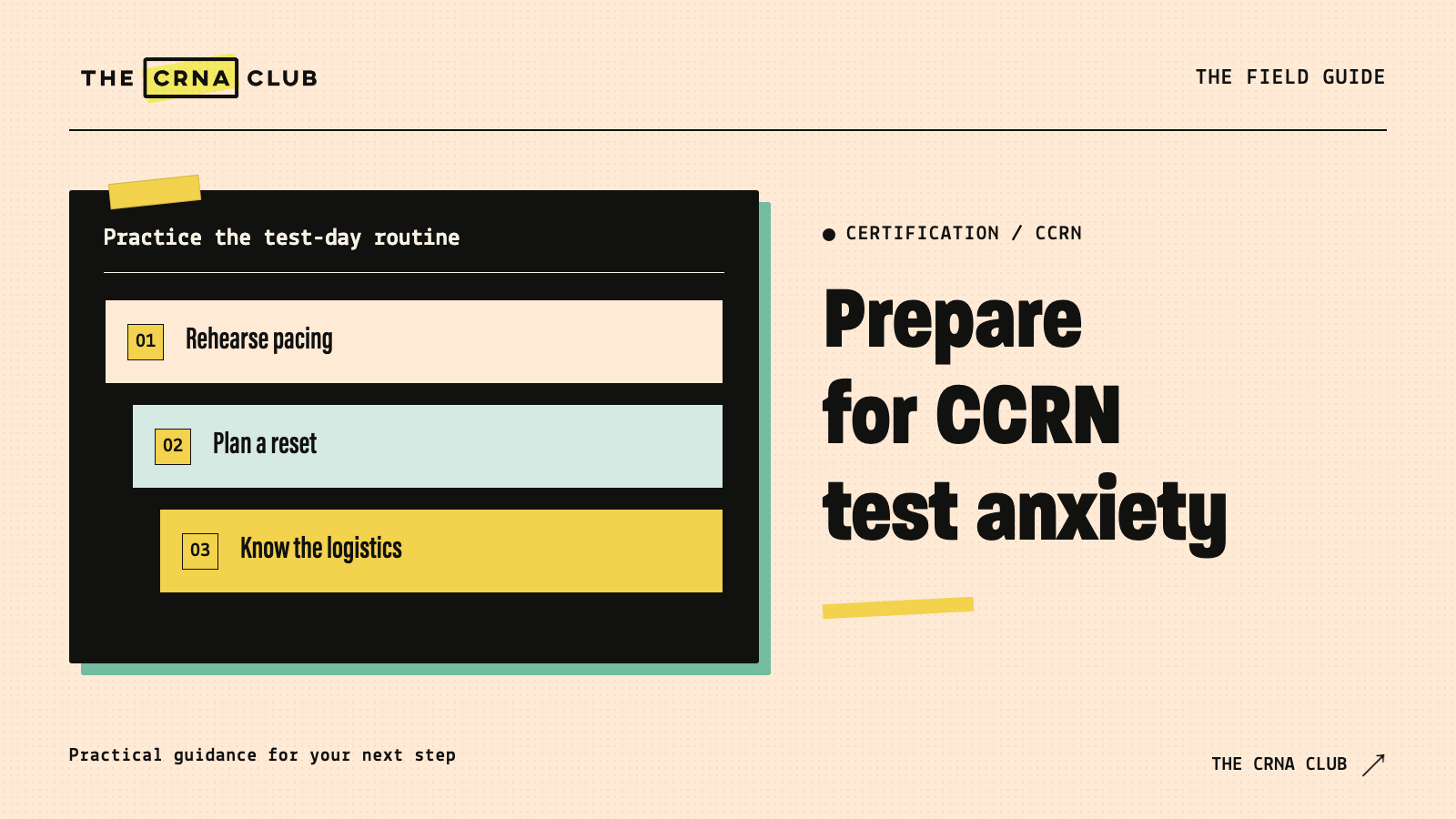
Use a manageable rehearsal to learn how you respond to the task and conditions. Decide its purpose, use suitable materials and review what happened afterward. A practice routine gives you observations about reading, pacing and preparation rather than demanding you feel completely calm before beginning.
The UT Dallas Student Counseling Center’s test-anxiety guidance includes practicing under examination-like conditions. Apply the idea thoughtfully to your preparation rather than treating a practice session as a treatment program.
Start with a block you realistically complete. Keep the conditions clear: timed or untimed, unfamiliar or familiar questions, explanations during or after. Afterward, write where attention or time became difficult.
Then choose a specific adjustment. A content gap needs teaching. Repeated rereading needs a clearer way to identify the request. Confusing practical instructions need an official source. “I must do better next time” doesn’t define the activity.
What should you practice when a question feels difficult?
Read the request, identify the relevant information and explain the decision you are trying to make. If you remain uncertain, follow the examination’s permitted process for moving through items. Practice that routine with study questions so one difficult item doesn’t automatically turn into a judgment about the entire attempt.
Say you can’t distinguish two practice answers. Ask what difference between them the question supplies. If you don’t understand that difference, write the concept down during review and study it. One hard choice tells you something about that task. It doesn’t decide whether you belong in CRNA school.
This isn’t a claim a certain phrase guarantees the right answer. It is a way to make the practice task more specific.
Avoid rules such as never changing an answer or always choosing a particular kind of action. Use the information and reasoning relevant to the item, and review your own decision patterns afterward.
How can you make the week before testing less chaotic?
Finish practical checks, give remaining learning tasks specific appointments and avoid adding a large new preparation project without a defined purpose. Keep ordinary sleep and recovery needs visible. A calendar packed with anxious extra work sometimes leaves little time for the focused tasks you already identified.
Check current instructions for your appointment through the AACN handbook and document page and the information supplied for the booking. Old posts about arrival, identification or appointment changes aren’t the final authority.
Write down what you verified so you don’t need to research the same practical issue repeatedly. If a question remains, seek the official answer while there is time to act.
Use your own remaining gaps for review. Another nurse’s last-week schedule doesn’t account for your shifts, knowledge or responsibilities. Our CCRN overview helps place the remaining work in its broader scope.
What if you’re anxious because you failed before?
Use the previous result as information for a changed preparation plan, while recognizing disappointment and worry deserve attention too. Review the score report and what you will do differently. A previous attempt doesn’t establish every future outcome, and reassurance alone doesn’t replace specific work on the gaps it revealed.
Write what will change this time. If you relied on repeated questions, give the relevant lessons time. If study kept losing out to overtime, use the planner with reliable blocks. A specific change gives you something to try and review instead of asking yourself to feel confident first.
You don’t need to retell the failed attempt to everyone. Choose support from people who help you make useful decisions rather than compare scores or predict your future from one result.
When should you ask for professional help?
Ask for appropriate professional support when anxiety interferes with sleep, work, studying or daily activities, or when your efforts aren’t helping. You don’t need to diagnose yourself first. Study strategies and a membership product aren’t treatment for an anxiety disorder.
NIMH’s guidance on seeking help emphasizes the impact of symptoms on daily life. Use that guidance to start a conversation with a qualified professional when needed.
If you need testing accommodations, use the current official application process and instructions. A peer’s prior accommodation doesn’t establish your eligibility or the documentation required. Check early enough to understand the process before the appointment.
Keep the boundaries clear. An educator helps with a clinical concept. Official certification support answers process questions. A health professional evaluates symptoms and discusses treatment when appropriate.
How do you keep CRNA school from becoming part of every practice question?
Give application planning its own time and evidence. One difficult item doesn’t decide whether you will succeed in every future academic or clinical setting. If a program deadline or credential policy concerns you, verify that specific requirement rather than asking today’s percentage to settle the whole application.
Our CCRN requirement and strategy guide helps separate those questions. School A and School B might have different rules, so use each target program’s current information.
After checking the policy, return to the actual study assignment. “Explain this concept” is a task you complete. “Prove I will be accepted” isn’t a task a practice set answers.
What support fits the preparation problem you identified?
Choose support according to the need. A clinical lesson addresses an explanation gap. A planner helps organize available time. Professional care addresses health concerns. Keeping those roles clear helps you use each resource without expecting it to solve everything.
Try our CCRN teaching and study tools through the seven-day membership trial if you need help organizing review or understanding the material. Choose one actual study problem and use the matching lesson or planner. Keep professional support available for anxiety needing care beyond preparation.
You don’t need a perfect emotional state before taking a useful next step. You need a specific task and appropriate support for the concern actually in front of you.
Our Final Thoughts
Take the worry seriously and make the next action specific. Learn the concept when knowledge is missing, verify the instructions when the process is unclear and seek professional support when anxiety affects daily life. Another question set deserves a purpose beyond asking it to promise your future.
Take the Next Step
Use the free certification planner if the immediate problem is organizing preparation. It includes one lifetime free plan. Bring your real workdays and a short remaining-work list so the schedule gives each study session a clear job.