How Do You Describe Precepting on a CRNA School Resume?
The teaching you do during a shift deserves a clear description on your CRNA school resume. Describe what you actually do when you precept. Who are you teaching? What do you help them learn? How do you give feedback or recognize they need more support? Those details tell a program much more than the word “preceptor” by itself.
Sachi, CRNA
CRNA
In This Article (7 sections)
Use the Resume Review tool to check whether the wording makes that work clear. The seven-day platform trial adds application lessons and experience trackers for keeping real examples while you remember them.
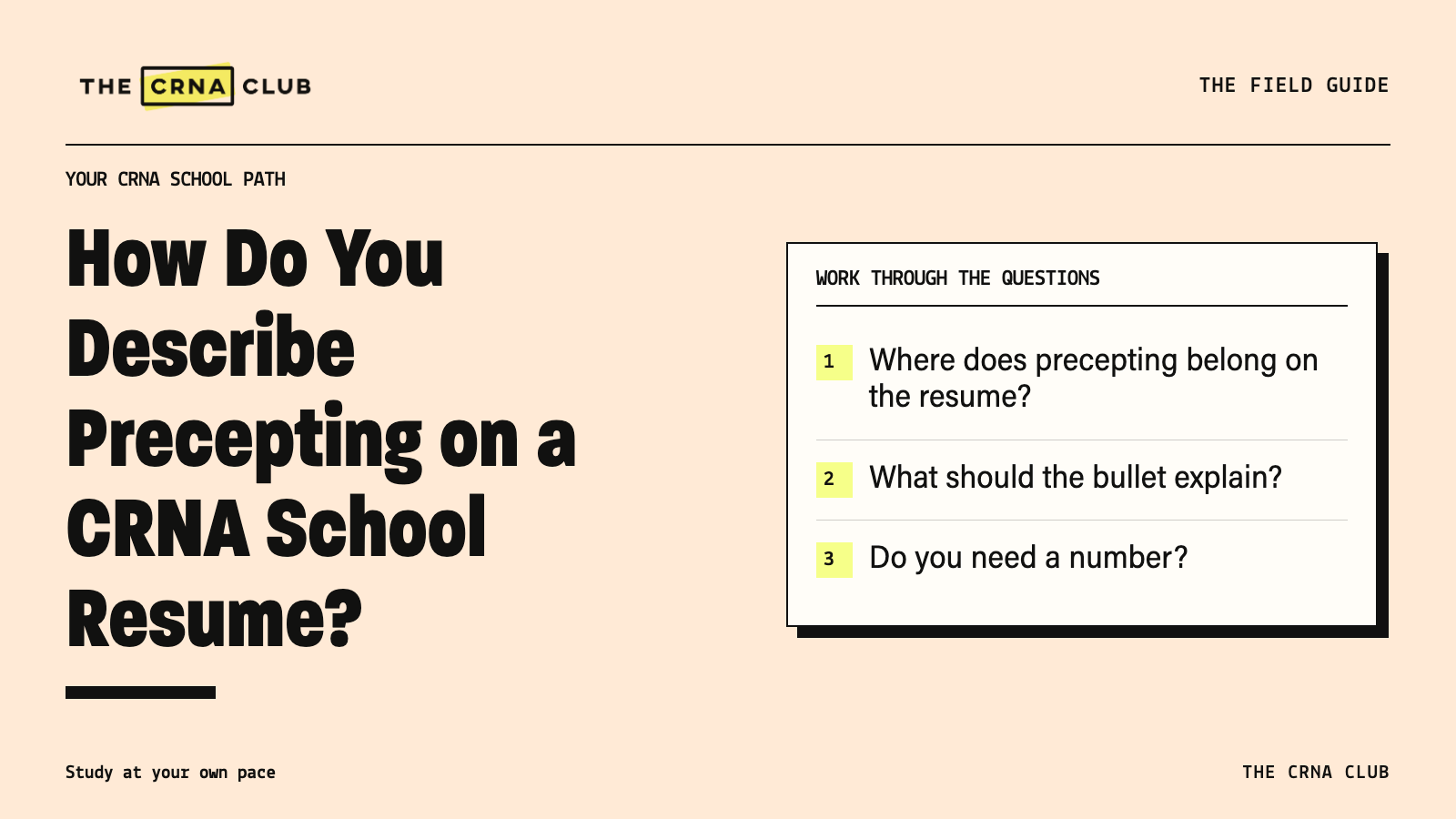
Where does precepting belong on the resume?
If it’s part of your ICU job, a bullet under that position usually makes sense. If you hold a separate educator appointment, list its actual title and dates.
Follow the school’s requested resume or CV format. You don’t need to turn occasional precepting into another job to make it look substantial. You also don’t want a major teaching responsibility buried in a membership list.
Our CRNA resume examples show how to give relevant experience room without repeating everything.
What should the bullet explain?
Compare these fictional versions:
Before: “Precepted new nurses and students.”
After: “Precepted newly hired ICU nurses during bedside orientation. Used case review and feedback to support assessment, vasoactive-infusion monitoring and escalation of patient changes.”
Now you know who was taught and what the teaching involved. The second version gives the reader something to ask about.
Use it as a writing example, not a list of duties to borrow. If final competency decisions belonged to the educator, describe your feedback and assessment role without claiming you made that final decision.
Check that distinction with Resume Review. Then compare every suggested detail with what you actually did.
Do you need a number?
Well, a real count can help. “Precepted four newly hired nurses” tells you the scope if four is accurate.
But you don’t need a percentage to make the bullet worth reading. “Improved orientation success by 35%” creates more questions: how was success defined, what was the comparison and where is the evidence?
If you don’t have that measurement, describe the teaching. Maybe you demonstrated an assessment, asked a learner to explain a medication response or brought in the educator when more help was needed. Use the work you can explain.
How do you show leadership without claiming too much?
Name the part you took responsibility for. “Managed all nurse education” suggests a broad formal role. “Led a bedside review on arterial-line leveling for orienting nurses” tells you about one specific activity.
If the educator designed the program and you delivered part of it, say that. Your contribution doesn’t become less useful because other people were involved.
The reader should be able to tell what you did, what the team did and which decisions belonged to someone else.
What story sits behind the bullet?
Pick one nonidentifying teaching situation. What did the learner need? How did you check understanding? What feedback did you give, and what did you change afterward?
If the orientee struggled, keep the focus on your teaching and communication. Don’t share private performance details or make the answer about blaming the learner. Explain when you involved an educator or manager if that was part of the situation.
Use the platform’s experience trackers and interview resources to keep the details of your own actions. Then you’re preparing from what happened, rather than trying to invent a stronger story months later.
Our Final Thoughts
Start with one bullet, not the whole resume. Show who you taught and what you helped them learn, then keep a real example ready for the follow-up. Your contribution doesn’t need an inflated title or an invented result to be worth explaining.
Give one precepting bullet a closer look
Use Resume Review to check how the teaching comes across, then confirm every detail against your own work. For application lessons and experience trackers, explore the seven-day platform trial.