How Do You Explain an Old Low GPA in a CRNA Application?
Sachi, CRNA
CRNA
In This Article (9 sections)
- Where should you address the old grades?
- What does a useful academic explanation contain?
- How would you revise a vague explanation?
- How do you write about circumstances without oversharing?
- What if you don’t have a dramatic explanation?
- How much space should the explanation take?
- How should you get feedback without losing your own voice?
- Our Final Thoughts
- Take the Next Step
Explain the old GPA briefly, say what changed, and point to completed work that supports the change. We suggest using our Essay Critique tool to review the explanation against the actual prompt, then our personal-statement lessons for revision. Both are available through the seven-day membership trial. You don’t need to turn the whole essay into an apology for college.
Follow the prompt and answer any required questions honestly. If the program offers an addendum for academic circumstances, use that space for its stated purpose.
Keep the academic plan and the writing task connected. Our low-GPA application guide helps with the broader preparation. Here, let’s write the part that explains your actual record without repeating it across every essay.
Where should you address the old grades?
Address grades where the application’s instructions ask for academic context or permit an appropriate addendum. Don’t assume every personal statement needs a GPA paragraph, and don’t ignore a required question because you prefer another essay topic. Read all written components together before deciding where the explanation belongs.
For example, Columbia’s nurse anesthesia application page provides an optional addendum for substantive circumstances and specifically identifies academic circumstances for that section. That is one program’s format, not permission to attach extra documents everywhere.
Make a prompt map for your own applications. List the main essay, academic explanation field, optional statement and any disciplinary or other required questions. Record word limits and the purpose of each. This prevents you from repeating the same paragraph in every section.
Purdue’s writing guidance also emphasizes responding to the actual question. Keep the program’s specific instructions ahead of a generic template, including the examples in this article.
If the application leaves the location unclear and the issue needs explanation, ask the program where to provide it. A short process question is more useful than sending unsolicited pages of personal history.
What does a useful academic explanation contain?
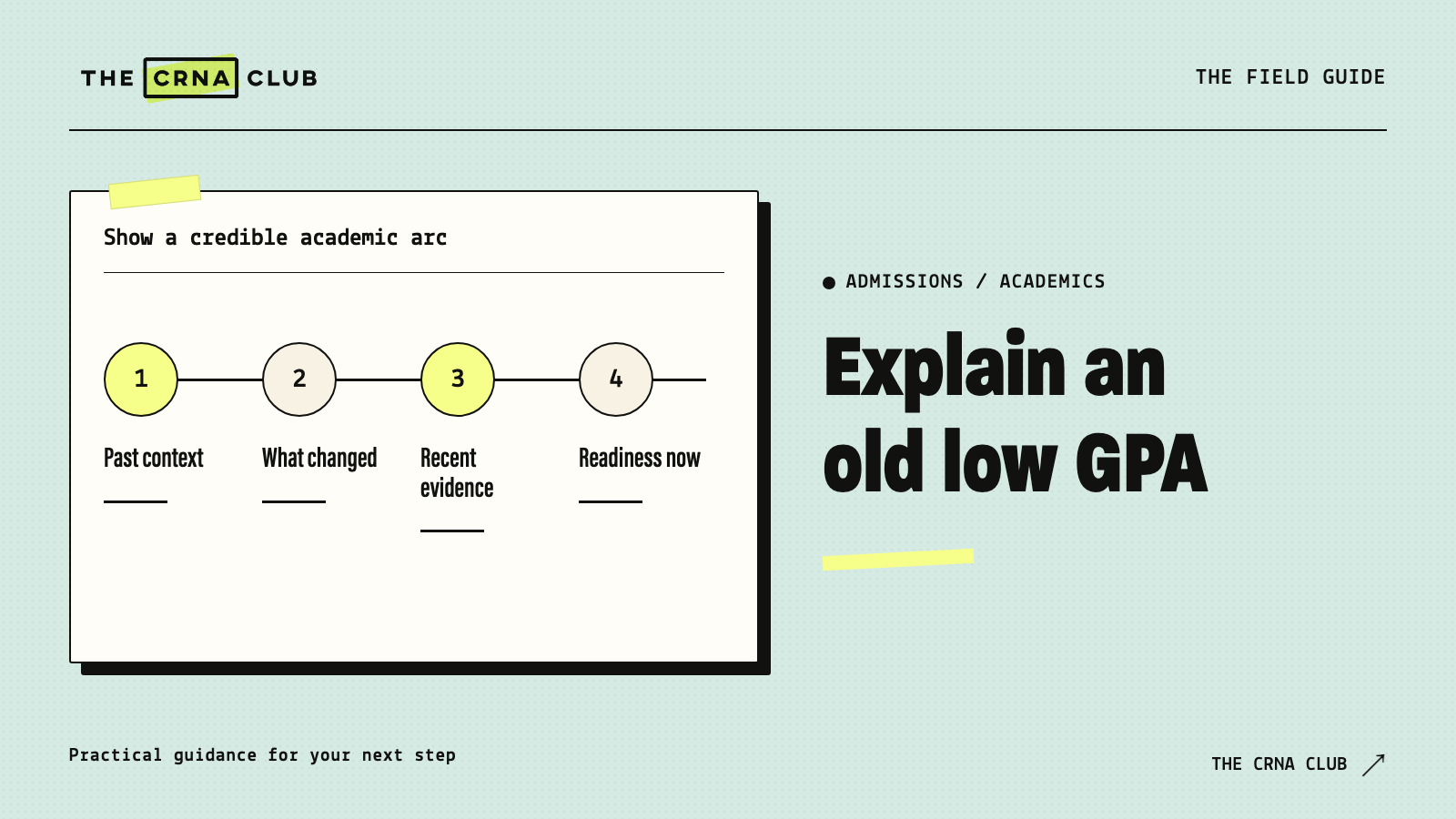
What happened, what did you change, and where can the reader see the difference? Answer those questions with your actual dates, habits and grades. We suggest replacing a broad claim such as “I’ve grown” with the change you made and the completed work that supports it.
Use this drafting worksheet:
- Academic issue: Which period, course group or pattern needs context?
- Relevant circumstance: What explains that period accurately?
- Changed approach: What did you do differently?
- Completed evidence: Which later work supports the change?
- Current preparation: What does the record now show, within its actual limits?
Use the questions to find what belongs, then follow your school’s prompt and space limit. You may only need a short paragraph. If one sentence repeats what the reader already knows, use the space for the change or the evidence instead.
Be concrete without overloading the paragraph. A changed approach might include reducing a competing commitment, using regular problem practice or seeking academic support. Only include actions you actually took.
Then point to the evidence. A completed course and grade are different from a class you plan to begin. Keep both accurately labeled. Future intentions don’t become proof of a changed academic record because they appear in a confident sentence.
How would you revise a vague explanation?
Replace broad promises with the specific academic period, changed behavior and actual later result. Remove blame, unnecessary detail and claims about what the committee should conclude. A good revision helps the reader follow the record without asking them to accept a dramatic statement about your potential.
The following examples are fictional and should not be copied into an application.
Before:
My old GPA doesn’t represent me. I had many challenges, but I am passionate about anesthesia and will work harder than anyone. I know I will succeed if given the chance.
After:
During my first undergraduate year, I took a full course load while maintaining work commitments I had not planned realistically. My grades in that period were lower than my later work. Before returning to science coursework, I reduced those commitments and scheduled weekly problem practice and instructor support. I completed the listed physiology and chemistry courses with A grades. Those results reflect the changed study approach I now use.
Why is the second version easier to follow? You can see the period, the problem, the change and the later grades. Use your own facts in that order where it fits the prompt. Don’t borrow the example’s circumstances or courses just because the paragraph sounds polished.
Now check each factual line against your record. If chemistry is still in progress, change “I completed” to the actual status. If you didn’t use instructor support, name the change you really made. A polished sentence only helps when you can support it.
How do you write about circumstances without oversharing?
Include the context needed to understand the academic issue and answer the prompt, using the level of personal detail you choose to share. A concise description often provides enough information without recounting every event. Follow any specific disclosure instructions separately and keep facts accurate across the application.
You don’t need to make a difficult experience sound worse to justify the grades. You also don’t need to minimize it. Write the relevant time period and effect on your academic work, then explain what changed or what support is now in place if that is true.
Avoid including private details about someone else when a general accurate description does the job. The application needs to understand your record, not receive another person’s full history.
If the circumstances remain ongoing, don’t invent a complete resolution. Describe the actual arrangements and current evidence without promising certainty you don’t have. Honest specificity is stronger writing than a tidy ending that isn’t true.
Ask a trusted reviewer whether the context is understandable and proportionate. The reviewer should help you choose useful detail without replacing your experience with language you wouldn’t use yourself.
What if you don’t have a dramatic explanation?
You don’t need to invent a hardship or unusual story. Describe the actual academic issue and the real changes you’ve made. Poor planning, weak study habits or an earlier lack of direction should be addressed accurately if relevant, without turning the paragraph into self-criticism or blaming the institution.
A fictional revision might read:
I did not approach my early coursework with the study structure it required. Before my recent science courses, I changed how I prepared: scheduled practice across the week, reviewed errors and sought help when concepts remained unclear. My completed grades in those courses document the improvement.
A real version needs specific completed evidence. If there is no later academic work yet, don’t claim the improvement has been demonstrated. Describe the current status accurately and consider whether more preparation is needed before the intended application.
Our GPA and prerequisite retake guide helps identify possible academic tasks. Choose those tasks using program requirements and a realistic plan, rather than taking courses solely to create a paragraph about recovery.
The explanation should follow the evidence. Writing a polished version first doesn’t remove an unmet minimum or substitute for the work the record still needs.
How much space should the explanation take?
Use the program’s stated limit and enough space to explain the issue without repeating it elsewhere. An academic addendum and a main personal statement serve different purposes. Keep the main essay responsive to its prompt, including your preparation and goals where requested, rather than letting one old grade consume the whole application.
Give the GPA explanation the space its role in the prompt requires. Include the context and change the reader needs to understand, then return to the question. A paragraph that helps one application might need a different location or a shorter form for another school.
During revision, underline every sentence supplying new information. If several sentences say the same thing about working hard, keep the most specific one and use the space for evidence or cut the repetition.
Check consistency with the transcript, resume and course dates. If the paragraph says a course is completed while the application lists it in progress, correct the discrepancy. Accuracy matters more than a neat narrative.
How should you get feedback without losing your own voice?
Ask reviewers whether they understand the issue, change and supporting evidence, and whether the paragraph answers the actual prompt. Request specific feedback on unclear or excessive detail. Keep the final facts and language yours instead of accepting every rewrite simply because it sounds more formal.
Use Essay Critique with the actual prompt beside your draft. We suggest checking whether the explanation answers that prompt, points to evidence and still sounds like you. Then revise one issue at a time. Follow your program’s rules on outside help, and keep the final facts and wording your own.
A reviewer shouldn’t invent motivation, hardship or results. If a suggested sentence doesn’t sound like something you mean, rewrite it plainly. The goal is an accurate explanation a reader can follow once.
Our Final Thoughts
Explain the old record with proportion and honesty. Name what happened, what changed and which completed work supports the change.
Then let the rest of the application do its job. You are applying with a whole academic and professional record, and the explanation should help the reader understand it without becoming the entire story.
Take the Next Step
Try the free Essay Critique tool, which includes one lifetime free critique, with your draft and the school’s actual prompt. For personal-statement lessons and continued revision tools, explore our seven-day membership trial. Check the course names, dates and grades against your record, then revise the explanation so the reader can follow what changed.