How should I review the rationales for questions I miss on CCRN practice tests?
Sachi, CRNA
CRNA
In This Article (10 sections)
- What belongs in a CCRN error log?
- How do you identify why you missed the question?
- How much should you write about one rationale?
- What would a worked review look like?
- How do you review a rationale you don’t understand?
- Should you log correct answers too?
- How do you fit error review into a real study week?
- How do you know the log is helping?
- Our Final Thoughts
- Take the Next Step
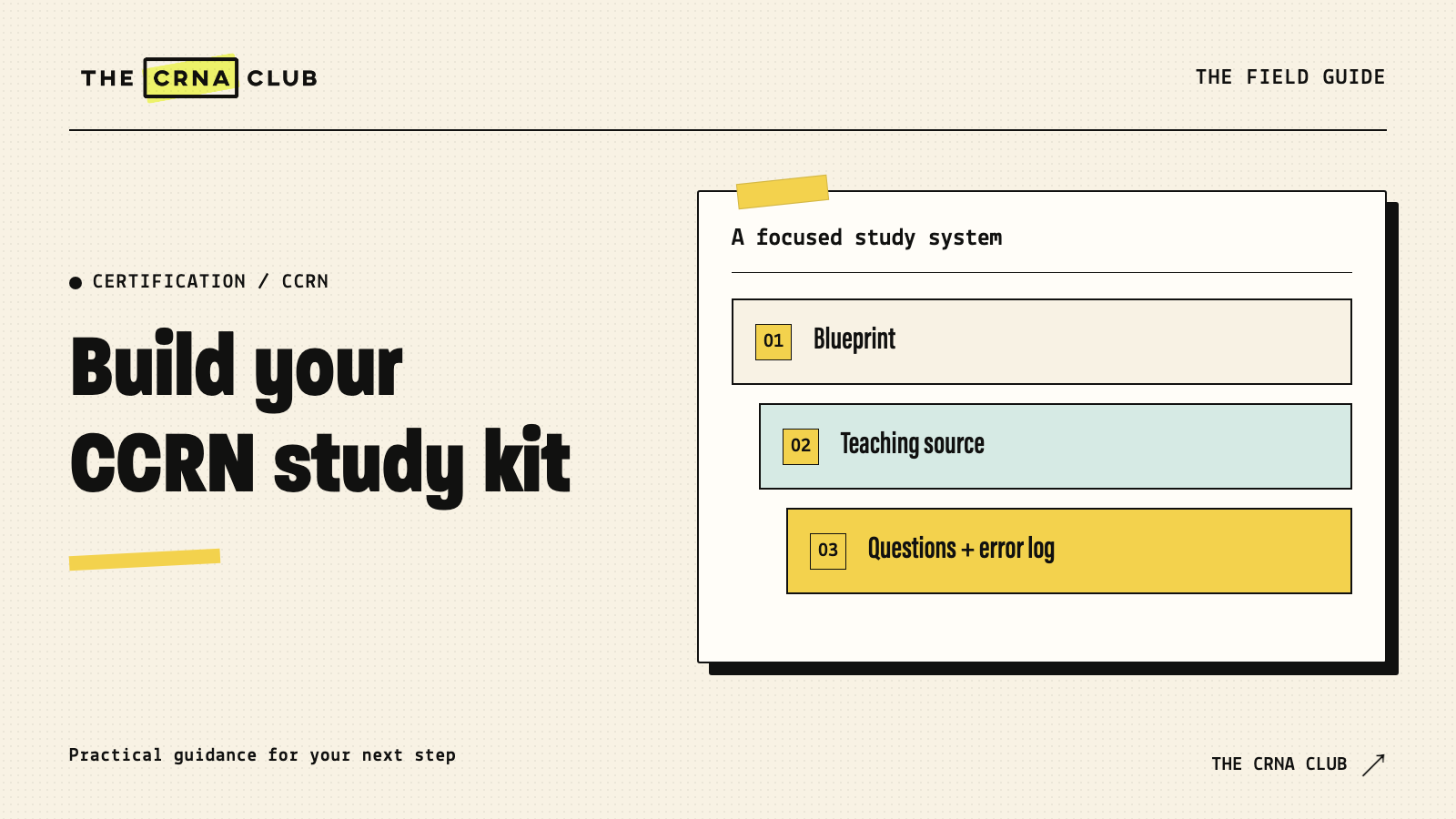
After a missed CCRN question, write what you misunderstood and how you’ll check it again. Keep it short. If the rationale still doesn’t make sense, use the relevant video lesson in our CCRN Toolkit, then explain the idea with the answer hidden.
The toolkit brings CCRN teaching, practice questions and a planner together. We suggest using the planner for your follow-up lesson and later review, rather than filling every study session with another question set.
“Review cardiovascular” is too vague. Did you misunderstand a measurement? Miss the word asking what to assess next? Choose an intervention for a different problem? Your note should tell you which one to work on.
What belongs in a CCRN error log?
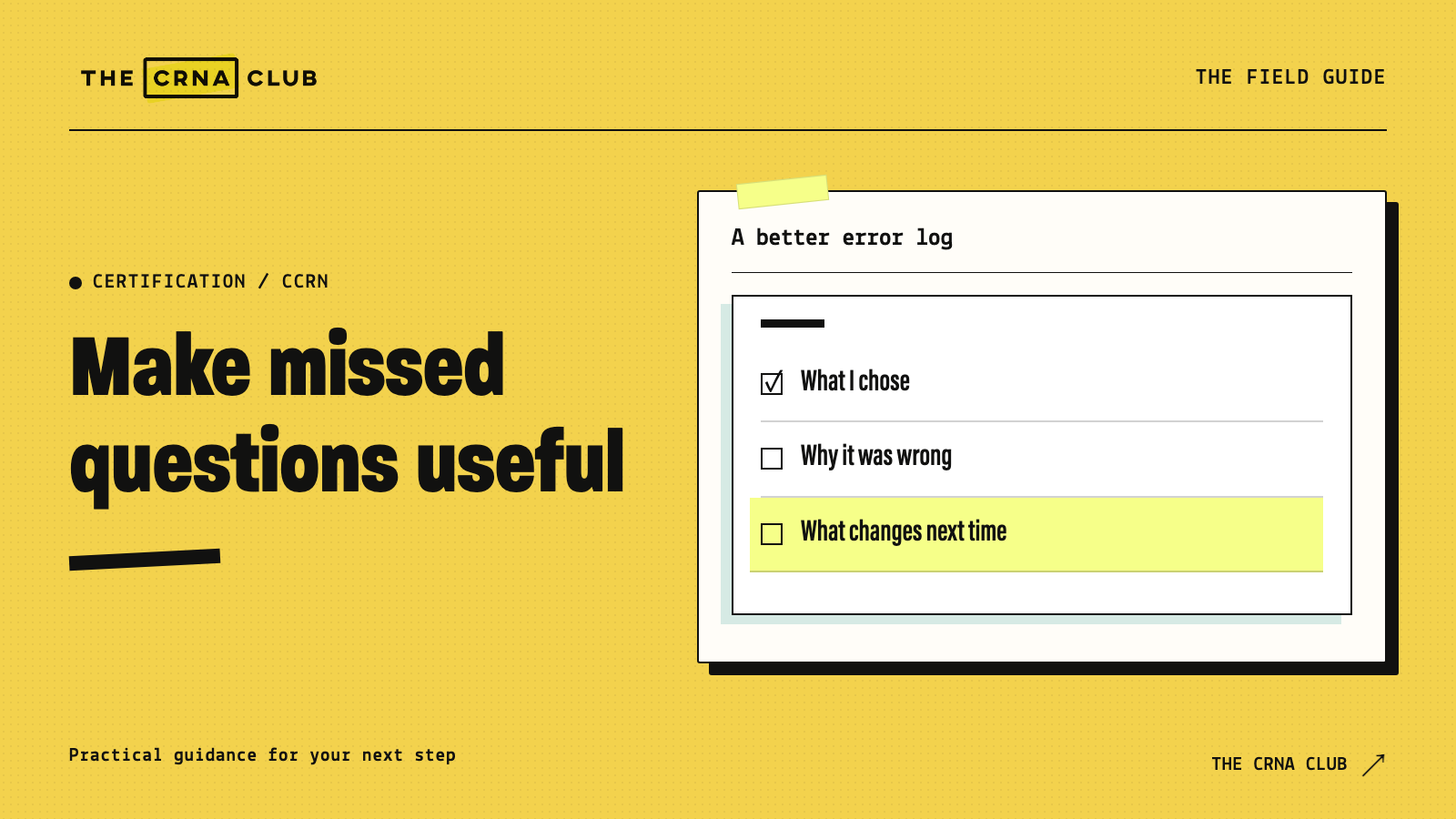
Keep the topic, your reasoning error, the corrected explanation and the next check. Add a source location so you find the teaching again. Avoid copying protected question text into a personal file. A short paraphrase of the learning problem usually gives you everything needed for later review.
AACN’s preparation guidance uses practice and the official outline to identify further study needs. Your log connects those needs to your own calendar.
A simple page might look like this:
-
Topic: Interpreting a change in a patient’s condition.
-
My reasoning: I selected an intervention before identifying what had changed.
-
Missing connection: I need to connect the new finding to the underlying problem.
-
Repair: Review the relevant mechanism and explain the sequence aloud.
-
Source location: Specific lesson section or reference chapter.
-
Next check: Fresh example later this week, without the original choices.
You don’t need all six fields if four work better. Keep enough detail to understand the entry when the question is no longer fresh in your mind.
How do you identify why you missed the question?
Describe the point where your reasoning stopped being accurate. Did you lack the content? Did you know it but misinterpret a finding? Did you answer a different task from the one asked? Use those descriptions to choose the next activity rather than assigning every error the same fix.
These are personal review labels, not official examination score categories. You are organizing the study work you control.
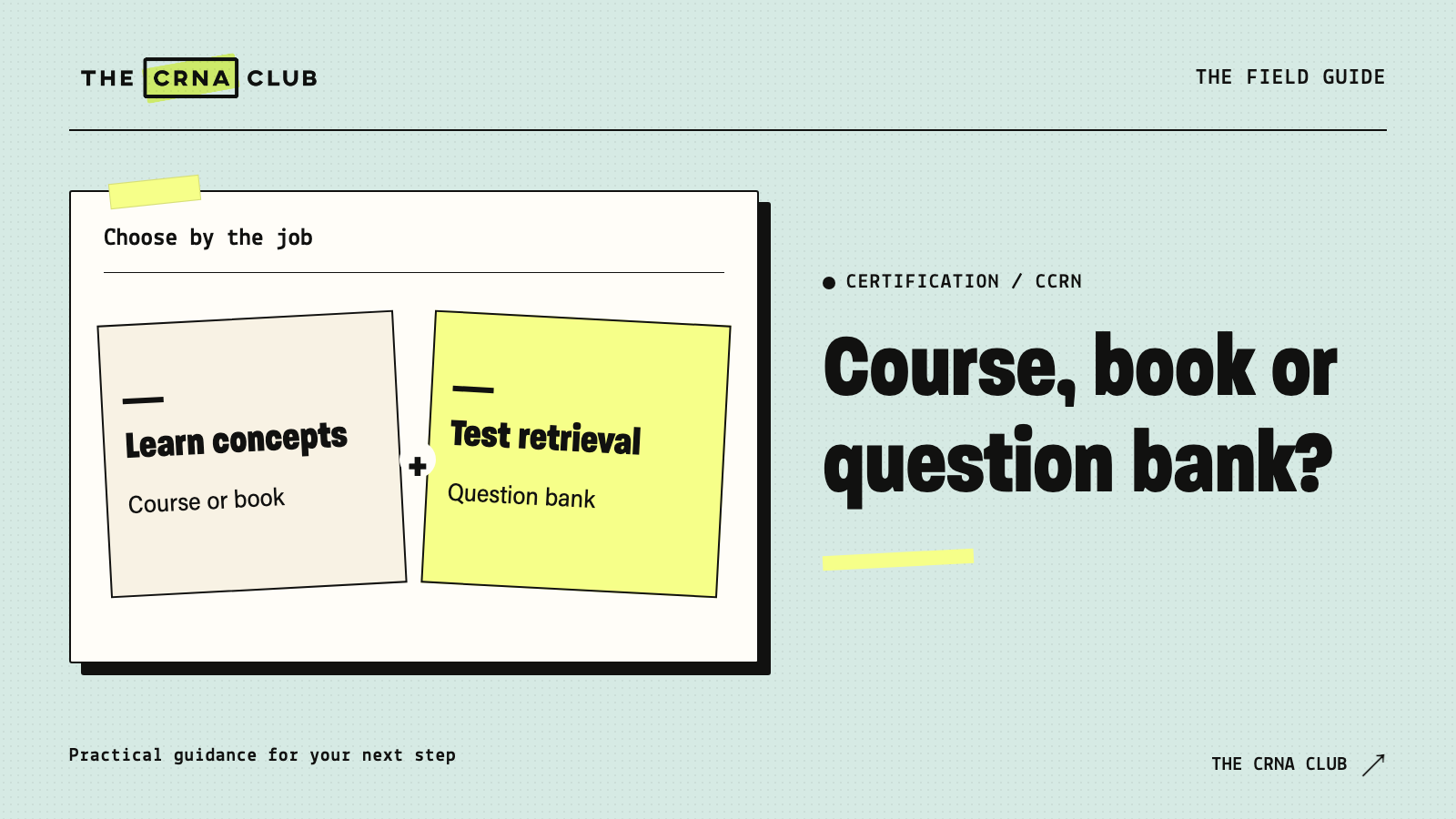
If you don’t understand the content, start with teaching. Find the relevant CCRN lesson and work through the step the rationale assumes you know. Then close it and explain that step yourself. More questions become useful once you’ve given yourself a chance to learn it.
For a reading error, identify the word or time frame you missed. Practice restating the task before considering the choices. Reading the whole subject chapter again would use time without addressing the mistake.
For a discrimination problem, compare the two choices you considered. What detail favors one? What additional finding would favor the other? You need the difference, not a longer list of everything true about both.
How much should you write about one rationale?
Write enough to recover the reasoning later, usually a few connected sentences. If the entry becomes a page of copied material, shorten it to the actual gap and a source location. Long notes cost review time and sometimes hide the one concept you needed to learn.
Start with your explanation before polishing anything. “I treated a single finding as proof without checking the rest of the profile” tells you more than “review hemodynamics.” The first statement identifies a reasoning habit you are able to practice.
Then write a question for your future self. For example: “What other information would I need before choosing between these two interpretations?” A useful prompt requires you to retrieve or explain something. It shouldn’t reveal the answer in its first half.
If you cannot produce a short explanation yet, mark the entry as needing teaching. Don’t disguise confusion with a beautifully formatted summary copied from the source.
What would a worked review look like?
Say a practice question asks what to assess next after a new finding. You choose a treatment you recognize from work. When you read the rationale, you realize the question wanted more information before deciding what caused the change. You knew something about the condition, but answered a different question.
Instead of writing “review deterioration,” try: “I chose a treatment before answering the request for the next assessment.” Now you know what to practice. For the next few questions, restate the request before looking at choices.
Don’t turn that correction into a rule to assess first in every question. Read the task each time. The useful habit is answering what you’re being asked, rather than automatically repeating the sequence from the last item.
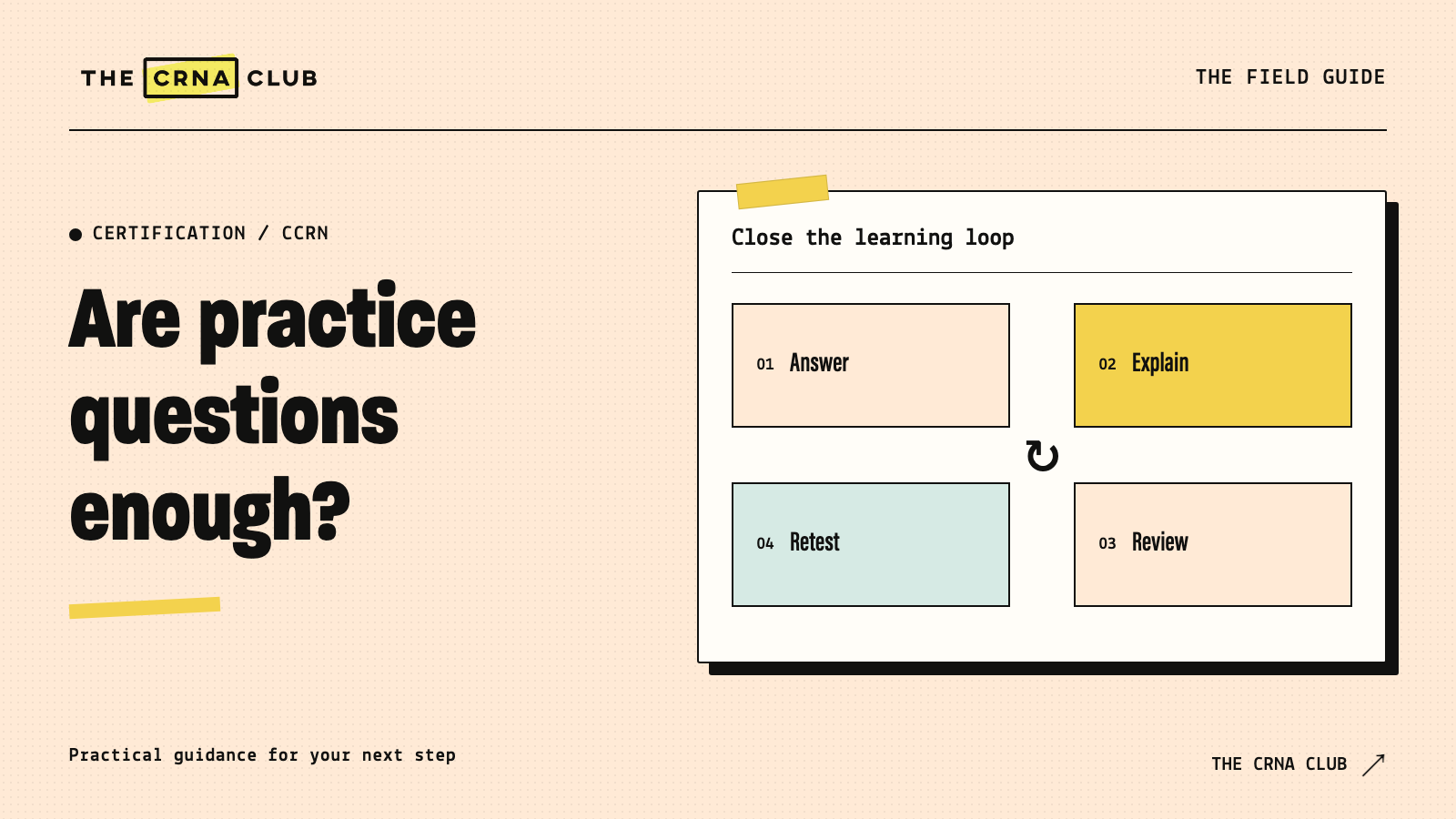
Later, cover the original choices and explain what you missed. Then try a fresh example. If you identify the requested decision correctly, record what helped. If you repeat the error, bring that specific habit back to your next review.
No actual examination item is needed to practice this process. You are building a review method, not collecting recalled questions.
How do you review a rationale you don’t understand?
Locate the unfamiliar term or relationship first, then use a credible teaching source to address it. Check the explanation against a current reference if something conflicts. Bring a specific question to an educator when the connection remains unclear. “I don’t understand why this finding changes the choice” is a useful starting point.
A rationale often compresses several steps into one sentence. You might understand the final action while missing the earlier interpretation. Expand only the steps you need, then explain how they connect.
Keep the original source location in your log. If you write “watch video again” without a title or section, next week’s review starts with another search. A precise location saves you time without turning the log into a full reference library.
Our CCRN overview helps place individual topics within broader examination scope. Review gaps in context so one difficult explanation doesn’t consume every available session.
Should you log correct answers too?
Log uncertain correct answers when you guessed, eliminated choices for the wrong reason or recognized wording without understanding it. You don’t need an entry for every straightforward correct response. Focus on questions where the percentage looks better than your explanation.
Correct answers sometimes make the best teaching opportunities because you are less defensive about them. Ask why the nearest alternative didn’t fit. If you cannot say, write the comparison as a learning task.
Also watch for repeated log entries. If you have written the same missing connection four times, writing it a fifth time won’t resolve it. Change the repair activity. Use another credible explanation, retrieve it later, or ask someone to examine your reasoning.
The log should reduce repeated unaddressed mistakes. It shouldn’t become a collection you maintain without returning to it.
How do you fit error review into a real study week?
Reserve time after practice and again later for retrieval. If you schedule only question answering, rationales become the work you squeeze in at the end. A smaller set with completed review gives you a more usable next step than a large unanswered list of learning needs.
If you have an hour today, choose a set small enough to leave time for review. Pick one topic needing a fuller explanation and schedule its lesson. You don’t need to solve every gap tonight. You do need to give the important one a real appointment.
Several days later, open your log with the answers hidden and explain those concepts again. Put anything you still can’t explain back into your plan. Give resolved entries a later check.
Use that pattern rather than copying exact time blocks from someone else’s week. Your pace depends on how much background learning the missed topics require.
AACN’s certification FAQ also directs unsuccessful candidates to the examination score report. If you are retaking, use that broader report alongside your practice log. The two records describe different samples of performance.
How do you know the log is helping?
Look for more precise explanations, fewer repeated unresolved entries and better application to new examples. The log isn’t successful merely because it contains many rows. It helps when you return to a recorded gap and explain something you previously couldn’t.
At the end of the week, choose an entry and answer its prompt without opening the source. Then verify your explanation. If it remains unclear, make the next task smaller and more specific.
Keep your application planning separate from the log. CCRN requirements for CRNA school deserve a program-policy check. A single difficult study topic shouldn’t determine which programs you consider.
Put one specific retrieval appointment beside the new entry before closing your notes. A recorded gap without a return date is easy to carry forward untouched.
When the rationale skips a step you need explained, try the CCRN lessons through our seven-day membership trial. Bring the exact question you still have about the concept. Use the teaching, explain it back and return to practice. Your error log tells you where to begin.
Our Final Thoughts
Use the rationale to find the missing connection, then give that connection a real study task. A short, honest entry beats a copied paragraph you never revisit. Your future self should open the log and know what to explain next.
Take the Next Step
Start with the CCRN Toolkit if you want the teaching and practice beside your study plan. Already have your materials? Use the free certification planner for one lifetime free plan and make room for reviewing the mistakes you’re finding.