How should you use the CSC blueprint to find gaps outside your usual CVICU cases?
Sachi, CRNA
CRNA
In This Article (9 sections)
- How do you turn the blueprint into a working document?
- What should you check in the procedures domain?
- What should you check in the complications domain?
- What should you check in therapeutic interventions?
- What should you check in monitoring and diagnostics?
- How do you choose which gap to study first?
- How do you keep the checklist current without letting tracking replace studying?
- Our Final Thoughts
- Take the Next Step
Use the CSC blueprint to find what your usual CVICU cases haven’t taught you, then turn those topics into study sessions. We suggest our CSC planner and questions for that next step, with shared cardiac lessons where the foundation needs work. You can try them through the seven-day membership trial. Keep the official outline beside the calendar and check the actual topics as you go.
A unit can provide excellent experience without exposing every nurse to every procedure or complication. The blueprint helps you find the difference between a familiar work pattern and the breadth of exam content.
Start with the official CSC test plan for your actual exam date. The revised plan applies on or after November 19, 2026. Keep the date visible so an old checklist doesn’t silently guide a later appointment.
How do you turn the blueprint into a working document?
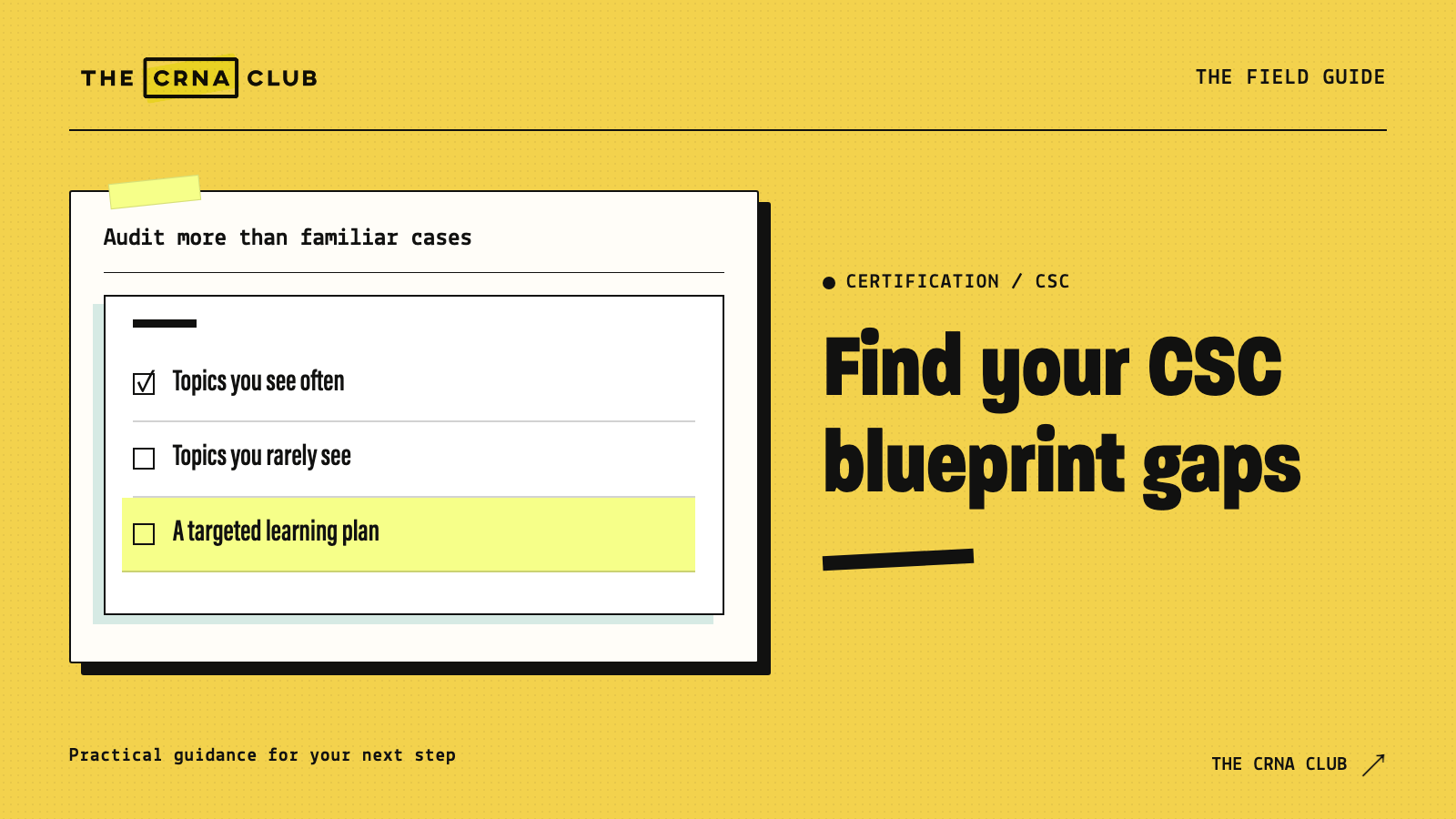
Beside each AACN topic, write where you’ll learn it, how you’ll practice it, and what you still don’t understand. We suggest starting with a short list of unfinished topics and putting them in your CSC planner. Keep the actual outline names so a familiar unit routine doesn’t become your whole study plan.
Make a copy you can edit without losing the original. Add columns for relevant experience, the source you will use, a practice check and an unresolved question. Start with one domain if the full document feels large, but complete the coverage pass before deciding the plan is balanced.
Avoid marking a topic finished merely because you watched a lesson or saw it at work. Record the activity and the understanding separately. “Video watched” describes exposure. “Explained the mechanism in a new case” describes a different check.
Use your normal case mix as context rather than a substitute outline. A familiar operation might connect to several complications and interventions. An uncommon procedure may have received no study time at all. Both facts need to be visible before you choose the next session.
Keep the sheet simple enough to use. When you open it, you should know which lesson, surgical section or question set comes next. If you’re spending the whole study block formatting the sheet, simplify it.
What should you check in the procedures domain?
Check whether you understand the purpose and relevant postoperative implications of each listed procedure, including those your unit rarely manages. Knowing the procedure’s name isn’t enough to explain the clinical context. Use targeted surgical teaching or a reference when the outline item is unfamiliar, then connect it with the assessment questions it creates.
For the revised plan, procedures account for 9%. Keep the domain in proportion without skipping it. Procedure context also helps you understand other parts of the outline, so a smaller percentage doesn’t make the learning irrelevant.
A hypothetical nurse may explain routine bypass recovery well while needing a first review of another listed procedure. Her next task should name that procedure and the question she needs answered. “Read procedures” is too broad to guide a focused session.
Use the AACN CSC bibliography to identify an appropriate reference. Check existing employer or library access before purchasing. Read enough to explain the procedure and relevant context, then test the explanation with an unfamiliar case.
Keep knowledge and hands-on experience separate in the worksheet. Learning the procedure’s implications doesn’t become a claim that you’ve managed it personally.
What should you check in the complications domain?
Check the full system range and your ability to compare plausible explanations using patient findings. A familiar cardiovascular complication should not hide untouched respiratory, neurologic, renal or other listed topics. Use the outline for breadth and work specific cases to see whether you understand the mechanisms and distinguishing information.
Complications account for 37% of the revised plan. The percentage helps you notice if your calendar contains little complication review, but it doesn’t tell you how many hours an individual topic will take.
Choose one familiar complication and explain what supports it in a hypothetical case. Then identify another plausible cause and describe what information would help distinguish them. If you only recall one classic sign, read a fuller explanation before adding more flashcards.
Our postoperative drainage article gives focused teaching for one assessment concern. Keep other complications visible on your checklist. One well-understood topic is useful progress, but it doesn’t complete the entire domain.
Don’t force every postoperative patient into a single mechanism. Instability after surgery can have several contributors. Ask which findings each proposed problem explains, and keep mixed mechanisms in the discussion when the case supports them.
What should you check in therapeutic interventions?
Can you explain why you’re doing the intervention and what you expect to change? If you know the steps but the mechanism is unclear, review that foundation before the next question set. We suggest using the cardiac lessons for drug and hemodynamic explanations, then surgical reading for the procedure-specific details.
Therapeutic interventions make up 43% of the revised plan. Look beyond the medication groups you use every shift. The official outline includes procedures, organ support and postoperative care topics. Use the actual list so your personal definition of “interventions” doesn’t become narrower than the exam’s.
For a medication, explain what it acts on and how the effect relates to the patient problem. For a device or support method, explain what it supports or measures and the remaining limitations. Then describe what information would show the response.
Our vasopressor pharmacology article helps with a relevant foundation. The seven-day membership trial also includes cardiac physiology and pharmacology lessons, CMC Review, CSC quiz questions and planning. Use those for the gaps they actually address, while keeping surgical reference needs separate.
Choose the lesson matching your foundation gap, then use surgical reading to connect that explanation with the procedure or complication you are reviewing.
What should you check in monitoring and diagnostics?
Check the purpose, quality and limitations of each listed measurement or test, then connect the result with the clinical case. A memorized range doesn’t establish whether a reading is reliable or explain the cause of an abnormal value. Include tests and monitoring tools you rarely encounter, rather than studying only familiar arterial pressures and rhythm strips.
Monitoring and diagnostics account for 11% of the revised plan. Use the listed items to identify gaps, then choose a specific explanation task. “Learn monitoring” is too broad. “Explain how an unreliable pressure measurement changes the interpretation” gives you a clear review target.
For each tool, write what it tells you and what it doesn’t. Cardiac output describes flow. Filling pressures describe pressure at particular locations. An ECG supplies electrical information. Keep these contributions distinct while combining them in the full case.
Our hemodynamics and perfusion guide supports these foundations. Follow the reading with an unfamiliar example and a measurement-quality question. That checks whether the explanation works beyond a reference table.
If a familiar tool still produces uncertain answers, review the mechanism or setup rather than repeating its normal values again.
How do you choose which gap to study first?
Start with a topic you haven’t covered or a mistake that keeps returning. How much do you need to learn, and when can you work on it? Give that topic a real session in the planner, then keep some mixed practice in the week. That way, focused review doesn’t make the rest of the outline disappear.
Try this worked audit:
- Maze procedure: You recognize the name but can’t explain its purpose. Find the procedure section, explain its purpose, then review the postoperative rhythm context.
- Repeated medication error: The drug name is familiar but the mechanism is unclear. Review the mechanism and work a different case.
- Postoperative delirium: You have not reviewed this listed complication. Read about its assessment and contributing factors, then work a case and schedule mixed review.
- Familiar monitoring topic: Definitions are accurate but setup is still confusing. Practice measurement-quality examples.
The gaps require different amounts of work. Don’t give every topic the same 30-minute slot simply to make the calendar look complete. Estimate, complete the first session and update the remaining tasks using what you learn.
Keep a small amount of time for delayed review. A clear explanation immediately after reading is encouraging, while an unfamiliar case later checks retention and transfer.
How do you keep the checklist current without letting tracking replace studying?
After a lesson or question set, write what became clearer and what you still need to learn. Check that list once a week and update the next sessions. We suggest keeping the notes short, because the point is to get back to learning rather than build another tracking project.
If an item remains unfinished for several weeks, ask why. Is the task too large? Is the source unclear? Are you avoiding it because familiar questions feel better? Change the task or source rather than moving the same vague label to another week.
Recheck the version after an appointment change. AACN’s revision announcement states existing materials remain useful. Keep accurate explanations and compare coverage with the outline for the date you will take.
Our Final Thoughts
The blueprint helps you find the topics your normal assignments haven’t taught completely. Turn those gaps into named tasks with teaching and a later check.
You don’t need a complicated score for every topic. You need an honest record of what you understand, what you’ve practiced and what still needs work.
Take the Next Step
Start a seven-day membership trial and choose three unfinished CSC topics from your outline. Add them to the planner, use the questions to practice, and review shared cardiac lessons or surgical references where needed. Compare the calendar with the current AACN blueprint and adjust any missing topics, especially when your exam date crosses a revision.