Should I take the CCRN before my CRNA application deadline or wait?
Sachi, CRNA
CRNA
In This Article (11 sections)
- Which deadline do you actually need to meet?
- What should your program-policy worksheet contain?
- Why doesn’t a booked examination always solve the requirement?
- How do you work backward from the verified milestone?
- What if two target programs use different timing rules?
- How should you ask a program about unclear timing?
- What if you aren’t yet eligible to test?
- What should you do if preparation is taking longer than expected?
- What belongs in your final submission check?
- Our Final Thoughts
- Take the Next Step
Take the CCRN in time to meet your target program’s actual requirement and submit the document it asks for. A booked exam isn’t always enough. Check whether certification is due at application, interview or before the program starts, then work backward.
We suggest using our School Database to organize your target programs and their requirements. Once you’ve confirmed the dates, use the free certification planner to build your study calendar around work. It includes one lifetime free plan.
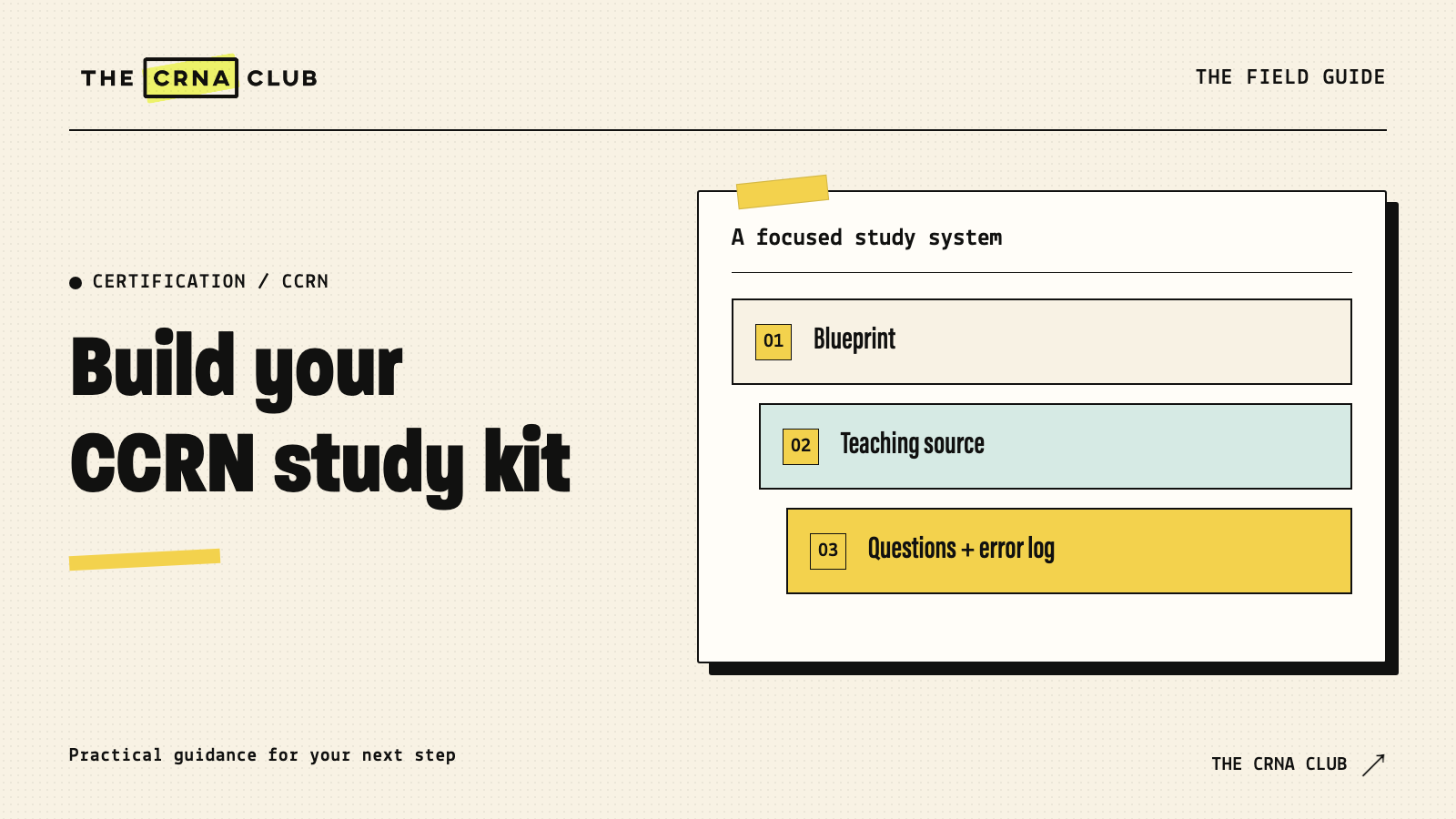
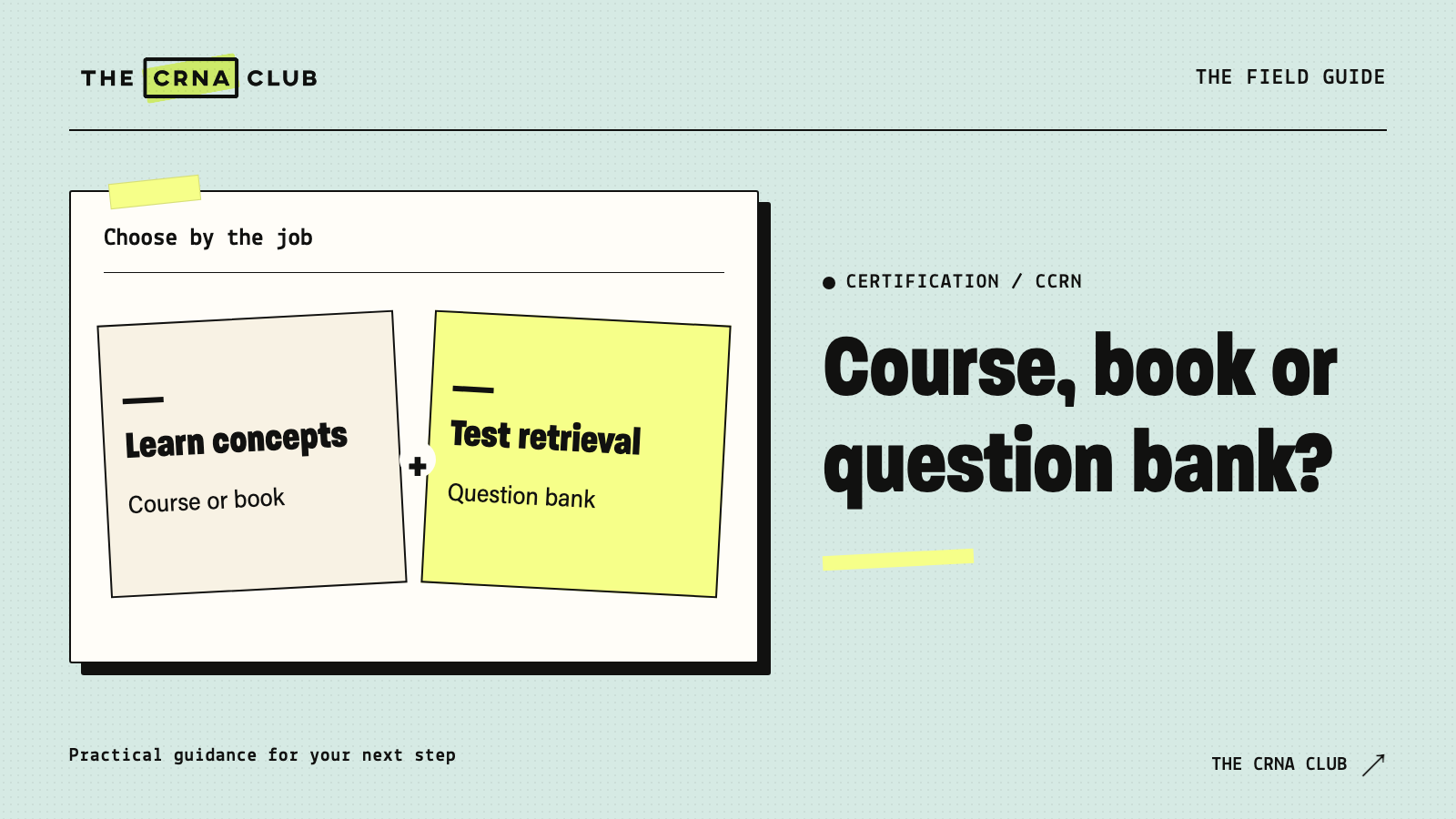
If you need teaching and practice for that calendar, our CCRN Toolkit brings video lessons and CCRN questions beside the planner. Start with the deadline you verified, rather than rushing toward a rule another school uses.
Which deadline do you actually need to meet?
Find when the program requires the credential and when it requires the supporting document. Read the current admissions page, application instructions and relevant checklist together. Record the exact milestone instead of translating every statement into a general application deadline.
Current official pages show why the distinction matters. Ohio University’s admissions instructions require proof of CCRN by the application deadline and state a scheduled test date isn’t acceptable evidence. In contrast, the University of Tennessee Knoxville allows application before CCRN, with admission contingent on obtaining it before the program starts.
Those are specific policies checked November 3, 2026. They don’t establish what another program permits. Read your target program’s current cycle instructions before acting.
Our CCRN requirement-versus-strategy article covers the broader decision. Use the workflow here to turn a verified policy into a practical deadline plan.
What should your program-policy worksheet contain?
Keep one row for each program. Write the application cycle, when CCRN is due and which document it requires. Save the official page or written answer beside it. Our School Database helps you organize your targets. Confirm the current instructions before you build a deadline around the entry.
Use a personal planning example:
-
Program and cycle: The exact application you intend to submit.
-
Credential wording: Required, recommended or another stated status.
-
Completion milestone: Application, interview, enrollment or explicit date.
-
Evidence: Certificate, score report or other specified document.
-
Submission method: The actual upload or official process described.
-
Source and checked date: Current official page or written clarification.
-
Next action: Obtain document, ask a question or schedule preparation.
Separate the application deadline, program start and credential task in your notes. They aren’t always the same date. That makes it easier to see whether you still need to take the exam, obtain a document or upload something you already have.
Why doesn’t a booked examination always solve the requirement?
A booking shows an intended appointment. A completed credential or requested result document shows something different. Use the evidence the program actually asks for. Don’t assume it accepts an appointment confirmation, pending status or later update unless current instructions or a direct answer permit that approach.
This is especially relevant when a program has separate submission and completion dates. The existence of a later document date doesn’t automatically move every prerequisite or certification requirement to that date.
If the official wording is unclear, ask about the specific credential and milestone. Don’t send a vague question asking whether the program accepts “late materials.” Different materials sometimes have different rules.
Keep the answer with the worksheet. A saved response tied to your application cycle is easier to act on than a memory of what someone said at an open house months ago.
How do you work backward from the verified milestone?
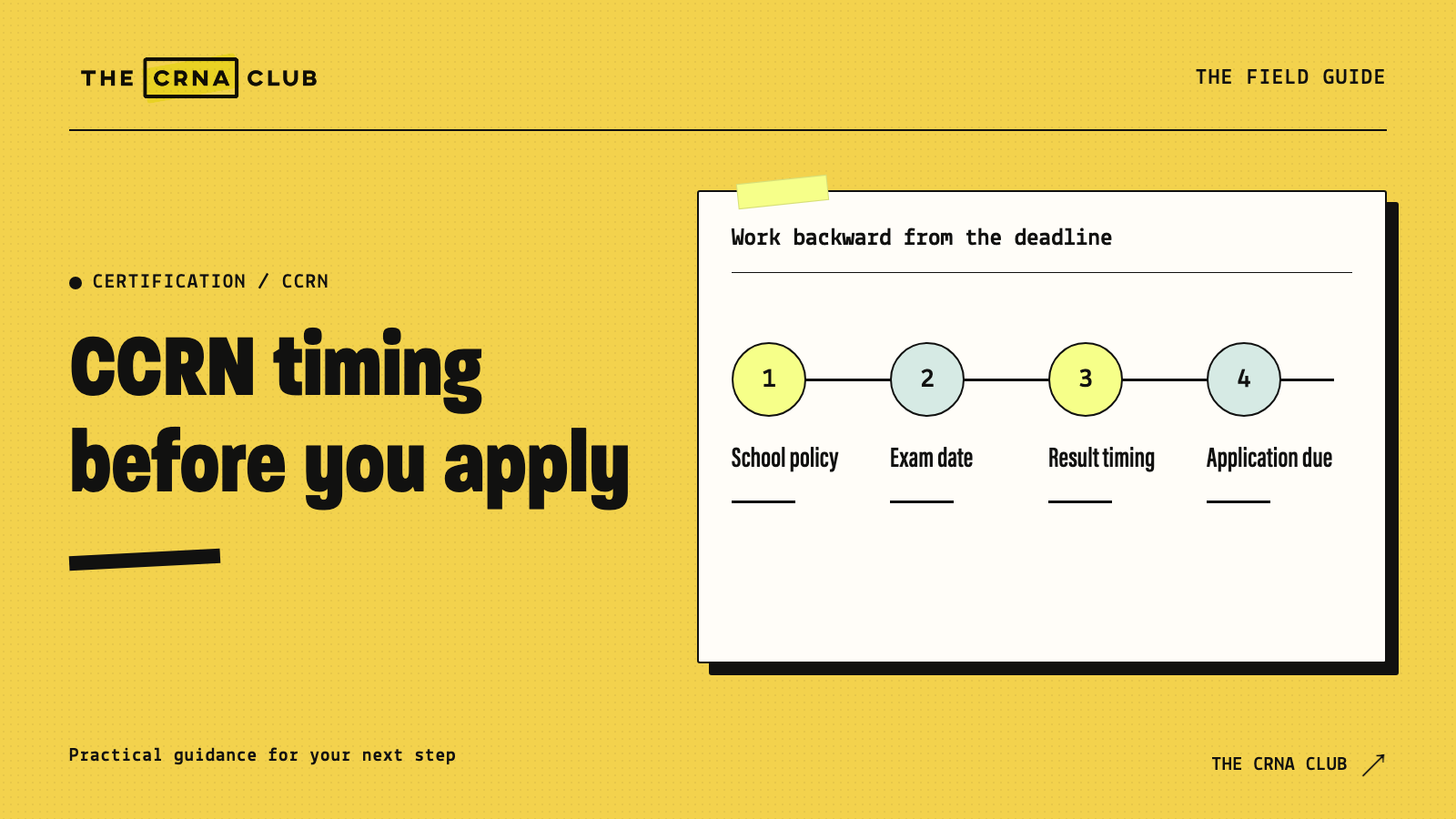
Start with when the program needs the document. Check how you obtain and submit it, then choose an exam date allowing adequate preparation. Use our planner to put lessons and practice around your shifts. Don’t assume a universal processing delay or buffer. Find out what your actual document process involves.
Work backward in this order:
- Required evidence must be supplied by the verified program milestone.
- Confirm how the evidence is obtained and submitted.
- Choose an examination appointment consistent with adequate preparation and that document process.
- Mark study blocks around actual shifts and other deadlines.
- Set a progress review early enough to reconsider the timeline if major gaps remain.
The sequence doesn’t prescribe a universal buffer of days. Your program’s process and your preparation needs determine what you need to check.
Don’t schedule the learning plan by dividing a question-bank total by the days left. You also need time to understand mistakes and address unfamiliar content. Our CCRN overview provides the broader preparation context.
What if two target programs use different timing rules?
Build a separate policy row for each program, then decide whether one realistic certification timeline meets both. If it doesn’t, evaluate each application independently. The earliest requirement matters for that program, but it doesn’t automatically decide what you are allowed to do at every other school.
Say School A requires proof at application, and School B lists a later milestone. Your exam date falls between them. You need to check A’s policy about updates or pending status. Keep B on its own row so A’s earlier date doesn’t hide another feasible application timeline.
You now have a specific question about School A. Does its current policy permit any update or pending status? If it doesn’t, don’t relabel your booked appointment as a completed credential. Your plan for B still needs to meet B’s actual conditions.
The two rows also help you see opportunity cost. If trying to meet A’s date would crowd out adequate preparation or essential documents for B, decide which timeline is feasible instead of assuming you must rush both.
How should you ask a program about unclear timing?
State the exact application cycle, your situation and the unclear policy. Ask what evidence must be present at which milestone. Keep the message short enough for the responsible person to answer directly. You don’t need a long explanation of your entire application to clarify one document requirement.
A hypothetical draft message is:
I am reviewing the requirements for the upcoming nurse anesthesia application cycle. The page lists CCRN, but I couldn’t determine whether certification must be completed at application or before enrollment. What evidence is required, and at which milestone? If a test appointment is scheduled after submission, is any pending status permitted?
Adapt it to what the current page actually says. If the page already answers the question clearly, use the answer rather than asking for an exception by implying the rule is missing.
Don’t assume a previous applicant’s accepted update creates a policy for you. Ask the program when the current instructions don’t settle the issue.
What if you aren’t yet eligible to test?
Verify current AACN eligibility for your role and pathway before scheduling a plan around an assumed date. Qualifying clinical experience has specific requirements. A program’s application calendar doesn’t waive certification eligibility, and studying doesn’t replace required clinical hours.
Use AACN’s current adult CCRN requirements when that is the relevant population and pathway. If your duties or hours are unclear, seek clarification before applying.
Then place the earliest realistic eligible period beside the program milestones. If the dates don’t fit, you have a timeline issue to resolve with accurate information. Another study resource won’t move the clinical-hour requirement.
Keep the program’s own experience requirements separate too. Meeting a certification rule doesn’t automatically establish that a school accepts your unit or clinical background.
What should you do if preparation is taking longer than expected?
Compare the remaining learning with available time, then revisit the appointment and application plan. Check current change policies before acting. A fixed admissions goal doesn’t make broad unfamiliar content disappear, and a single reassuring practice result doesn’t settle the document or readiness questions.
Build a short progress checkpoint into the calendar. Are the scheduled blocks happening? Are unresolved areas getting narrower? Do you explain unfamiliar examples more clearly? Those observations help you see whether the plan still fits.
Try the school-research, planner and CCRN tools together through the seven-day membership trial. Use it to organize your targets, then plan study toward the verified milestone. The value is seeing the application and certification tasks in the same preparation process.
What belongs in your final submission check?
Compare each required item with what is actually uploaded or received. Check current certificate status, requested report type, file readability and the application’s stated completion process. Don’t treat owning the document as equivalent to submitting it correctly.
Keep the final check specific to the program. A certificate alone doesn’t replace a numerical report when the instructions request both or name the report explicitly.
If the program allows an update, follow its stated method and check that you actually submitted it. Record the date and any confirmation. Don’t mark the item complete because you intended to send it later.
Our Final Thoughts
Write the policy, the document and the date for each school. Then give the preparation and submission steps real appointments. If the wording is unclear, ask early. You’re much better placed to choose a timeline when you’re working from the requirement itself.
Take the Next Step
Use the free certification planner after verifying your target programs’ milestones. It includes one lifetime free plan. Bring the relevant dates and your work schedule so your study calendar supports the application plan you actually intend to follow.