What resources should I use to study for the CCRN before CRNA school?
Sachi, CRNA
CRNA
In This Article (8 sections)
- Which CCRN books and question banks should you use?
- Can you use Barron’s with the CCRN Toolkit?
- How do you use your CCRN resources in one study session?
- Should you use flashcards or Anki for the CCRN?
- How should you review questions you get wrong?
- What should you do before buying another CCRN resource?
- Our Final Thoughts
- Take the Next Step
For CCRN preparation before CRNA school, we suggest our CCRN Toolkit. You get a study planner, CCRN video lessons and practice questions together. Use the lessons to understand the material, the questions to find what still needs work, and the planner to organize your preparation around your shifts.
Already have Barron’s? Prefer flashcards? You don’t have to throw out something useful. The question is how to use it without spending every day rereading a chapter or collecting more subscriptions.
Let’s compare what each resource gives you, then put a small set of materials to work in one study session.
Which CCRN books and question banks should you use?
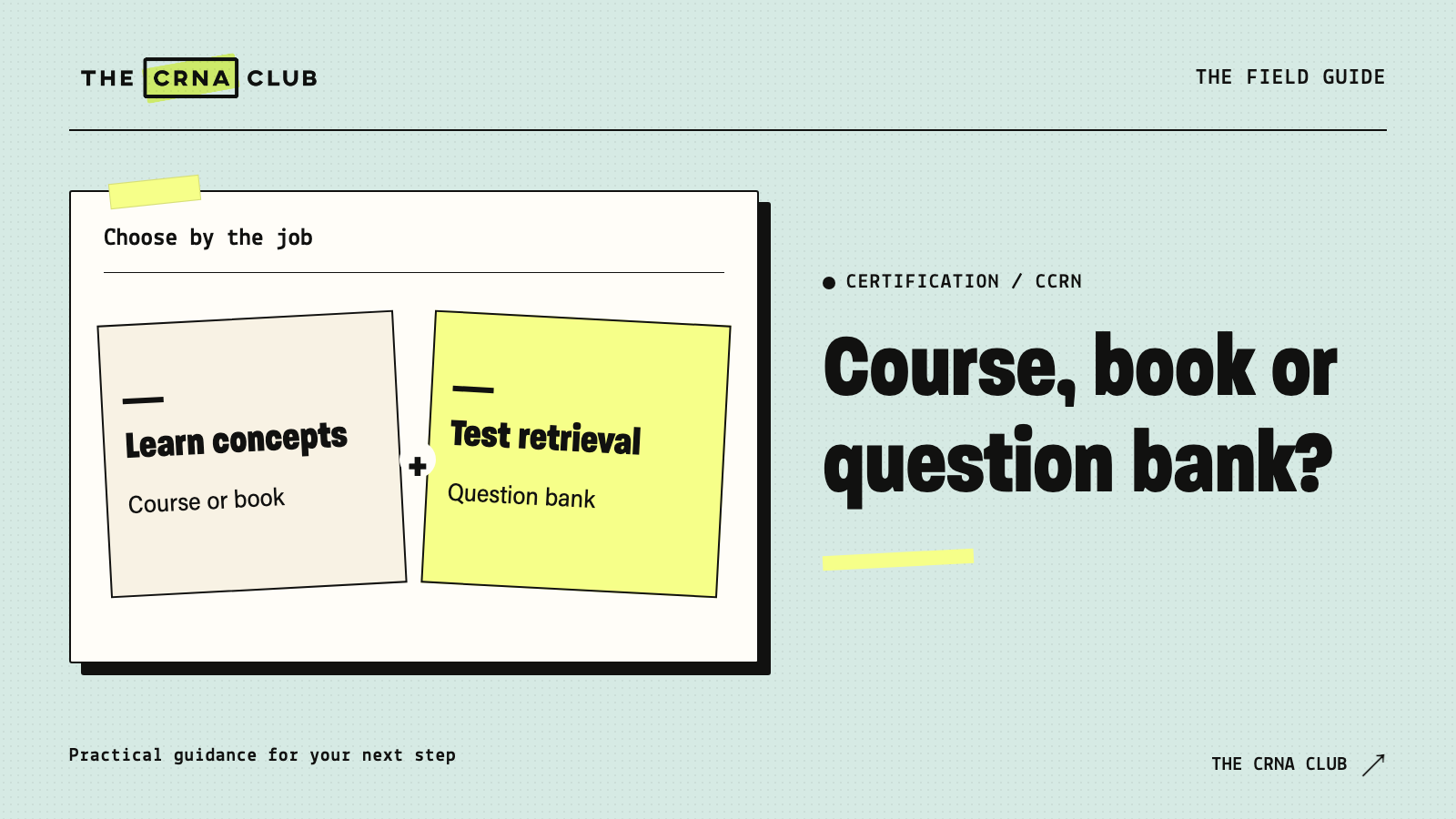
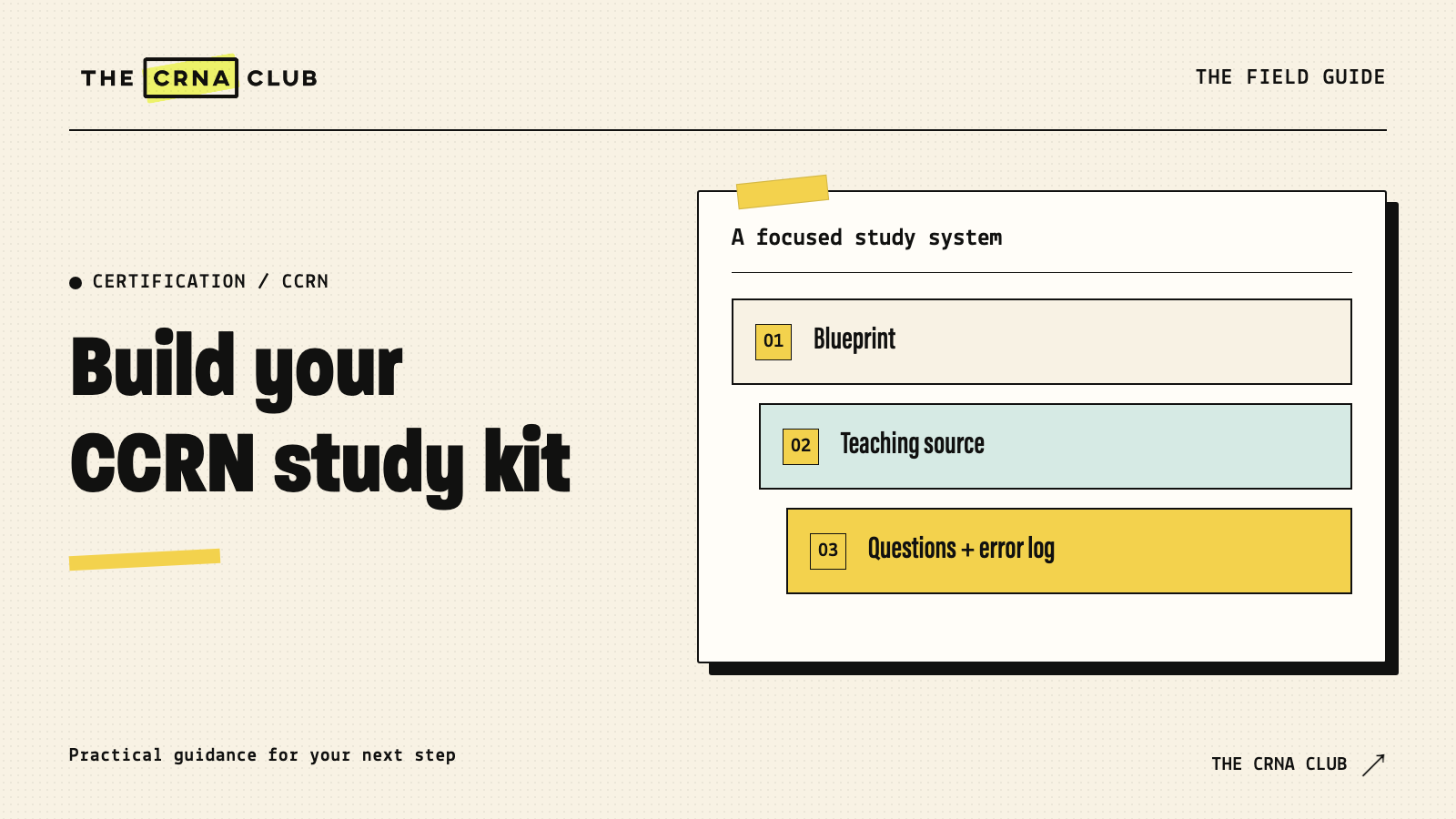
Choose one source of teaching you understand, questions with explanations, and a way to plan your review. Our CCRN Toolkit brings those functions together. If you already have a useful book and questions, use them before paying for duplicates. Add video teaching when a written explanation still leaves you stuck.
Here are the practical differences, checked November 3, 2026. These are adult CCRN resources; match a different clinical population to its own AACN materials.
| Resource | What you get | When we’d use it |
|---|---|---|
| The CRNA Club CCRN Toolkit | CCRN video lessons, practice questions and a study planner in one focused product | You want teaching, practice and a shift-aware plan together |
| Barron’s Adult CCRN Exam Premium, fourth edition, by Pat Juarez | A purchased adult review book with two full-length tests in the book and a third online, according to its publisher | You prefer reading and want included practice. Online companion access isn’t guaranteed for third-party copies |
| AACN practice exams | Time-limited question access: a one-time seven-day trial, a 30-day basic tier, or a 180-day premium tier with content-area exams | You need additional practice. Choose the duration around when you will actually use it |
| Elsevier’s Pass CCRN (Adult), sixth edition, by Robin Donohoe Dennison | A purchased outline-style review with Evolve learning activities and more than 1,000 interactive questions advertised for Study and Practice Exam modes | You prefer reading and want companion online exercises. Confirm valid companion access when buying a used copy |
| Kaplan’s Adult CCRN Qbank | A question-bank product, rather than a CCRN textbook | You need another source of questions, not another full teaching course |
| Anki or paper cards | Recall prompts you build and revisit | You understand a concept but keep forgetting a fact or part of its explanation |
A publisher’s description doesn’t replace the current AACN outline. The linked Elsevier sixth edition was published in 2023, before the November 2025 exam revision, so compare its coverage with today’s plan. Barron’s edition-specific registration helps avoid opening the wrong companion materials; it doesn’t verify that a used access code is available.
For a reading-first setup, start with a useful book and its included practice, then see what is still missing. For a video-first setup, use our toolkit lessons and questions before adding another bank. Already own both a book and questions? Your best next step may be a focused review session, with no new purchase.
Can you use Barron’s with the CCRN Toolkit?
Yes. Let the book and toolkit solve different parts of the same problem. If you understand the book’s explanation, try the questions. If you keep rereading without understanding why, use the matching toolkit video lesson. You don’t need to finish both resources cover to cover before practicing.
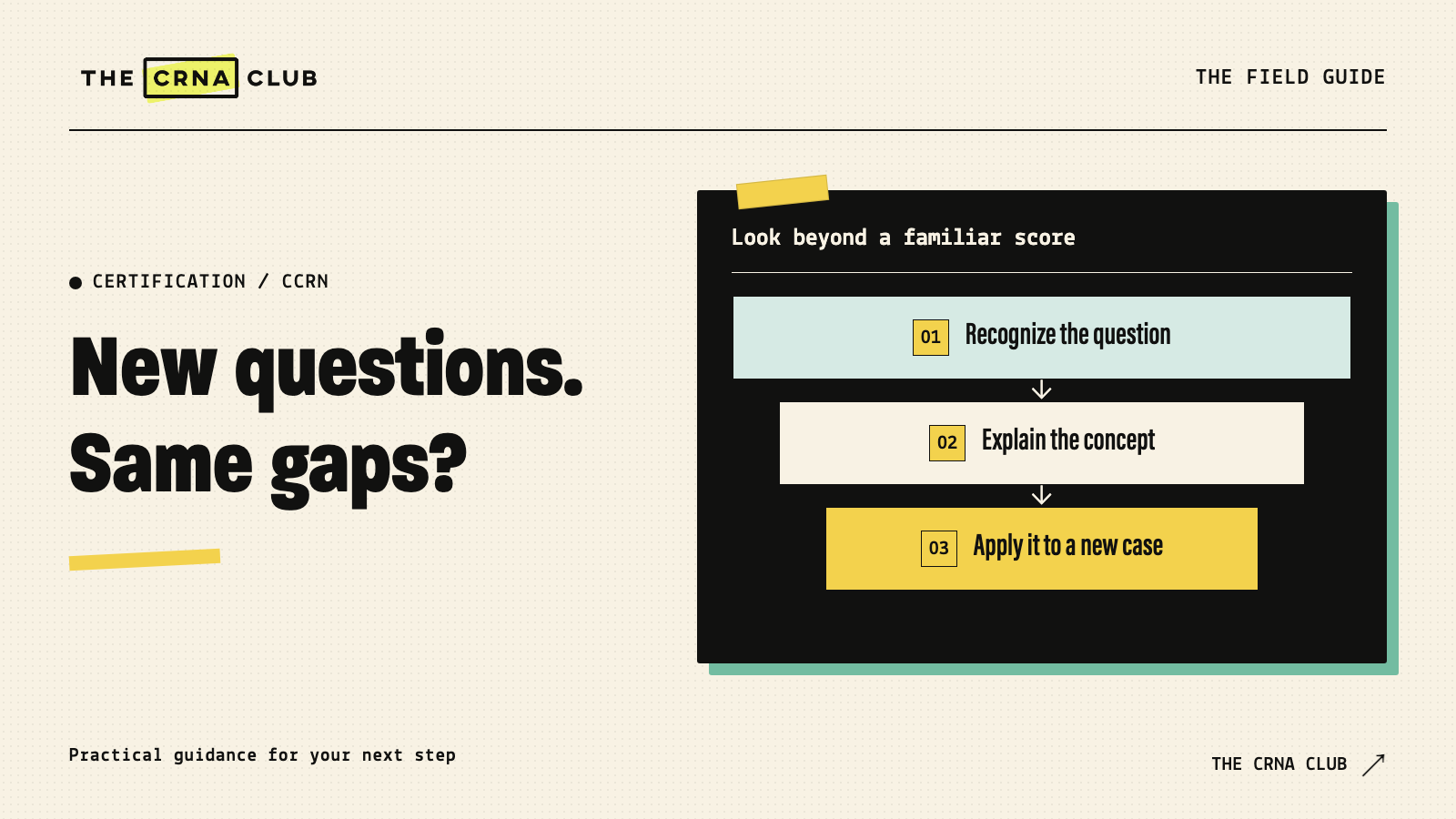
Say you keep missing hemodynamics questions. Before opening either resource, name the gap: “I confuse cardiac output with cardiac index.” Use the relevant explanation, then close it and explain the relationship. Try different numbers afterward. If you can only repeat the first answer, the concept needs another pass.
The CCRN Toolkit keeps the teaching and practice together. Bring your book in for another explanation when it helps, rather than automatically assigning the same topic twice.
How do you use your CCRN resources in one study session?
Give each resource a job before you start. Here’s an example 45-minute session for one narrow gap, not an exam-readiness formula:
| Time | Task | Resource to use |
|---|---|---|
| 5 minutes | Name one concept you missed or guessed | Your practice notes |
| 15 minutes | Work through the missing explanation | The relevant toolkit video or book section |
| 10 minutes | Explain the concept with the material closed; reopen only the step you cannot explain | Your own words, then the same teaching source |
| 10 minutes | Try a few related questions and review their explanations | Your existing question bank |
| 5 minutes | Write what is still unclear and schedule a later check | Your study planner |
That’s 45 minutes total. Keep the question set small enough to finish its review. A complicated explanation may need the whole block; move practice to the next session instead of rushing it. Our planner helps organize topics around selected workdays, and you can adjust tasks when the week changes.
Use the seven-day membership trial to try a lesson on a topic you actually find difficult. The focused paid Toolkit and the broader platform trial are separate offers.
Should you use flashcards or Anki for the CCRN?
Use flashcards for information you need to recall and explanations you want to test again later. Make them from the mistakes and uncertain answers in your own practice. You don’t need to turn every sentence in Barron’s into a card before you start answering questions.
Anki schedules reviews based on how you rate your recall. Paper cards work too if you’ll actually return to them. The format matters less than asking a clear question and checking an accurate answer.
Try cards such as:
- “What finding did I overlook in this question?”
- “Why did my original answer fail to fit?”
- “What would need to change for the other answer to make sense?”
Then add the concept-specific explanation after you’ve checked it. A card reading “renal: review again” won’t help tomorrow. A focused prompt about the connection you missed gives you something to retrieve.
Use your own words and verify unfamiliar shared cards against current teaching. Flashcards help you revisit what you’ve learned. If you still don’t understand the explanation, return to the lesson before building a larger deck.
How should you review questions you get wrong?
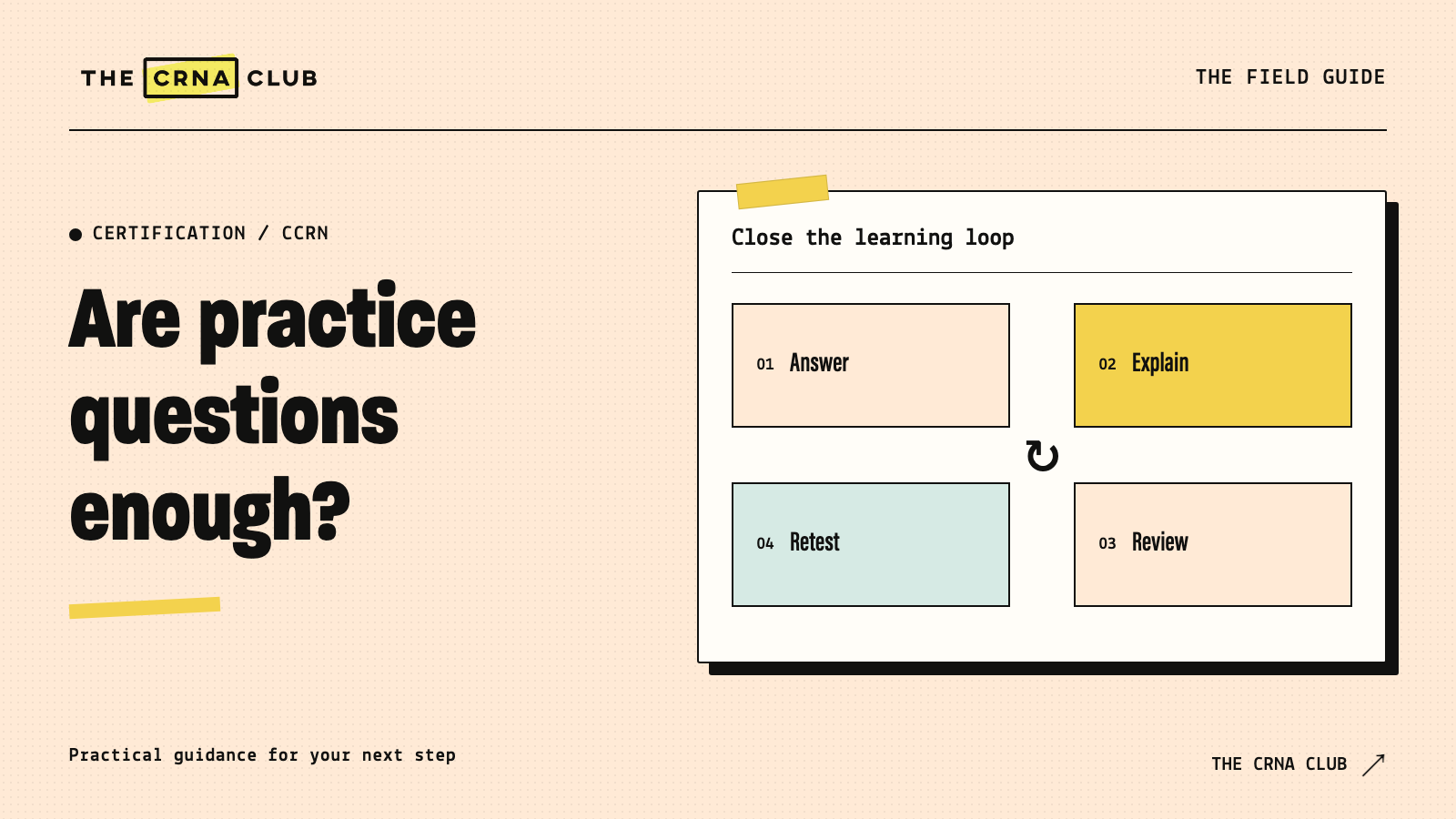
Explain why your answer didn’t fit, learn the missing concept, and try a different question later. Copying the correct letter into a notebook doesn’t show you understand the choice. Correct guesses need review too, because the score doesn’t tell you whether you knew the answer or got lucky.
Use a short note:
-
You didn’t understand the concept: Review the relevant toolkit lesson and explain it without notes.
-
You overlooked a finding: Name the finding and explain how it changes the answer.
-
You remembered the answer from before: Check the topic with an unfamiliar question.
-
You understood the explanation but forgot it later: Make one focused card and revisit it.
Our questions and video library work together here. A missed question tells you which explanation to revisit. The next attempt tells you whether the review helped. You can explore the broader learning library through the seven-day membership trial.
What should you do before buying another CCRN resource?
Name the problem you want the purchase to solve. If you need another explanation, look for teaching. If you’ve memorized a small set, fresh questions might help. If the problem is finding study time, another book won’t create an off-day block.
Check what you already own first. A book bought used might have different online access from a new copy. A question subscription might expire before your planned exam. Check the current product details rather than relying on what came with somebody else’s purchase last year.
And keep the current AACN test plan beside your resources. Use its scope to catch an area you haven’t studied, even when that topic rarely appears in your own unit. The CCRN overview covers the broader exam context.
Our Final Thoughts
A useful CCRN plan gives you something specific to do when you sit down: a lesson to understand, questions to work through, and time to review what you missed. Barron’s or flashcards can fit into that plan. You don’t need to collect every resource another nurse used before you begin.
Take the Next Step
Explore the CCRN Toolkit for the study planner, video lessons and practice questions. Add your real workdays, review the first week’s workload, and start with one topic you need help explaining. If you want to explore the full application platform alongside your studying, try The CRNA Club free for seven days.