What resources should you use to study for the CSC exam for CRNA school?
Sachi, CRNA
CRNA
In This Article (9 sections)
- Which CSC resources should you use first?
- What should a CSC question source provide?
- When do you need a cardiac-surgery reference?
- How do you choose the lesson or reference you need?
- How should your CVICU background influence the resource choice?
- How do you use the resources together during a study session?
- Should the November 2026 revision change everything you buy?
- Our Final Thoughts
- Take the Next Step
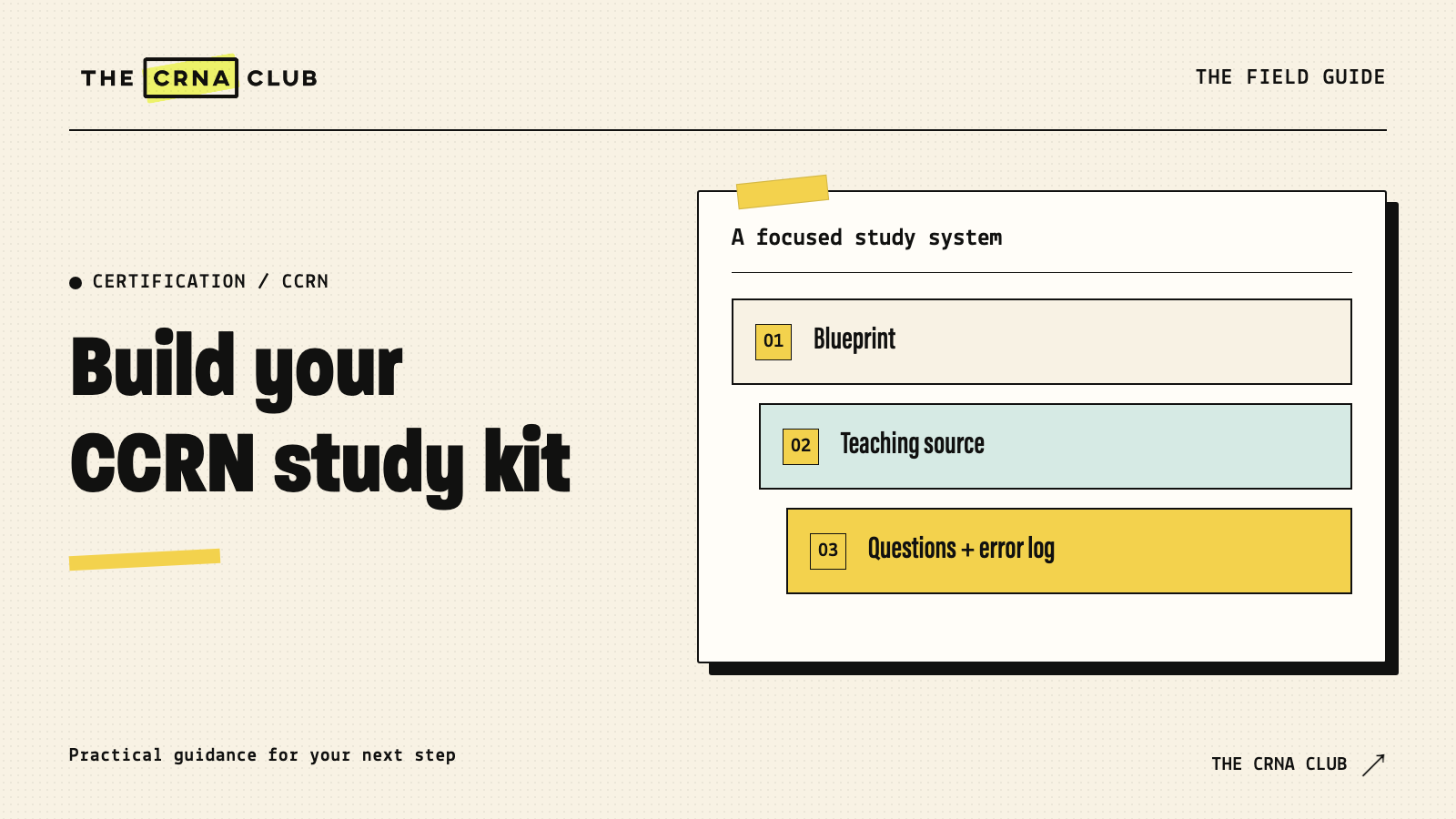
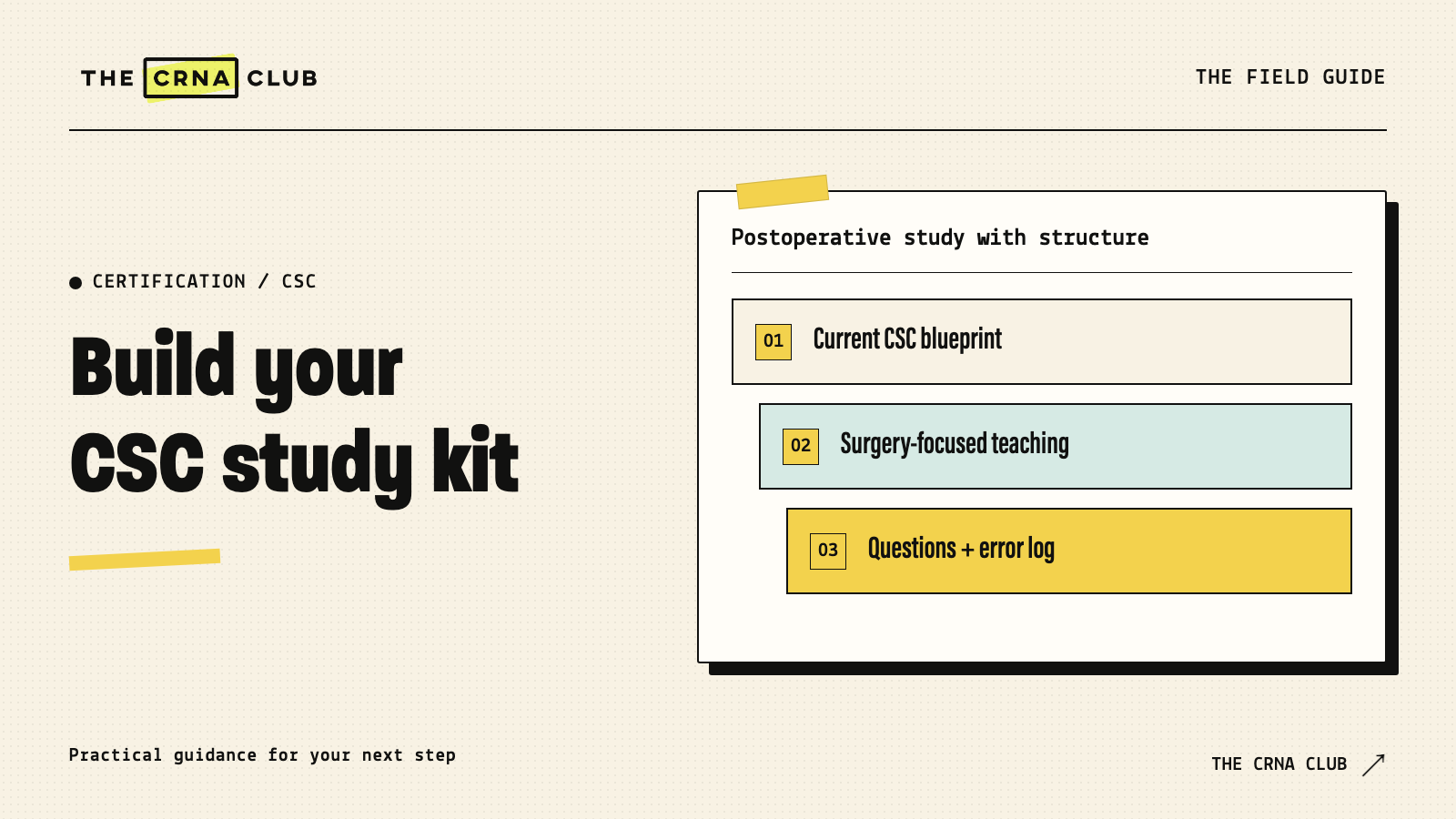
For CSC preparation, we recommend our CSC practice questions and planner, with learning-library lessons for the cardiac physiology and medications you need to review. You can use them through the seven-day membership trial. Keep AACN’s exam outline beside your plan, and add a cardiac-surgery reference for procedures or postoperative problems you need to understand more deeply.
If you’re taking CSC while applying to CRNA school, keep both plans visible. The exam covers cardiac-surgery knowledge. Your application still needs the experience, academic work and other requirements stated by each target program.
Use our certifications beyond CCRN guide for the broader decision about another credential. This guide focuses on selecting a workable CSC resource set once you’ve decided the exam serves a real purpose.
Which CSC resources should you use first?
We suggest using the CSC outline beside your CSC planner. Choose a topic you’re less comfortable with, review the explanation, and try a few CSC questions. The outline tells you what to cover. The planner gives the work a place in your week, and the questions show which explanation you still need.
AACN’s CSC certification page links the handbook and preparation options. Review your qualifying practice and base credential before building an ambitious schedule. Studying unfamiliar postoperative care doesn’t create the required clinical experience.
Then label the outline with your appointment date. Revised CMC and CSC exams begin November 19, 2026. Use the correct version for an earlier or later appointment, and recheck if you reschedule across the transition.
Print or save a clean copy for your personal checklist. Beside each item, add where you’ll learn it, when you’ll practice it and what remains unclear. An outline with your own gap notes becomes more useful than a downloaded file you opened once and forgot.
Don’t worry about making the checklist look polished. It needs to help you find unfinished work quickly. A blank next to an unfamiliar procedure gives you a concrete task for the next session.
What should a CSC question source provide?
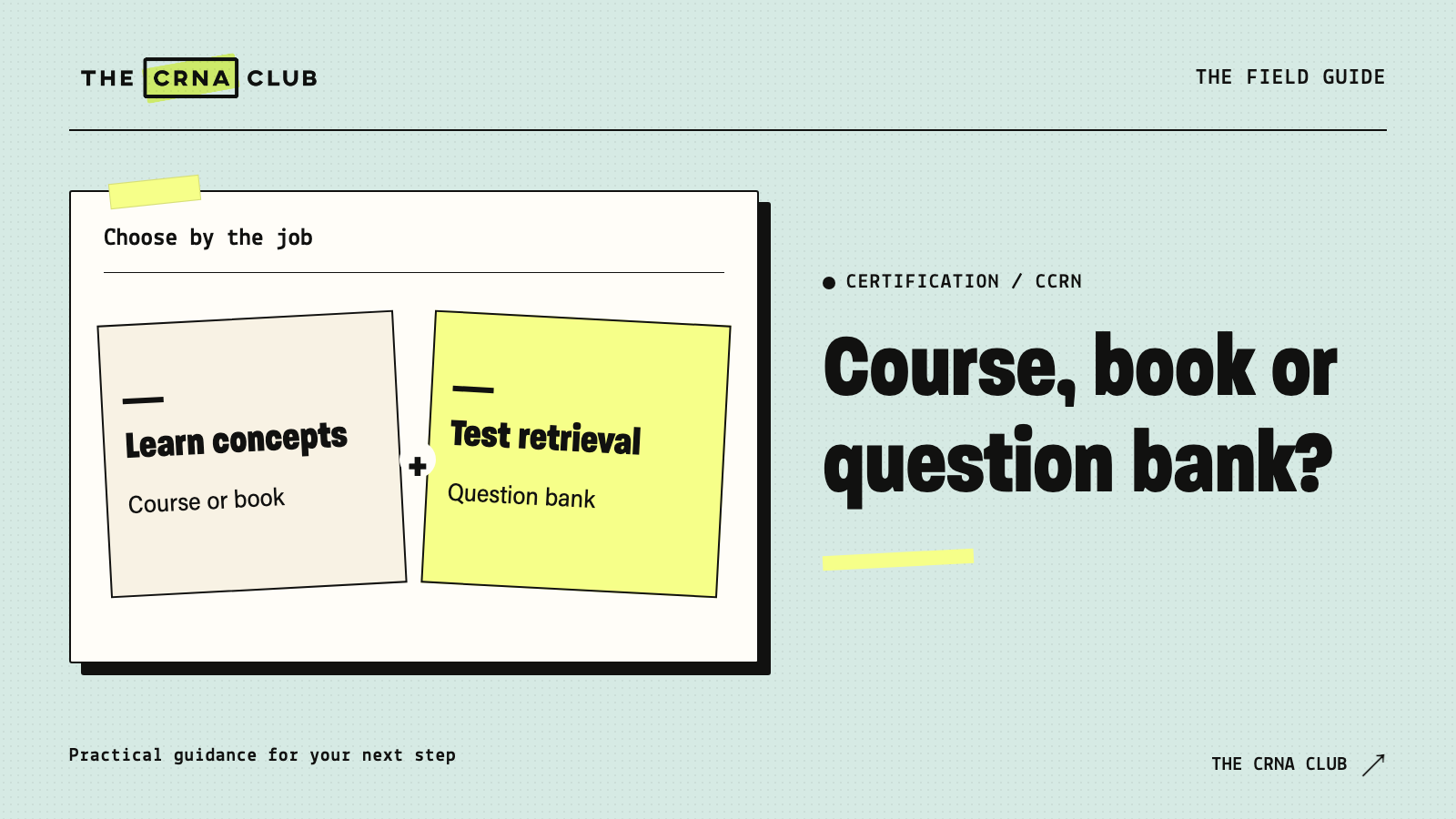
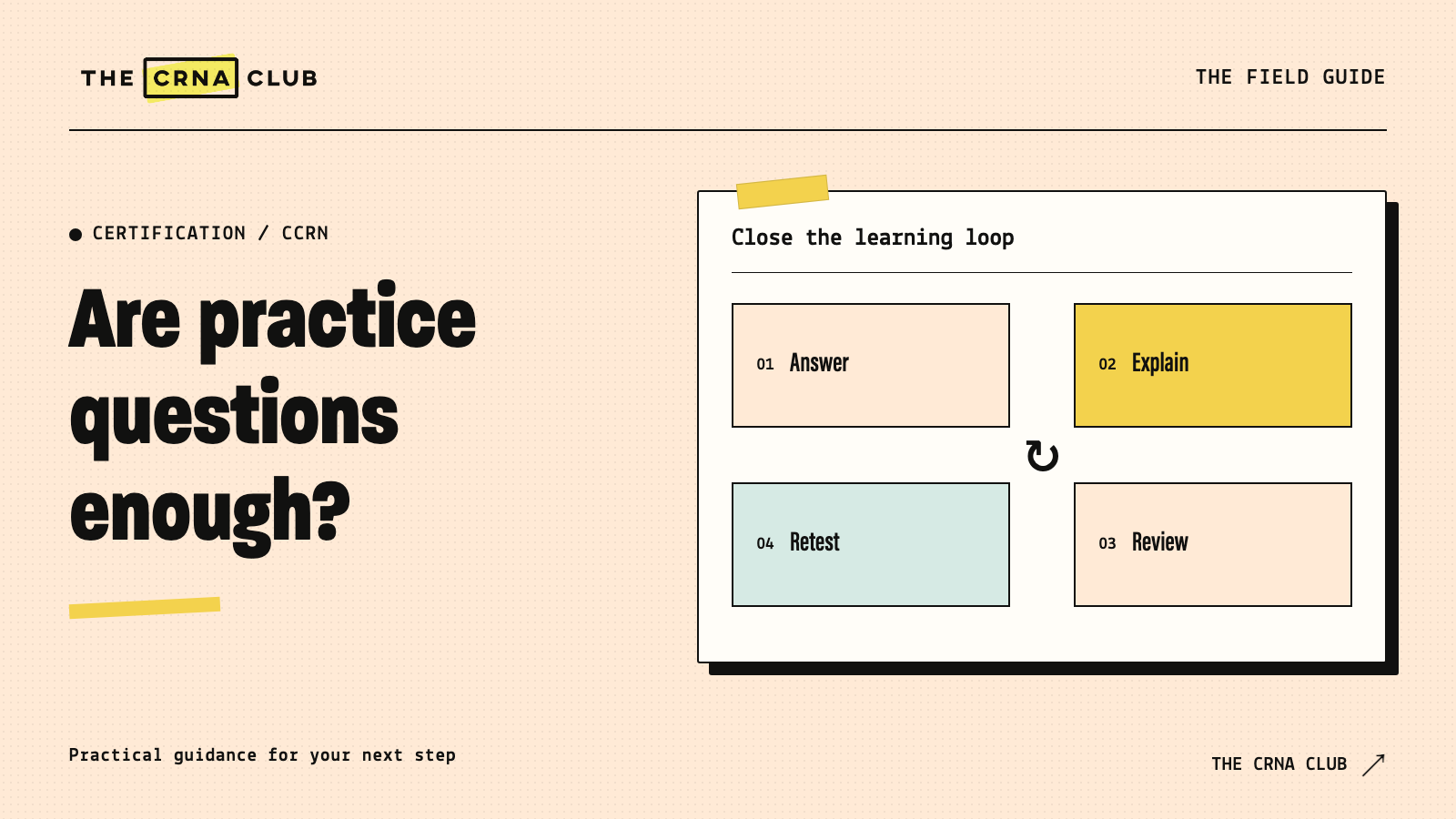
Use the CSC questions to find what you can explain and what you can’t. Read the rationale even when you guessed correctly. If a procedure still doesn’t make sense, open the relevant reference section before the next set. We recommend leaving time for that review instead of measuring the session only by how many questions you finished.
Ask why the right answer fits this patient. What detail makes another option less appropriate? Try explaining that before rereading the rationale. If you can’t, write the question down in plain language so you know exactly what to learn next.
AACN lists its practice exam option among preparation resources and states it doesn’t require a particular commercial product for eligibility. Choose materials you understand and can realistically use.
Record whether each practice set was new, repeated, timed or completed with notes. A repeated score and a first-attempt score answer different questions about your learning. Keep uncertain correct responses in the review list alongside the items marked wrong.
Avoid recalled live exam questions or requests for someone else’s test content. You have an official outline and authorized preparation tools. Your goal is understanding unfamiliar situations, not recognizing a question someone remembers seeing.
When do you need a cardiac-surgery reference?
Use a cardiac-surgery reference when a missed question exposes a mechanism, procedure or postoperative context you can’t explain from your current notes. Read the relevant section with a specific question in mind. Then close the reference and explain the case again before testing the concept in unfamiliar practice.
AACN’s CSC bibliography identifies references used in exam development. It includes cardiac-surgery and broader critical-care sources. The list helps you locate appropriate reading, rather than requiring you to buy and read every book.
Two named options are worth comparing:
| Reference | How we suggest using it | Access detail to know |
|---|---|---|
| Cardiac Surgery Essentials for Critical Care Nursing, 4th edition, edited by Hardin and Kaplow | A nursing-focused source for postoperative assessment and care | AACN’s listing says new print copies include the eBook and Navigate Test-Prep; don’t assume a used copy includes unused access |
| Bojar’s Manual of Perioperative Care in Adult Cardiac Surgery, 6th edition | A reference to consult for a named perioperative question | This edition appears in AACN’s revised CSC bibliography; check available library access before buying |
For example, if you can’t explain the difference between bleeding and impaired drainage after surgery, look up the relevant postoperative complication section. Read for that question, write the findings that would change your explanation, then try a fresh case. You don’t need to start at page one of both books.
Now consider a different error: the nurse understood the mechanism but misread what the stem asked. Buying a larger textbook won’t directly fix that. Reviewing the question task and practicing careful interpretation is the more relevant next step.
Check your existing access before purchasing. Your employer, professional library or current study resources might already contain an appropriate reference. Use the resource to answer the named question and return to your plan. You don’t need to turn every gap into a new reading project.
How do you choose the lesson or reference you need?
Choose the explanation from the problem you missed. If pressure and flow are getting mixed up, we suggest our hemodynamic-monitoring teaching. If the missing piece is a surgical procedure, use your cardiac-surgery reference. Then come back to a CSC question and explain how the patient findings fit. You don’t need another whole course every time you miss something.
Before adding another resource, work through these questions:
- Name the gap: Which topic or mechanism needs an explanation?
- Check coverage: Find the section that teaches that topic.
- Try the explanation: Read or watch a sample you can follow.
- Plan the practice: Decide how you will check the learning afterward.
- Check access: Will it last for the period you need?
- Keep remaining gaps visible: What still needs another source?
For example, a hemodynamics lesson might strengthen a shared foundation while leaving surgical procedures or less familiar complications uncovered. Keep both facts in view. A useful partial resource doesn’t need to become your entire preparation system.
The CRNA Club’s seven-day membership trial includes CSC quiz questions and certification planning, along with broader critical-care and CMC teaching. Use the lessons to make cardiac physiology and pharmacology clearer, then apply those foundations through questions and targeted surgical reading.
How should your CVICU background influence the resource choice?
Use your experience to identify familiar concepts, then compare your usual cases with the full CSC outline. Clinical exposure helps connect new explanations to observations, but it doesn’t establish complete coverage. Give unfamiliar procedures and complications a planned source instead of assuming time in a CVICU has already taught every listed topic.
Imagine two hypothetical nurses with the same number of years in a unit. One mainly recovers routine coronary bypass cases. The other has a different surgical mix. Their eligible experience might overlap, but their study gaps won’t be identical.
Each should explain a familiar case without notes, then pick an unfamiliar outline item. The comparison tells them whether they need a short refresher, detailed teaching or reference reading. Choosing the same resource set because their job titles match would miss those differences.
For a focused postoperative assessment topic, our cardiac-surgery chest-drainage article offers a starting point. Keep it in its scope. One article about drainage doesn’t cover the full complications or therapeutic-interventions domains.
Write down what each resource adds. If two products do the same job and one remains unused, simplify. Your preparation needs time for application and review, not an expanding shelf of material you feel obligated to finish.
How do you use the resources together during a study session?
Let a specific gap determine the order of a session. Read or watch enough to understand the concept, explain it without the source, then try relevant questions and review uncertainty. Use the reference again only where the explanation remains incomplete. This creates feedback instead of a cycle of passive reading and repeated recognition.
A suggested session might begin with one unfamiliar postoperative topic from your outline. Spend the first part on the explanation. Then write a brief hypothetical case or use authorized practice. Finish by naming the detail you still don’t understand.
On a later day, revisit the concept in mixed questions. Mixing prevents the chapter title from revealing the answer category before you read the case. Record whether you can explain why the answer fits.
Leave a next task in the notebook before you stop. “Review monitoring” is vague. “Explain which measurement in this case was unreliable and why” is useful. A clear starting point makes it easier to return after several shifts without rereading everything.
The exact session length is personal. Choose a block you can protect and use well. A long scheduled session isn’t helpful if it repeatedly competes with sleep or other required work.
Should the November 2026 revision change everything you buy?
The revision should prompt a coverage comparison, not automatic replacement of every resource. AACN states existing study materials remain useful for the revised exams. Check the updated outline against the material you own, add missing topics and reverify version-sensitive exam information separately.
The AACN revision announcement identifies November 19, 2026 as the effective date. Keep the date beside your resource checklist. If a resource uses an older domain percentage in its introduction, correct that planning fact while evaluating the accuracy of its teaching independently.
Don’t rush the exam to avoid the revision. Choose the appointment using eligibility, preparation and your broader calendar. Accurate physiology doesn’t expire because a date changes, but an outline check still belongs in the plan.
Our Final Thoughts
A useful CSC resource set has a clear job for each piece: the official scope, practice with explanations, and deeper reading where your understanding needs it. Keep the set small enough to use.
When you’re unsure what to buy next, name the question you need answered. If your current materials already answer it, spend the time learning and applying the explanation before adding another resource.
Take the Next Step
Start a seven-day membership trial and use the CSC questions to find your next study topic. Review cardiac foundations in the learning library when needed, add surgical reading for the remaining detail, and put both in the CSC planner. For a calendar-first start, the free certification planner includes one lifetime free plan.