Why am I passing CCRN practice tests but still getting questions wrong on new material?
Sachi, CRNA
CRNA
In This Article (10 sections)
- How do you tell whether you learned the concept or remembered the answer?
- Which details should you record beside a practice score?
- What would a misleading improvement look like?
- How do you review mistakes without memorizing the rationale word for word?
- How much unfamiliar practice should you keep available?
- Does the official passing score give you a practice target?
- What should you change if you keep recognizing answers?
- How does this help with CRNA school preparation?
- Our Final Thoughts
- Take the Next Step
A high CCRN practice score sometimes reflects how well you remember those questions. When new material still feels difficult, hide the choices and explain why the answer fits. If you can’t, go back to the underlying topic before repeating the same set.
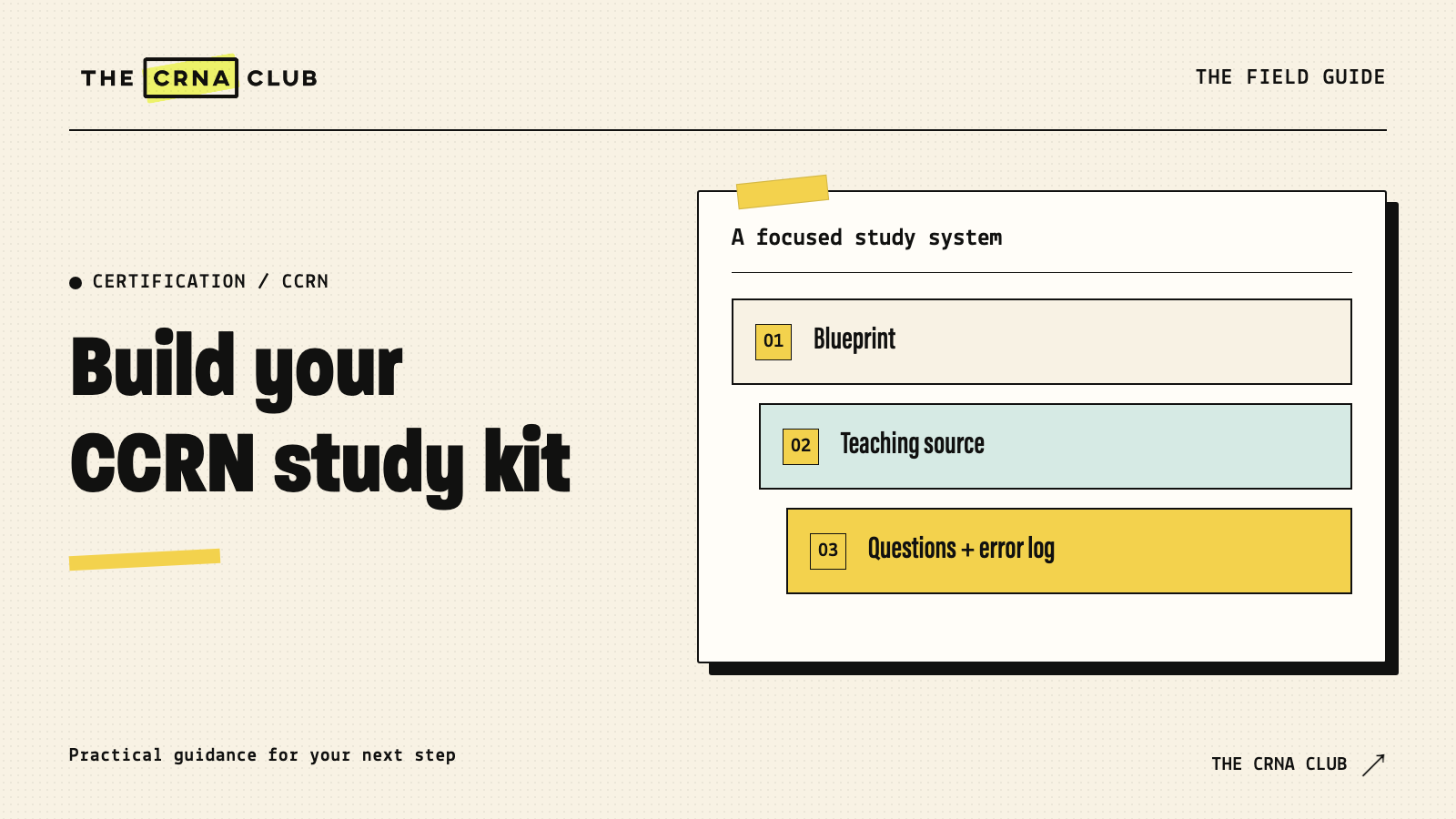
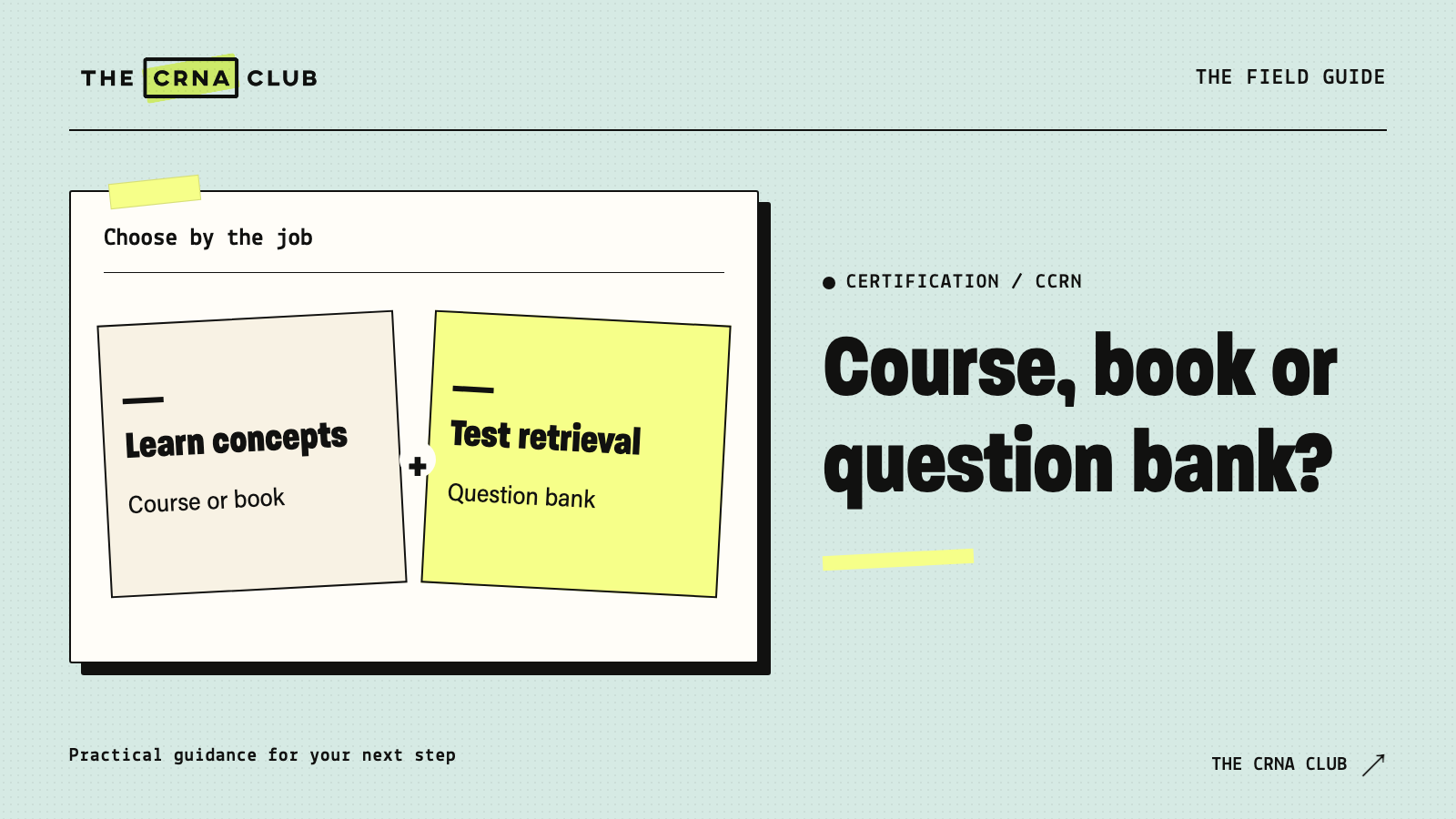
We suggest pairing the video lessons and practice questions in our CCRN Toolkit. Use a missed concept to choose the lesson, then try an unfamiliar example. The planner gives that review time a place around your shifts.
It feels frustrating to like your score one day and struggle the next. Let’s look at what actually changed between those attempts.
How do you tell whether you learned the concept or remembered the answer?
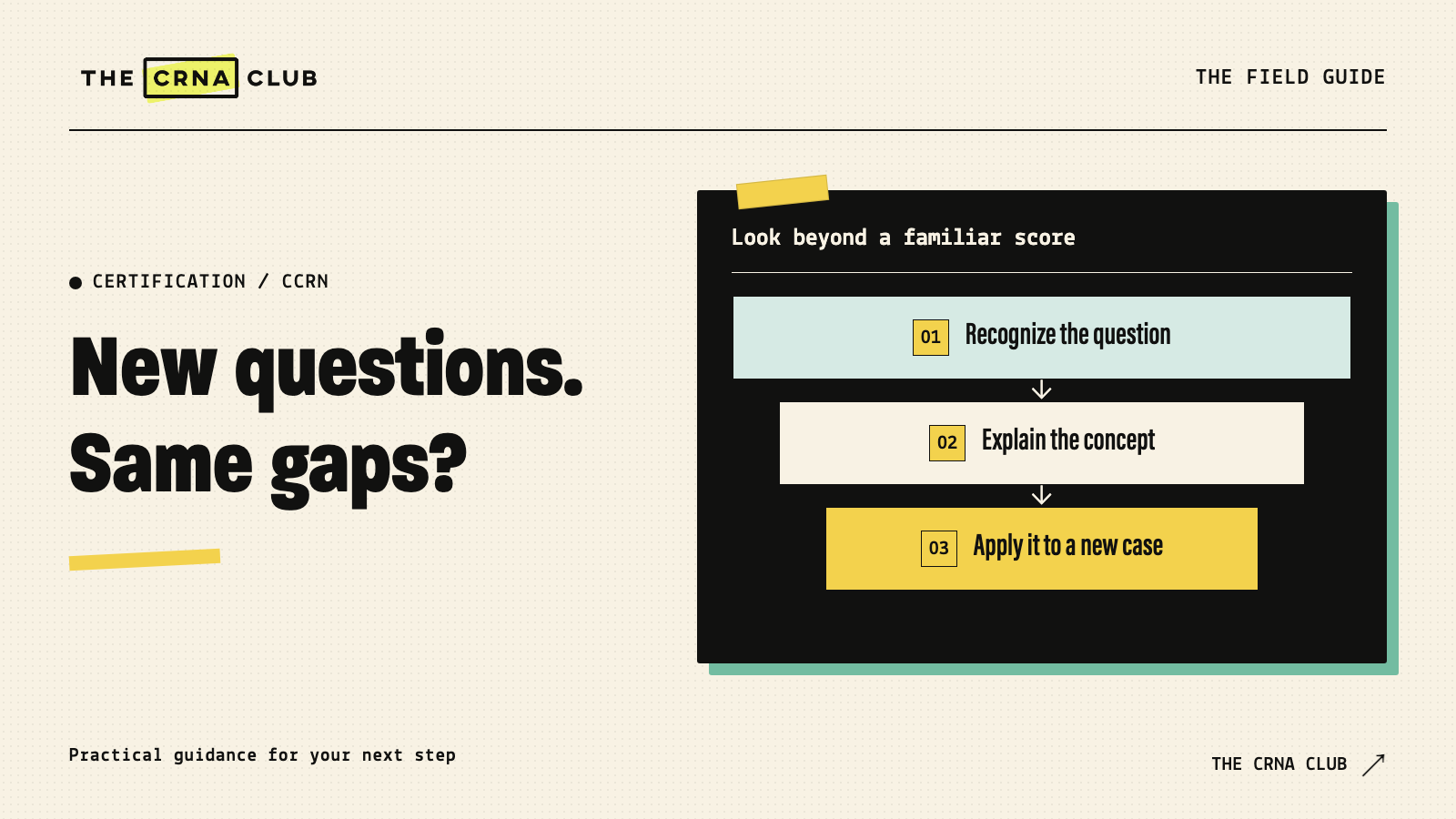
Hide the choices and explain the problem in your own words. Identify which findings support your interpretation and what change would alter your decision. Then try a different example later. If you depend on the original wording or answer position, the topic needs more independent retrieval and application.
You aren’t trying to prove you know nothing. Familiarity often develops alongside learning. You are checking whether the explanation survives when the cues change.
Say you’ve reviewed a hemodynamics question several times. You know which answer to choose. Now cover the choices. What does each measurement tell you? Why does that combination support your answer? If you’re repeating the rationale’s last sentence, you’ve found the part needing more teaching.
Use the relevant CCRN lesson to work through those measurements. Then close it and explain the relationship yourself. Don’t start by looking for another nearly identical question. First make sure the explanation holds up without the original cues.
AACN’s preparation guidance treats practice as a way to identify areas for further study. Use that purpose when deciding whether a familiar result answers the question you are asking.
Which details should you record beside a practice score?
Record whether the questions were fresh, what topics they covered, whether the session was timed and how you used explanations. Without those details, two identical percentages might describe very different tasks. Your notes help you compare sessions with similar demands and choose the right follow-up work.
A short record is enough:
-
Familiarity: “First attempt, no recent review” means less opportunity to remember a specific answer.
-
Topic selection: “Mixed domains, including weak areas” is a different task from a favorite-topic set.
-
Timing: “Untimed, explanations opened afterward” describes a learning session rather than a timing check.
-
Uncertain answers: “Four correct answers involved guesses” shows why the percentage still includes gaps needing review.
-
Follow-up: “Revisit one mechanism Thursday” turns the result into a concrete task.
Keep the notes short. “Fresh mixed set, untimed, four guesses” tells you plenty. You already chart enough at work. The point is to remember what you were comparing when you look back next week.
What would a misleading improvement look like?
An improvement is difficult to interpret when the later task is easier or more familiar. Repeating one set immediately, excluding difficult topics or reviewing explanations while answering all change the task. Keep those learning sessions, but don’t compare them directly with a fresh mixed assessment as though conditions stayed the same.
Imagine a nurse who answers twenty unfamiliar questions on Monday and gets twelve correct. She reviews the rationales and repeats the set Tuesday, answering eighteen correctly. She now has useful evidence she remembers more of that set.
On Friday, she attempts twenty new questions covering related concepts and answers thirteen correctly. Her first reaction is that Tuesday’s work failed. The better next question is which concepts improved and which remain unclear.
She discovers she explains two previously missed ideas well but still guesses on another topic. Tuesday’s improvement contained both answer memory and some learning. Friday helps her separate the two.
This example doesn’t establish a passing threshold. Its numbers illustrate how changing conditions affects interpretation. Keep your own comparisons honest rather than borrowing someone else’s percentage as a promise.
How do you review mistakes without memorizing the rationale word for word?
Write the reason in language you would use to explain it to a colleague. Describe the finding you missed, the connection you needed and what would make another option reasonable. Keep the note short enough to retrieve later without rereading an entire paragraph.
Copying a polished rationale feels efficient because the explanation is already complete. But copying doesn’t show where your understanding stopped. Writing from memory exposes that point.
Try finishing these prompts after checking a credible explanation:
- The question asked me to decide this specific thing.
- I chose my answer because I thought this finding meant something else.
- The detail changing the decision was…
- Next time I will check…
Those prompts guide personal review. They aren’t an official AACN scoring method. Use whichever ones identify your actual error and leave out the rest.
If you still cannot explain the concept, return to teaching. A brief answer key sometimes assumes background knowledge you don’t yet have. Address that background instead of rereading the same sentence ten more times.
How much unfamiliar practice should you keep available?
Keep enough fresh practice to check whether repaired concepts transfer, especially later in your plan. You don’t need to reserve an arbitrary percentage of every bank. You do need a way to attempt something unfamiliar after the first round of learning, without immediately looking at the explanation.
One practical approach is to alternate focused repair with fresh mixed practice. Topic-specific work gives you space to investigate a gap. Mixed work checks whether you still identify the relevant problem when the topic isn’t announced.
The balance depends on what you observe. If unfamiliar practice reveals broad content gaps, spend more time learning those topics. If understanding is stronger but timing is difficult, practice under suitable time conditions and review where time goes.
Our CCRN overview provides the broader examination context. Keep coverage in view so fresh practice doesn’t drift toward whatever happens to feel enjoyable that week.
Does the official passing score give you a practice target?
An official raw cut score applies to the certification examination. A percentage from a separate practice set describes that set. Different content, difficulty, familiarity and testing conditions prevent you from treating the two numbers as interchangeable predictions.
Use AACN’s current exam statistics and cut-score page when you need the official examination number. Don’t convert it into a universal commercial-bank readiness requirement.
The same caution applies to a friend’s report. You don’t know whether their practice questions, baseline experience or session conditions matched yours. Their result might help you generate a question about your plan. It won’t certify your readiness.
Look for a broader pattern: coverage across the applicable plan, clearer explanations, better reasoning on fresh material and manageable timing. Those are observations you control and investigate.
What should you change if you keep recognizing answers?
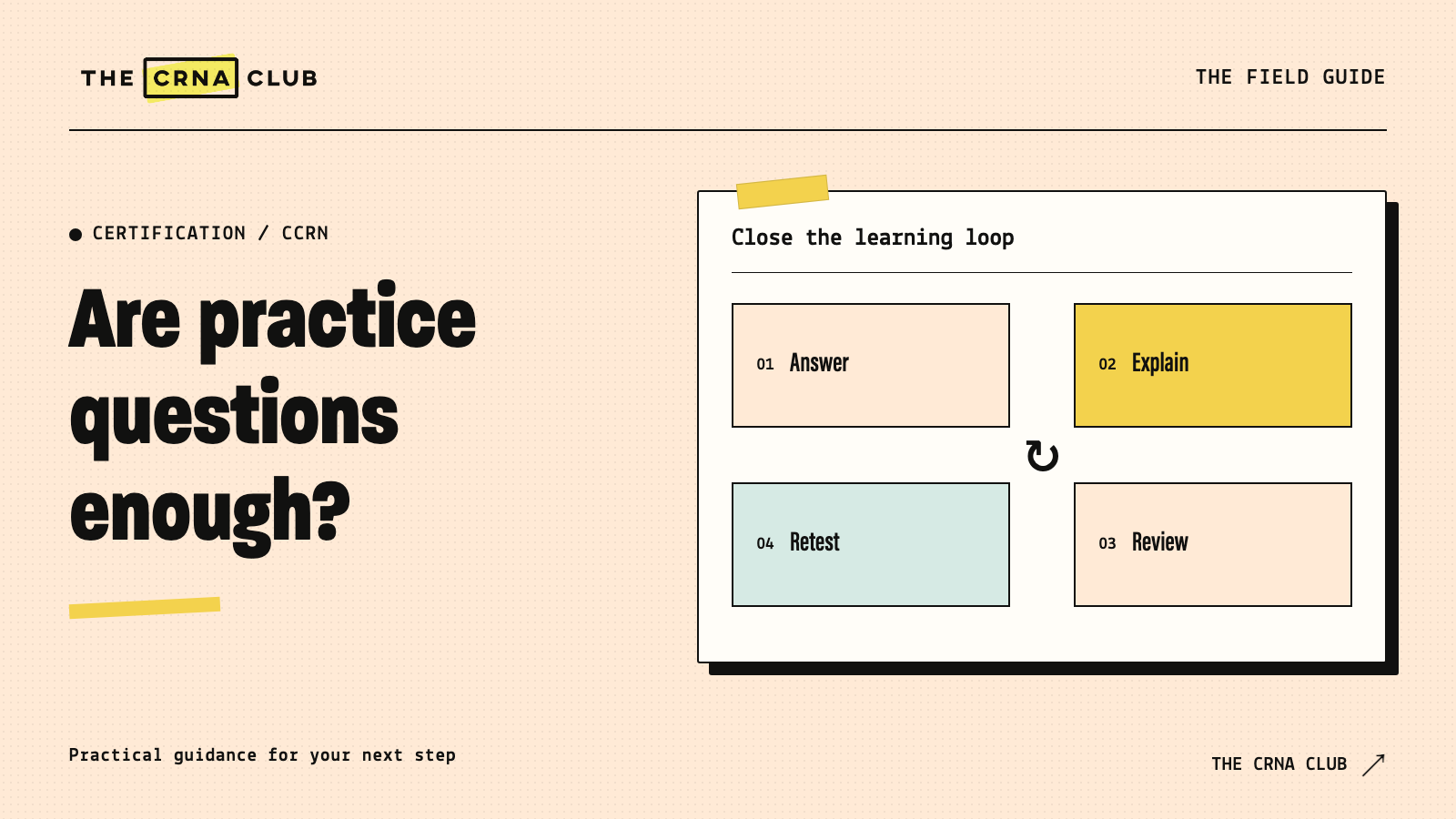
Choose a short period to change the study task. Stop repeating your strongest familiar set as the main measure of progress. Pick one weak concept, explain it without choices, repair the missing connection and schedule a fresh check. Record what changed in your reasoning, not only the percentage.
Try changing one part of your week. On Monday, use a lesson to clear up the concept. On Wednesday, explain it without notes. On Friday, try unfamiliar practice and review your reasoning. If Friday still feels unclear, return to the step you couldn’t explain rather than resetting the entire plan.
Also protect rest. A new question set after a difficult run of shifts doesn’t offer the same conditions as rested study. Note the difference without using it to dismiss every mistake.
How does this help with CRNA school preparation?
Explaining a concept independently is useful beyond certification practice. Later, interview preparation asks you to discuss your clinical reasoning in your own words. The habit of identifying the finding, explaining the connection and checking an alternative gives you material to practice speaking clearly.
Keep the application decision separate from your daily score. If the credential’s timing is the issue, read how CCRN fits CRNA applications and verify your target programs’ policies. A difficult practice evening doesn’t settle your whole application plan.
Write down one thing you now explain more clearly than last week. Then write one connection still needing work. Keeping both in view prevents one difficult set from erasing the progress you have made.
We built the CCRN teaching and practice tools to help you move between a missed question and the explanation behind it. Try that process in the seven-day membership trial. Choose an actual weak topic for your first session, so you’re checking whether the teaching helps where you need it.
Our Final Thoughts
Look beyond whether the percentage rose. What do you explain more clearly now? Which new example still confuses you? Use those answers to choose your next lesson and practice session. You don’t have to keep proving you remember the same question set.
Take the Next Step
Use our CCRN Toolkit to pair the explanation you’re missing with practice and a realistic plan. If you already have teaching and questions, the free certification planner gives you one lifetime free plan to organize your review.