CRNA Programs in Dallas-Fort Worth
There are 2 accredited CRNA programs in the Dallas-Fort Worth area: Texas Christian University and Texas Wesleyan University. In-state tuition runs $115,000 to $126,408 across the 2 programs that publish a number. All 2 programs that publish a GRE policy require it. Every program that publishes a minimum asks for 1 year of critical care experience.
Every figure on this page is computed from our verified program database. Where a program does not publish a number, we say so instead of estimating.
CRNA Club Snapshot
Dallas-Fort Worth CRNA Programs at a Glance
Compare all 2 CRNA programs in Dallas-Fort Worth
Click a column heading to sort. Programs that do not publish a value are shown as “Not published” and always sort last.
| Program | City | Degree | Length | Tuition (in-state) | GRE | CCRN | Min ICU experience | Application deadline |
|---|---|---|---|---|---|---|---|---|
| Texas Christian University | Fort Worth | DNAP | 3 yr | $115,000 | Required | Required | 1 year | May 15, 2027 |
| Texas Wesleyan University | Fort Worth | DNAP | 3 yr | $126,408 | Required | Required | 1 year | Nov 1, 2026 |
Data coverage: 2 of 2 publish in-state tuition; 2 of 2 publish a program length; 2 of 2 publish a GRE policy; 2 of 2 publish a CCRN policy; 1 of 2 publish a minimum GPA; 2 of 2 publish an application deadline. Tuition figures are reported as each program publishes them — some quote per-year cost and others quote total program cost, so confirm before comparing.
Not sure if you qualify for these programs?
Find out exactly where you stand and what gaps to focus on.
How to actually choose between 2 Dallas-Fort Worth programs
Okay, so you've got the table above and all 2 of these programs are within driving distance of you. That's a good problem. But the stuff in that table is not what's going to separate them.
I did a terrible job when I was looking for CRNA programs. And the thing I've watched people skip over, every single time, is the thing that ends up mattering most day to day: clinical sites.
Two Dallas-Fort Worth programs can look nearly identical on paper and give you completely different two and a half years. Even sitting in the same city, they send students to different hospitals. One might keep you at a big level 1 trauma center with hearts and complex regional. Another might rotate you through five community sites plus a rural block three hours away. Neither one is wrong. They just produce different new grads.
So the questions I want you asking each program in this metro, out loud, on the phone:
Number one, name every clinical site and how far the farthest one is. Number two, how many hearts, peds, OB and regional cases does a typical student actually get, not the minimum. Number three, is any rotation a required relocation. Number four, do students work during the program, and honestly, does anyone pull it off.
And listen, tuition here spans $115,000 to $126,408 , which is real money. But a cheaper program in a metro where you already have housing, family, and a job you can keep until start date can beat a pricier one three states away. I'm not saying cost doesn't matter. It matters a lot. I'm saying it's one piece of the puzzle, not the whole puzzle.
It is your responsibility to reach out to these programs and get these answers yourself, because none of it lives on a website. We've got a longer walkthrough of how to weigh all of this in how to choose a CRNA program, and if you want to see how these stack up against programs nationally, that's the best CRNA schools breakdown.
Explore Dallas-Fort Worth CRNA Programs
Compare 2 nurse anesthesia programs in the Dallas-Fort Worth area. Click any card for full details.

Texas Christian University
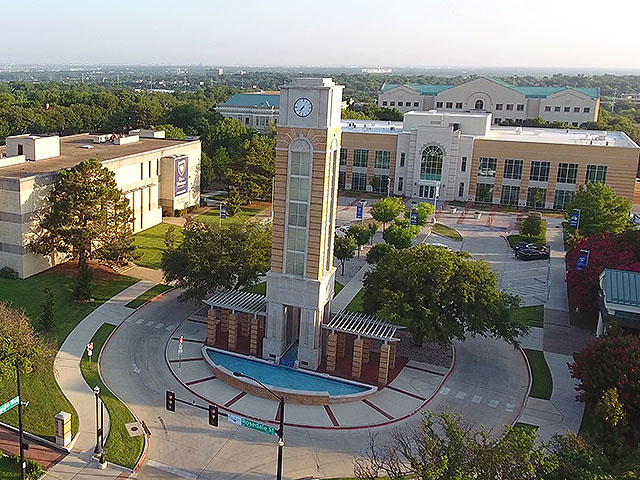
Texas Wesleyan University
If 2 programs isn't enough
2 programs in one metro is a thin list to apply to. Most people who get in applied to more than that, and reapplying is not failing, it's just what the majority of applicants end up doing. So widen the net before you narrow it.
Start with the full state list, then go by drive time from where you live.
Frequently Asked Questions
Click a question to see the answer.
How many CRNA programs are in Dallas-Fort Worth?
There are 2 accredited CRNA programs in the Dallas-Fort Worth area: Texas Christian University and Texas Wesleyan University. All of them are in Fort Worth.
Which Dallas-Fort Worth CRNA program is cheapest?
Of the 2 Dallas-Fort Worth programs that publish in-state tuition, Texas Christian University in Fort Worth lists the lowest figure at $115,000. The highest in the metro is $126,408. And sticker price isn't cost. Programs quote it differently, some per year and some for the whole thing, so confirm with the program before you rank anything on this.
Do Dallas-Fort Worth CRNA programs require the GRE?
Yes. All 2 Dallas-Fort Worth programs that publish a policy require the GRE. Some waive it for a high GPA or a graduate degree, so ask before you assume you're stuck taking it.
Can I commute to a Dallas-Fort Worth CRNA program?
Honestly, maybe. Campus is the easy part. All of them are in Fort Worth, so the campus drive is predictable. But clinical rotations are the thing that wrecks commute math. Programs send students to sites that can be an hour or more out, sometimes for months at a time, and a few require temporary relocation for a rural or specialty rotation. That is not on most program websites. So ask admissions two specific questions: where are your clinical sites, and how far is the farthest one students are assigned to. I'm not saying you can't commute, plenty of students do it. Just get the real answer before you sign a lease.
Not sure if you're competitive enough?
Get personalized insights on your GPA, ICU experience, and credentials. See exactly what gaps to focus on to strengthen your application.