How Do You Choose CRNA Schools When You Cannot Move Anywhere?
Sachi, CRNA
CRNA
In This Article (10 sections)
- Which location limits are fixed, and which are preferences?
- Have you checked the entire training geography?
- What should you ask about a hybrid or online label?
- Are the nearby programs compatible with your application?
- How do you test whether your support plan matches the schedule?
- What costs change when you stay near home?
- What if the workable school list is very small?
- How should you keep track of the schools that fit?
- Our Final Thoughts
- Take the Next Step
Choose CRNA schools by separating the geographic limits you truly cannot change from preferences you could reconsider. Then check eligibility, campus attendance and every required clinical location within that workable area. A nearby campus doesn’t guarantee nearby rotations. Your shortlist should contain programs you meet the requirements for and could realistically attend through the entire curriculum.
You don’t have to pretend you can move anywhere. Maybe you share custody, your partner’s job is tied to a city or your child’s care depends on family nearby. Those are parts of your life, and the application plan needs to work inside them.
We recommend starting in our School Database with the area you could actually live in. Save the programs that look possible, then keep the attendance and rotation questions with each saved school. Use the free preview for an initial three-program shortlist, or the seven-day trial for the broader planning tools.
Which location limits are fixed, and which are preferences?
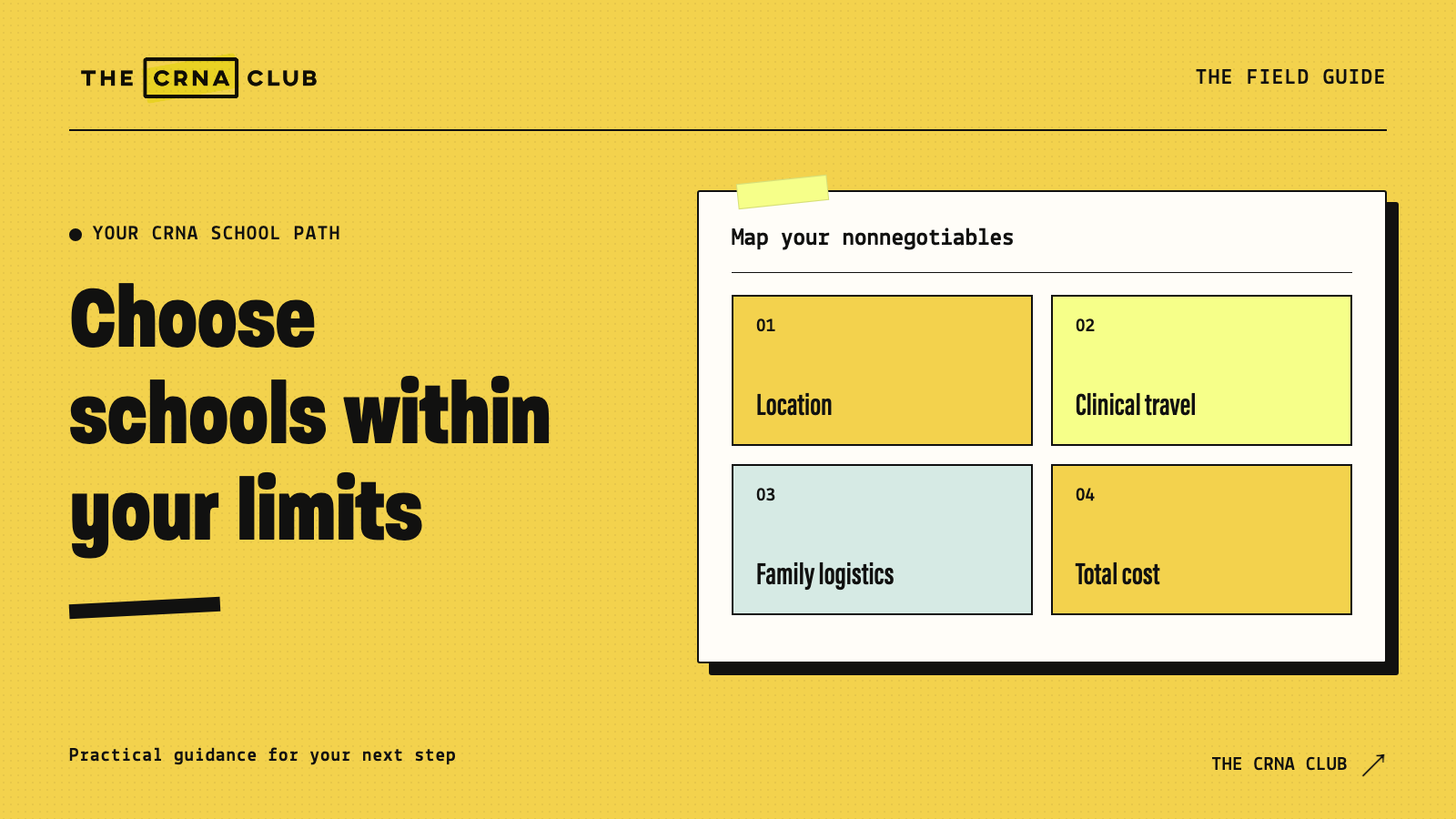
Write down the reason behind each limit and what it would take to change it. A legal custody arrangement, essential caregiving role or necessary treatment access is different from a preference to avoid moving. You don’t need to justify those circumstances to strangers, but you need to understand them clearly enough to compare programs honestly.
Try using three columns:
| Constraint | What it means in practice | Information still needed |
|---|---|---|
| Must remain within commuting distance of shared-custody home | No full-family relocation during the program | Required overnight rotations and their length |
| Partner cannot change jobs this year | Relocation would separate households temporarily | Whether a later start or different cohort changes feasibility |
| Grandparent provides weekday childcare | Existing support covers standard school hours | Early starts, late finishes and backup care |
| Prefer to remain near current friends | Relocation is possible but less comfortable | Cost and practical support in another location |
These are hypothetical examples. Your columns will look different, and that’s fine.
A vague radius such as “within two hours” needs another question: two hours from what, and how often? A commute for an occasional campus visit differs from travel before repeated early clinical starts.
Have you checked the entire training geography?
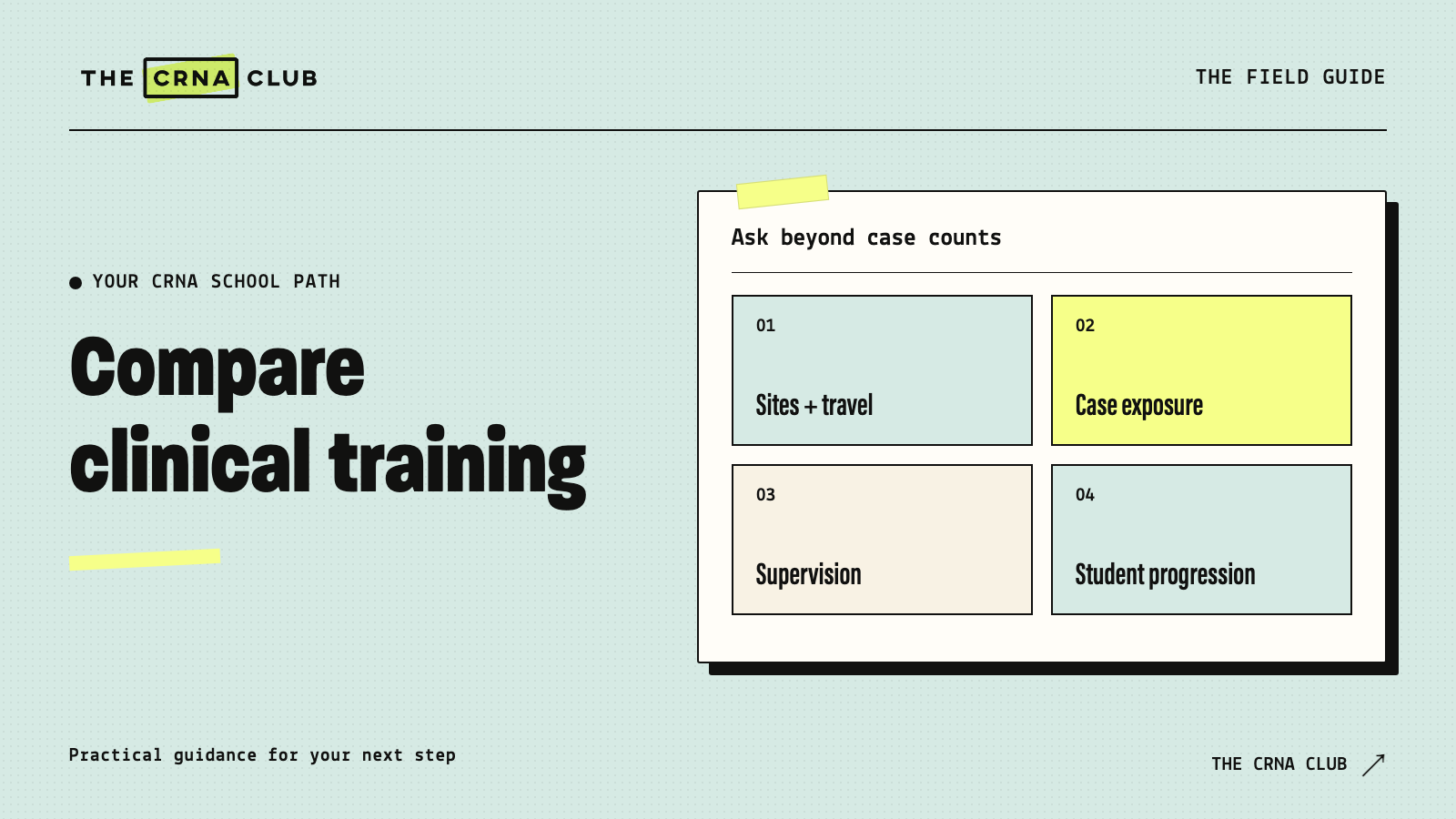
Map the home campus, required in-person sessions, simulation visits and clinical sites. Ask which locations are mandatory, how assignments are made and whether students need temporary housing. A nearby campus is only the beginning. Ask where you’ll actually train.
Ursuline’s nurse anesthesia FAQ explains that travel outside an assigned clinical hub is required and that housing is not provided. That’s an example of detail you need before equating a hub with staying in one place.
The University of Tulsa’s nurse anesthesia FAQ identifies a required rotation involving overnight accommodation. The relevant question is whether the entire rotation pattern fits your circumstances, even when the school itself is close to home.
For your own programs, ask how often students travel, how much notice they receive and whether preferences are guaranteed. A request being considered is different from a placement commitment.
What should you ask about a hybrid or online label?
Find out which parts are online, which require attendance and whether you must live in a particular area. A hybrid curriculum doesn’t remove hands-on clinical training or necessarily allow you to remain in your current home. Ask for the actual plan of study and attendance expectations for the cohort you’re considering.
Don’t build your care or work plan around an assumption that online classes are self-paced. Synchronous sessions, examinations, campus intensives and clinical preparation can still require protected time.
You can ask:
I’m reviewing whether the program is feasible while remaining based in my current city. Which on-campus sessions and clinical rotations require attendance outside that area? Are any locations or extended absences mandatory, and how are those assignments determined?
Our online and partially online program overview can help you begin the search. The official program’s current attendance instructions need to settle whether a specific option fits your life.
Are the nearby programs compatible with your application?
Check degree, GPA, prerequisites, ICU experience and certification rules before investing heavily in a geographically appealing school. A program inside your radius still needs to accept the record you bring. Where a requirement is unclear, ask a focused question and record the answer before deciding the program is an option.
Suppose a hypothetical applicant, Lila, can consider four programs within her region. One requires a course she hasn’t completed. Another doesn’t accept her ICU population under its current rules. The other two fit her documented experience and academic record.
Her practical list has two current options and one possible future option if she completes the course. The fourth needs a different clinical path before it becomes eligible.
That’s more useful than saying she has four schools nearby. She can now decide whether the course fits her timeline and whether the smaller current list is an acceptable plan for this cycle.
Use the program-selection guide for the wider comparison. Here, the aim is to identify options that survive both the eligibility check and the geographic reality check.
How do you test whether your support plan matches the schedule?
Use a sample week and a sample distant rotation, then ask the people involved what they can actually cover. Account for early starts, travel, study time and unexpected schedule changes. “My family will help” needs a practical conversation about days, hours, transportation and backup arrangements before you rely on it.
For example, your parent might reliably cover school pickup twice a week. That’s useful support. It doesn’t automatically provide childcare for a four-week rotation three hours away.
Ask the program about representative schedules, knowing they can change. Then test your plan against a demanding plausible week rather than only the best week you can picture.
A simple support worksheet can include:
- Regular care you already have and the actual hours it covers.
- Early-morning and evening gaps.
- What happens when your usual helper is ill or unavailable?
- Travel or temporary-housing arrangements for required rotations.
- Time to study and recover after clinical days.
You’re not expected to predict every event over three years. You do need to identify the obvious gaps before treating an acceptance as automatically workable.
What costs change when you stay near home?
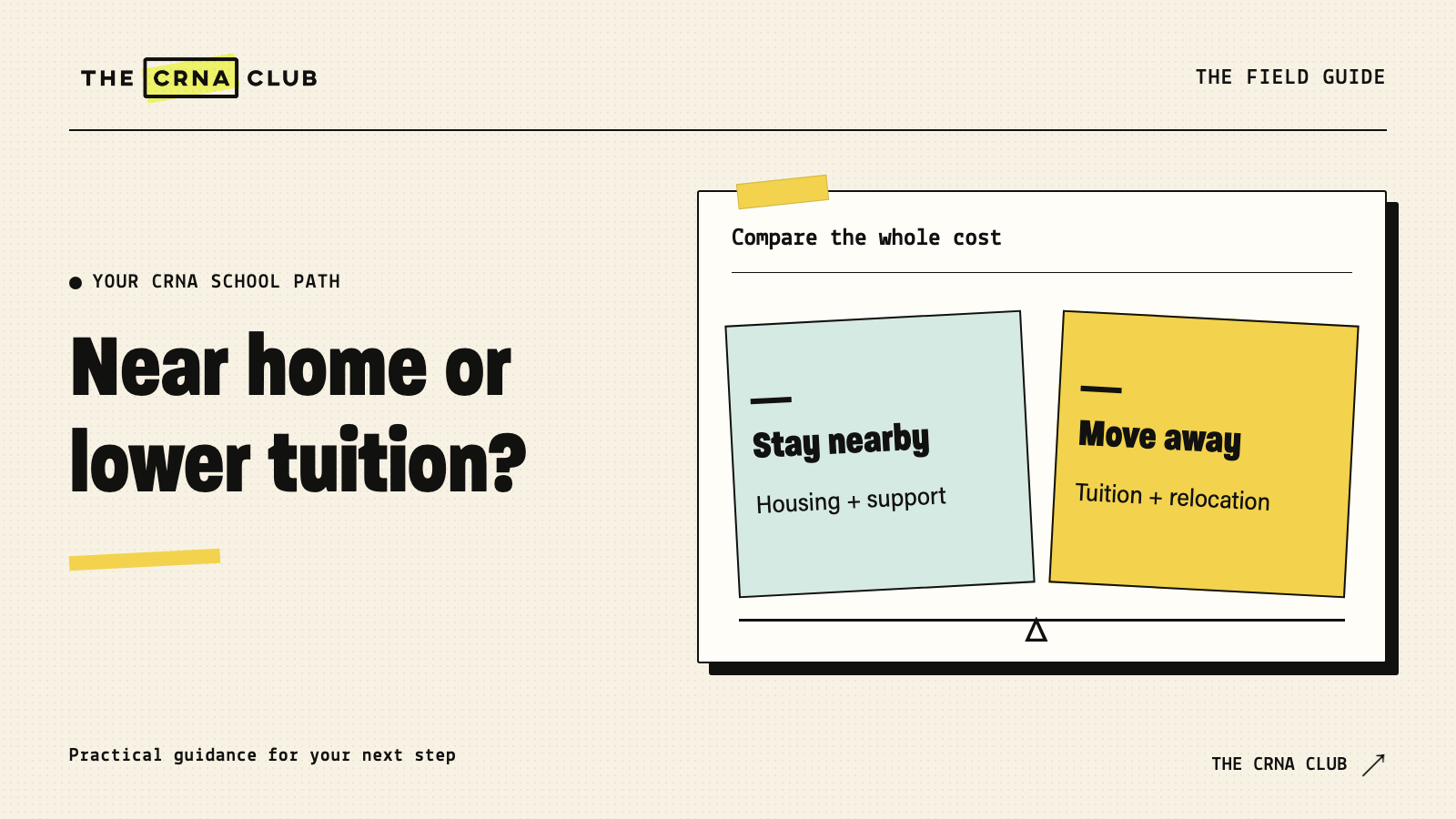
Compare the costs that actually differ between programs. Staying home can preserve childcare, partner income or housing arrangements, while a nearby program can still create clinical travel and temporary-housing expenses. Don’t assume the local option is cheaper or more expensive until you put the relevant categories beside each other.
Keep tuition, required fees, living costs and clinical travel in separate lines. Add any support you would lose by relocating and avoid counting the same housing cost twice.
We suggest comparing the same cost categories for every saved program before you decide the local option saves money. The tuition versus cost-of-attendance guide explains why tuition alone is an incomplete comparison.
If money is the limiting factor, clarify actual program costs and financial-aid options with the appropriate school offices before assuming a hypothetical budget solves the problem.
What if the workable school list is very small?
Acknowledge the limit and make a plan you can sustain. Review whether another application cycle, an approved prerequisite or a different start date would create additional realistic options. You can also reconsider actual preferences, but don’t treat an unchangeable family obligation as a failure of commitment to the profession.
A small list doesn’t tell you your individual probability of admission. It does mean you have fewer program opportunities in that particular cycle, so avoid promising yourself a guaranteed start year.
For Lila, a sensible plan might include two applications this cycle, a targeted course that opens a third program next year and ongoing clinical development. Someone else might choose to wait and apply to all three together. The right choice depends on the actual deadlines, costs and readiness involved.
Don’t apply to a distant program you could never attend solely to feel less limited. An offer that conflicts with a fixed obligation creates another decision rather than solving the first one.
How should you keep track of the schools that fit?
In My Programs, keep each school’s requirements, checklist and your research notes together. Record the rotation locations you’ve confirmed and the travel questions you still need answered. We’d rather see one clear “ask about overnight rotation” note than a school marked “local” when that part is still unknown.
For each required site, note the travel dates or expected duration, housing responsibility and whether your support plan covers the absence. Leave an unanswered field visible until the school clarifies it.
Before paying an application fee, try this sentence: “I can attend this program because…” Finish it using eligibility and practical facts. If the answer depends on avoiding a mandatory rotation, you still have a question to resolve.
Our Final Thoughts
Check the rotation you could have the hardest time attending before paying an application fee. If that requirement doesn’t fit, clarify it now rather than counting on a later exception.
Take the Next Step
Save the first three programs you could realistically attend in our School Database preview. Then check the clinical travel for each one. If you want the full school-planning tools and lessons while you work through that list, try the seven-day trial.