When Can You Stop Taking Extra Classes Before Applying to CRNA School?
Sachi, CRNA
CRNA
In This Article (9 sections)
- What academic requirements need a final check?
- How do you tell a real gap from an urge to collect more courses?
- What if you’ve already completed several strong recent sciences?
- What if a small GPA gap still remains?
- How do you decide whether one more graduate course adds something new?
- What should you do with the time when the course gap is closed?
- How can you make a clear stopping decision?
- Our Final Thoughts
- Take the Next Step
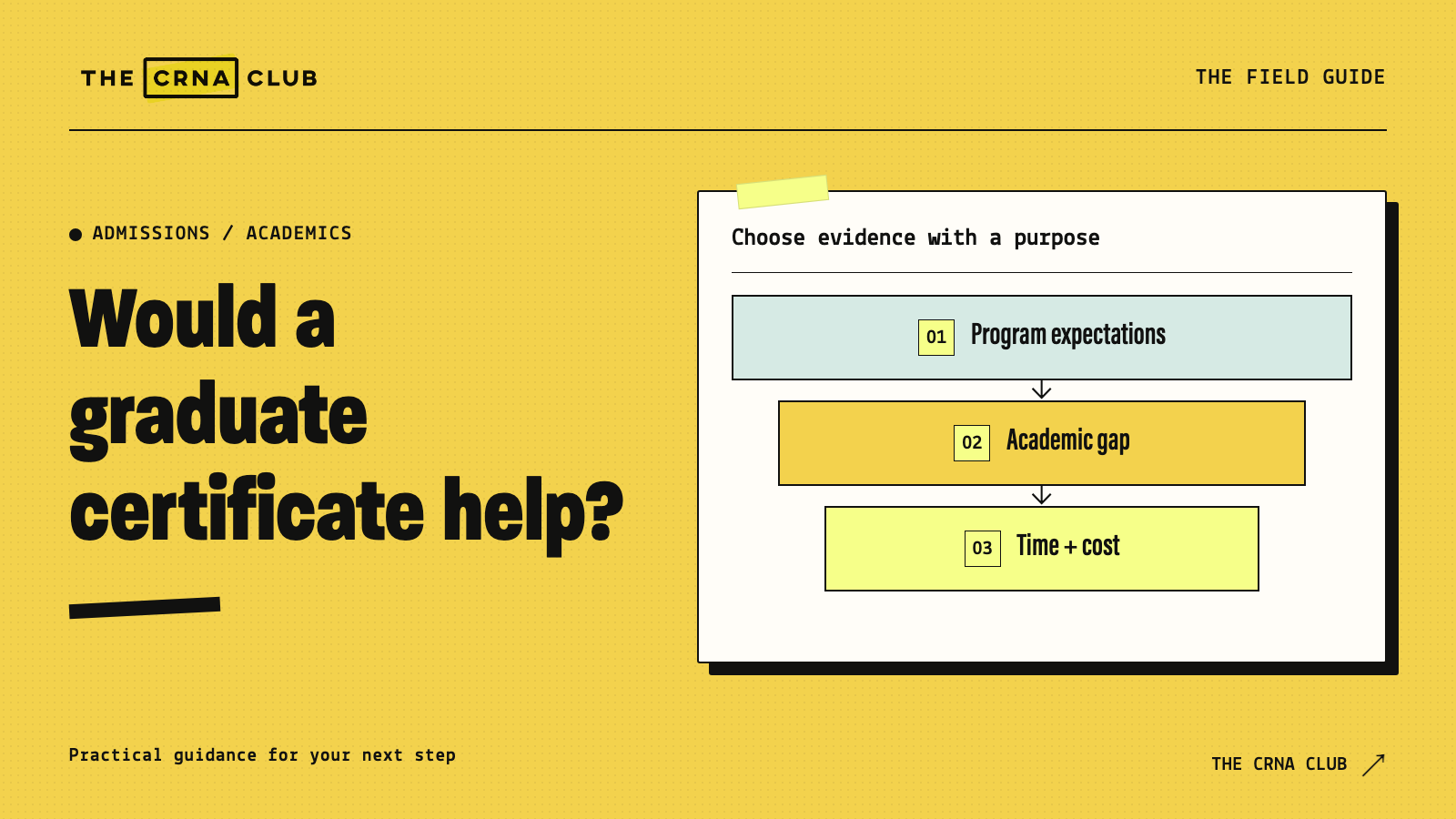
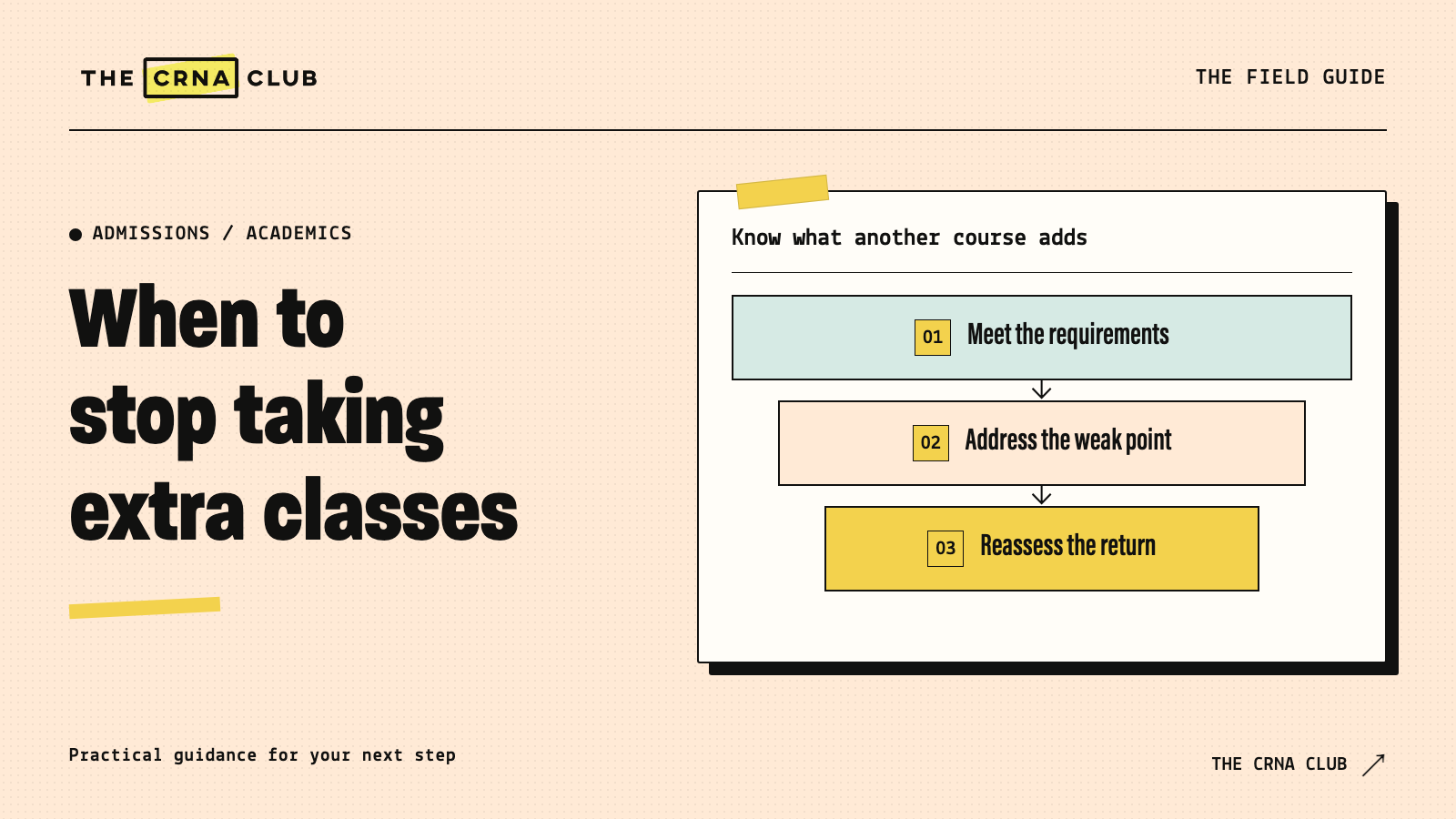
You can stop adding classes when the academic requirements are met and another course doesn’t solve a clear problem. We suggest checking that with our Transcript Analyzer, then comparing the result with your school list. Our seven-day trial includes GPA lessons and application tools to help you move from more coursework to the next thing your application actually needs.
There isn’t a universal number of graduate sciences every applicant needs. If the reason for the next class is only “I still feel behind,” pause long enough to identify what the class would actually change.
If the courses are done, what isn’t? An essay, a reference request, or school research may need your attention now. Our application planning guide helps you look at the rest of the application before signing up for another semester.
What academic requirements need a final check?
Check each target program’s accepted courses, minimum grades, recency conditions, lab or format rules and GPA definitions. Also verify completion timing. A course counts as finished for planning only when the actual requirement and required documentation are satisfied, rather than when you feel comfortable with the subject or have registered for another class.
Build a school-specific checklist. Keep confirmed items separate from unresolved ones. If a program needs a final grade by a particular point, an in-progress class belongs on the unfinished list even if you expect to do well.
Columbia’s nurse anesthesia prerequisite page gives one example of different academic conditions: it distinguishes required coursework from refresher advice for older courses. Don’t rewrite a recommendation as an automatic expiration rule.
TCU’s nurse anesthesia FAQ also distinguishes required prerequisites from guidance about additional science. Read the actual wording for your school list rather than turning one program’s recommendation into a rule for everyone.
Once a requirement is confirmed, keep the source and date. You shouldn’t need to reopen the same uncertainty every week unless the course, program or application plan changes.
How do you tell a real gap from an urge to collect more courses?
Ask what the new class would change. Does it meet a missing requirement? Raise a GPA that’s below a school minimum? Strengthen a subject you still need to learn? We suggest answering that before enrolling. If you can’t name the problem, another class may only add a deadline without helping you finish the application.
Use this gap-closure worksheet:
- Required course: Is an accepted completed course documented? If the subject or approved equivalent is still absent, keep it unfinished.
- Minimum grade: Does the grade meet the actual policy? If it doesn’t, the condition remains open.
- Recency: Does the current policy or a written clarification confirm acceptance? Follow up if the course is outside the stated window or the answer is missing.
- GPA requirement: Does the correctly calculated course group meet the published threshold? If it is still below, model the remaining work.
- Recent academic learning: Can you name the purpose and completed work? Add further study only for a specific unresolved learning or evidence need.
The recent-learning question takes more judgment than checking a published requirement. Don’t invent a universal course count to make it look precise. A program’s guidance, your actual pattern and the proposed syllabus provide the useful information.
If you can’t name the gap, another enrollment may be premature. Spend the next task clarifying the question instead of buying a course to relieve the uncertainty temporarily.
What if you’ve already completed several strong recent sciences?
Review what those courses already demonstrate. What would another class add? If you’ve already supplied strong recent work in that subject, compare the new course with unfinished recommendations, essays or experience questions before enrolling.
Consider a hypothetical applicant whose target schools have accepted her prerequisites. Her relevant calculations meet their published minimums, recent sciences are strong and current, and no additional course is required. She is considering another graduate class because she hasn’t started the essay and feels less comfortable with writing.
The next class may be interesting, but it doesn’t answer the unfinished essay task. Her plan needs an honest comparison of purposes. If she wants the class for learning, she can choose it as such. It shouldn’t become a requirement she invents for herself before applying.
Our science GPA calculation guide helps verify the numerical part. Keep the grade pattern and course acceptance beside the number, then identify the next real gap in the whole application.
Stopping extra classes doesn’t mean stopping preparation. It means moving the time to work you have actually identified as unfinished.
What if a small GPA gap still remains?
Do the math before assuming one more A closes the gap. We suggest adding the proposed course in the manual GPA Calculator, using the group your school counts. With lots of credits already included, an A may move the number less than you expect. Let’s compare a three-credit and four-credit example.
Consider a hypothetical school requiring 3.20 in a specific course group. The applicant has 30 included credits at 3.10, or 93 quality points. A three-credit A adds twelve quality points. The new result is 105 divided by 33, or about 3.18, still below 3.20.
A four-credit A, if accepted in that same group, would produce 109 quality points over 34 credits, or about 3.21. This assumes the four-credit course enters that same group and the final grade is an A. Recalculate with the actual grade when it posts.
NursingCAS’s GPA calculation guidance explains the credit-weighted method for its standardized categories. A program-specific group still needs its own course-selection rule.
If a threshold is unmet, don’t write an explanation as though it automatically waives the requirement. Verify any stated review process and make a realistic plan using the actual policy.
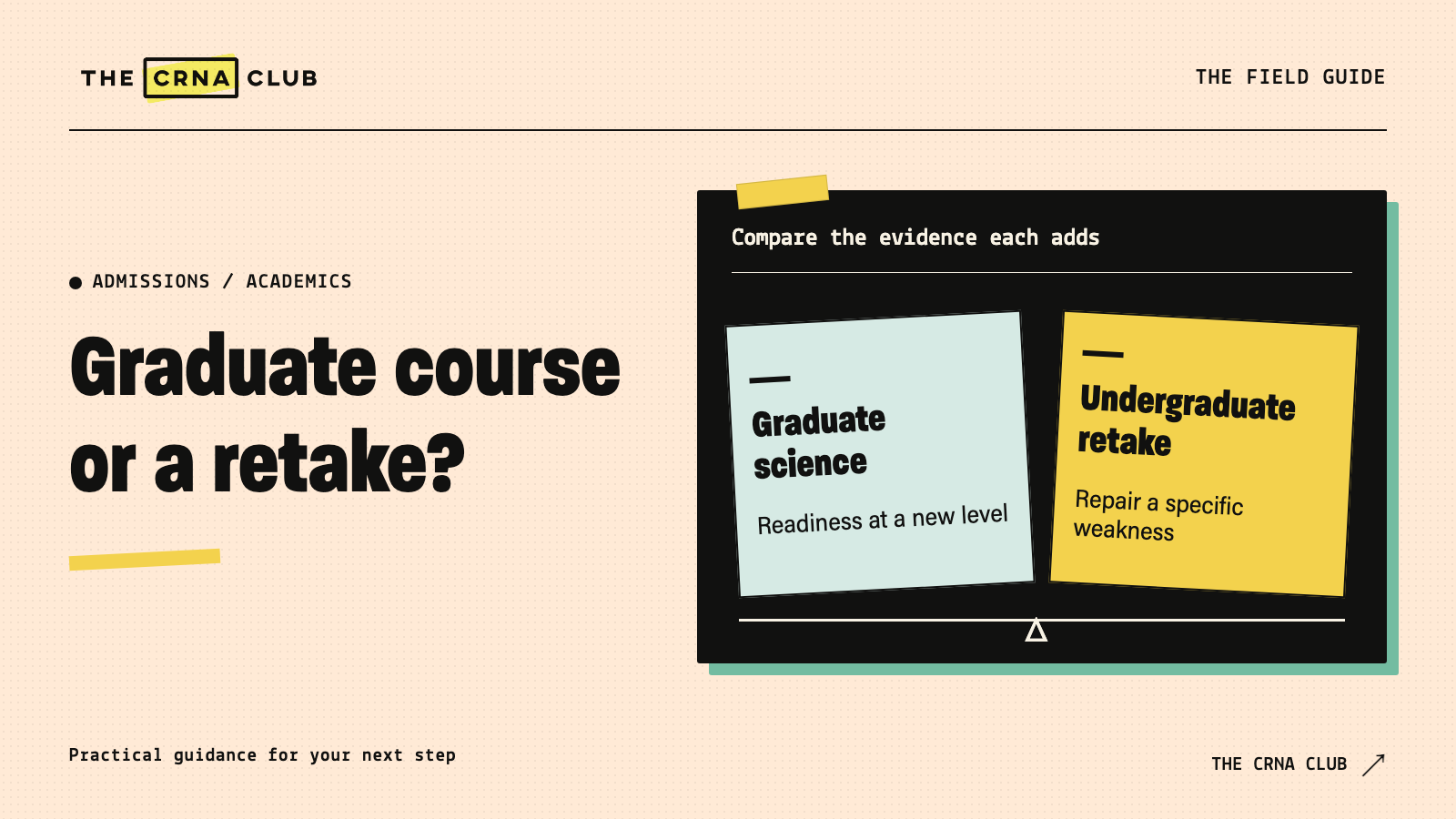
How do you decide whether one more graduate course adds something new?
Compare the proposed course with completed work and the target program’s guidance. Ask what distinct content, required condition or academic question it addresses. A graduate title alone doesn’t establish a new benefit, and a course’s potential usefulness doesn’t remove its workload or automatically change an undergraduate GPA.
If the proposed course teaches a subject you haven’t studied and serves a real professional goal, that is a specific reason. If it mainly repeats material you’ve already completed well, weigh the additional learning against time and cost.
Check the syllabus rather than relying on the title. Two courses with “advanced” in their names may differ in content and academic level. Registration prerequisites and assessment patterns also matter.
The GPA + Prerequisites lessons help connect these choices with your transcript and school requirements. Explore the seven-day membership trial if you want structured teaching while deciding whether the academic task is finished or another course has a clear job.
If a tool flags an old course or a grade, use that as a question to review. Does your school actually need an updated course, or have you already addressed the subject with later work? Check the requirement before adding a class for the flag alone.
What should you do with the time when the course gap is closed?
Choose the next unfinished task. If it’s writing, use Essay Critique and the personal-statement lessons to work on your actual prompt. If it’s school research, use the School Database and saved targets to organize the list. We suggest giving that task the same protected time you would have reserved for another class.
Create a next-task list with deadlines and a definition of done. “Work on essays” becomes “draft the response to this program’s actual prompt.” “Research schools” becomes “confirm the unclear experience requirement for this program.” The task should be clear enough to finish.
Keep the academic record organized so you don’t repeatedly redo the same audit. Save course approvals, current policy links and the calculation method. Reopen an item when the course, school list or policy changes.
If an interview is approaching, use the work you actually list on the resume as part of preparation. Don’t add an unfamiliar device or exaggerated academic claim to sound more advanced. Clear accurate explanations serve you better.
How can you make a clear stopping decision?
Write down what’s finished and what’s next. Which schools have accepted the courses? Which GPA requirements are met? Is one grade still pending? Then name the next task and its deadline. Keep the note with your application plan so you don’t restart the same course debate every week.
For example: “The current target programs have accepted these prerequisite courses. The relevant GPA calculations meet the stated conditions. This final grade is still pending by this date. After it posts, my next task is completing the specified essay.” Use your actual facts and dates.
If you later change the school list, recheck the affected requirements. The earlier decision was tied to a defined plan, not a permanent claim that no future coursework could ever be useful.
Our Final Thoughts
A course should solve a named problem or serve a real learning goal. Once the verified academic requirements and intended work are complete, give yourself permission to move to the next part of the application.
You don’t need an endless transcript to prove you care. You need accurate evidence, a realistic plan and time to finish the work you actually have left.
Take the Next Step
Use the free Transcript Analyzer, which includes one lifetime free analysis, to review the academic record you already have. Then try our seven-day membership trial for GPA lessons and application tools. Confirm what’s finished and choose the next task, whether that’s a needed course, an essay revision or a school requirement to clarify.