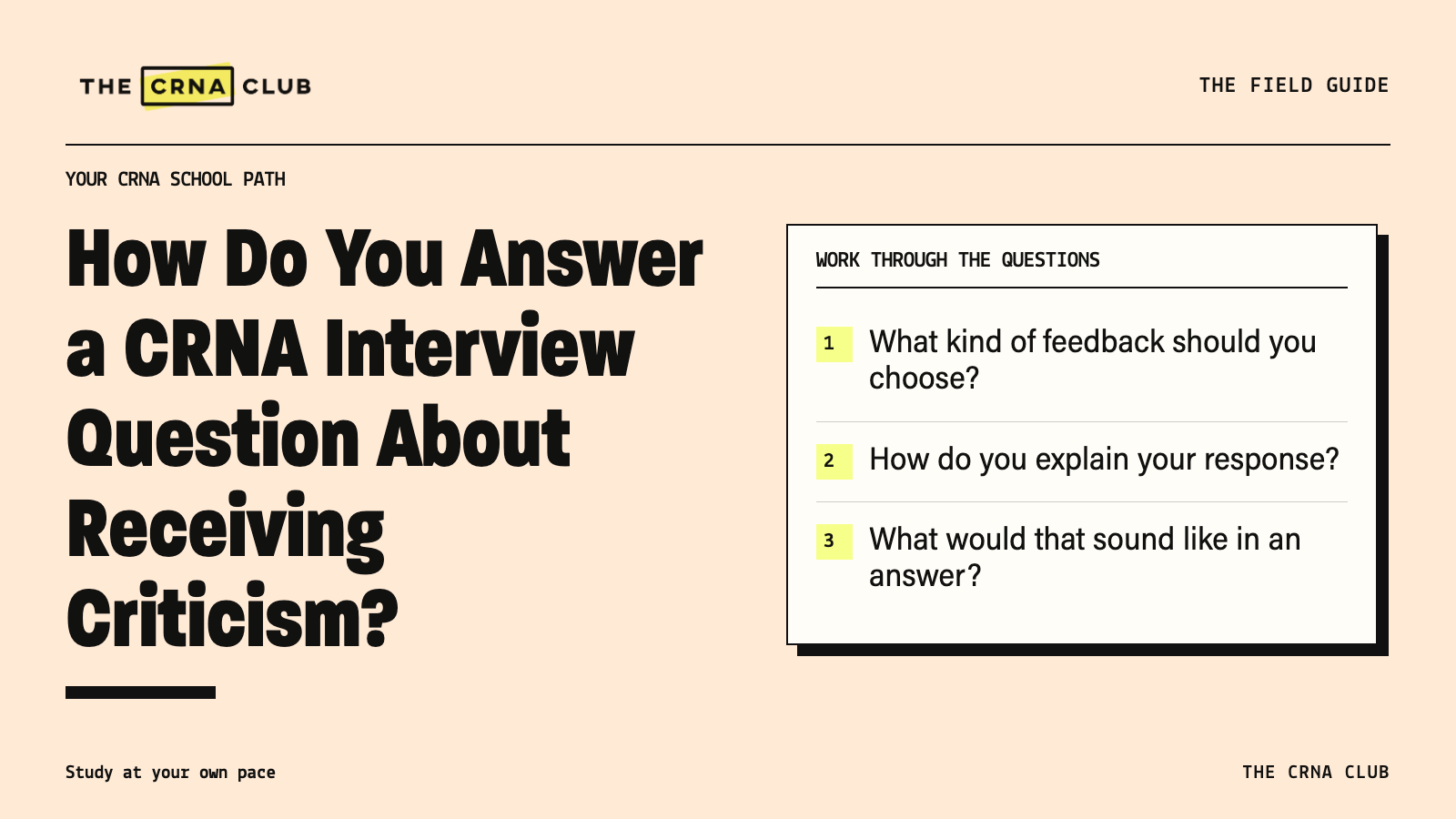
How Do You Answer a CRNA Interview Question About Receiving Criticism?
When a CRNA interviewer asks about criticism, give the feedback and explain what you did with it. Choose a real correction that changed a habit. “My manager said I care too much” doesn’t tell the committee how you respond when someone points out something you need to improve.
Sachi, CRNA
CRNA
In This Article (7 sections)
A correction about an ordinary handoff or work routine might be the example you need. Follow what changed afterward, rather than searching for the most painful feedback you’ve received.
Use the Mock Interview Lab to practice your answer aloud. The seven-day platform trial adds interview teaching and ongoing practice while you work on the explanation.
What kind of feedback should you choose?
It doesn’t have to be the harshest thing anyone has said to you. A correction about handoffs, preparation or how you organized your work can give you plenty to discuss.
Pick an example you can explain without confidential details. What habit did the other person notice? Did you understand what they wanted you to change? The answer gets useful when you show how you moved from hearing the feedback to doing something differently.
How do you explain your response?
Let’s take it from the feedback itself. Then say what you asked to clarify it, what you changed and how you followed up.
AHRQ’s TeamSTEPPS guidance describes feedback about specific behaviors and improvement. “I became more professional” leaves the listener guessing. “I moved the current patient concern to the beginning of my handoff” gives them a change they can understand.
Practice with the Mock Interview Lab and check whether someone listening could name the habit you changed.
What would that sound like in an answer?
This fictional example is about organizing a handoff:
“A senior nurse told me my handoff included too much chronology before the current concern. I asked which information they needed earlier. I changed my opening to the patient’s current problem, the trend and the tasks needing follow-up, then used the history to explain those points. I asked for feedback on later handoffs and kept adjusting the structure.”
You can follow the feedback, question, action and follow-up. The applicant doesn’t need a dramatic patient outcome or an invented percentage to show the change.
Use your actual experience. If the habit still needs work, say what you’ve changed and how you’re continuing to check it.
What if you didn’t agree with the criticism?
Well, how did you make sure you understood it? Did you ask for an example? Check the expectation? You don’t need to say every criticism was correct.
But for this interview question, choose an example that shows learning. A long account of proving the critic wrong gives the listener little information about how you use feedback.
Receiving feedback also doesn’t mean accepting mistreatment. If inappropriate behavior was part of the situation, describe your professional response and any support you sought where relevant.
How should you practice the follow-up?
Ask yourself what was difficult to hear. What part did you own? What changed the next time you did the task?
Our interview storytelling guide helps you keep enough context without spending the whole answer on the original event. Leave room for the work afterward.
If the interviewer asks about a weakness you’re still managing, describe the strategy you actually use. Claiming it vanished completely might leave you with less to say than explaining how you keep improving.
We also cover preparation in The EQ Interview Questions You Know You’ll Get Asked.
Our Final Thoughts
Start with a correction you remember clearly. Practice saying what you heard, what you changed and how you followed up. If the habit still needs work, you can be honest about that and explain how you’re continuing to improve it.
Practice how you used the feedback
Say the answer aloud in the Mock Interview Lab. The interview lessons in the seven-day platform trial give you more guidance for shaping the explanation and preparing follow-ups.