How Do You Answer 'What Will You Do If You Are Not Accepted?'
If you’re asked what you’ll do if you aren’t accepted to CRNA school, explain how you’d review the result and decide what to work on before applying again. You can be prepared for this cycle and still have a thoughtful response to a disappointing outcome. You don’t need to promise another degree, every certification or applications to every school.
Sachi, CRNA
CRNA
In This Article (7 sections)
You can care deeply about getting in without having the next several years scripted out. For this question, give yourself room to explain a thoughtful response to a result you can’t control.
Use the Mock Interview Lab to say the answer aloud and practice a follow-up. The seven-day platform trial includes interview lessons and planning tools for turning a next step into something you can actually do.
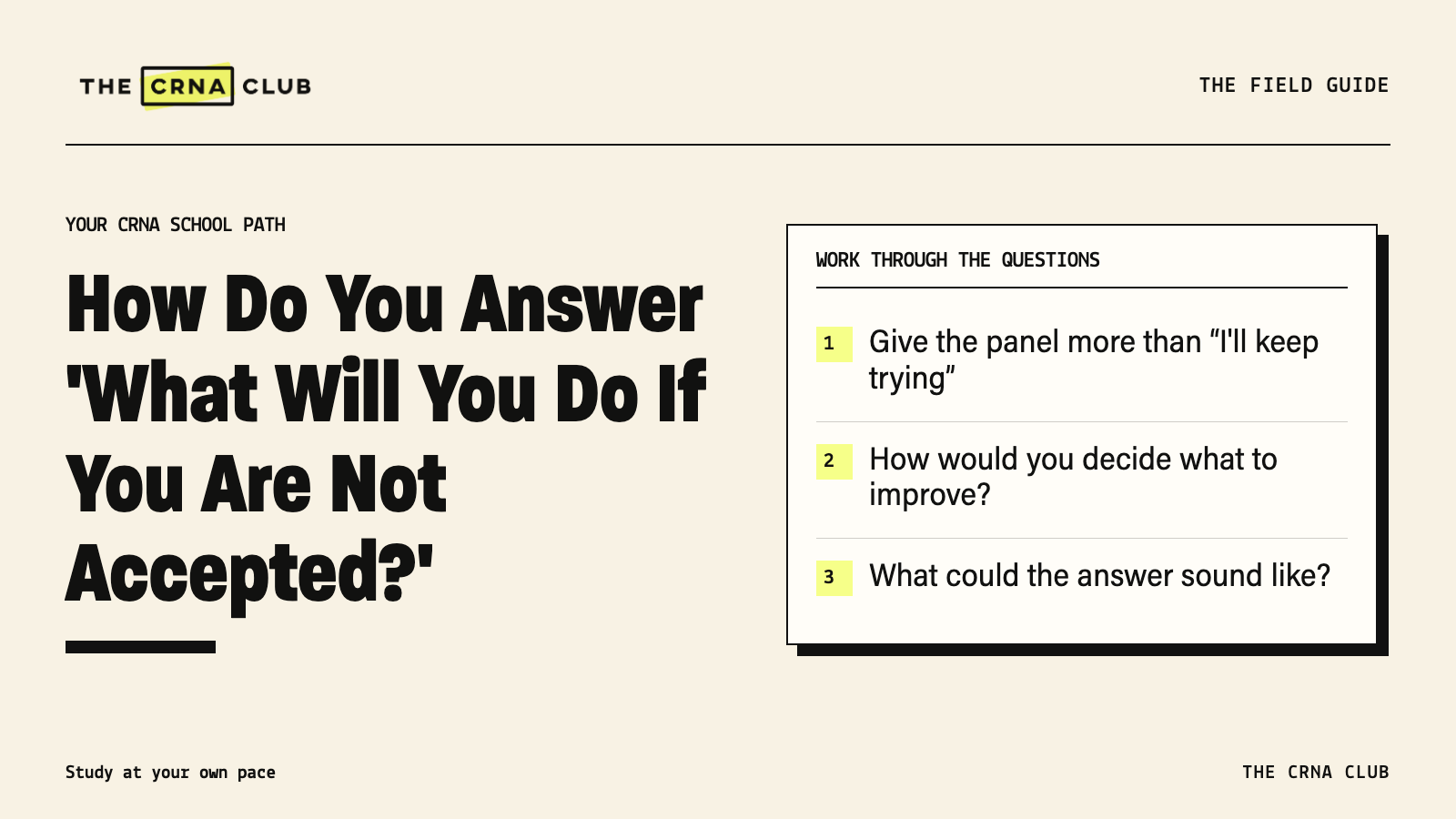
Give the panel more than “I’ll keep trying”
Persistence matters to your plan, but the sentence “I’ll keep applying until I get in” doesn’t explain what would change. If you sent the same application again, what would the program have to assess differently?
So what would you do with that result? Think through how you’d look for the gap. You could ask whether the program offers feedback, compare your record with its current requirements and review how well you explained your experience in the interview. Then you’d use what you learned to choose a useful change.
That’s also the question we come back to when discussing reapplication: what changed between the two cycles? Our episode Applying to the Same Program Again? Here’s What To Do. explores that preparation. You don’t have to know the outcome now to explain how you’d approach it.
How would you decide what to improve?
Well, start with the information you have. Did the application stop before an interview, or did you interview and then receive a rejection? Those details can help you decide what to review, but they don’t prove why the school made its decision.
Ask whether feedback is available. Some schools won’t provide an individual explanation, so your whole plan can’t depend on receiving one. You can still check your academic record, clinical preparation, school fit and interview practice against the information you do have.
Then choose an action that addresses the gap you’ve identified. Taking another course makes sense for a specific academic need. It doesn’t automatically help with an interview answer you haven’t practiced. Adding another certification without understanding its purpose can leave the same problem unresolved.
Your application planning tools in the trial can help you write down the task and how you’ll know it’s done. “Be more competitive” is hard to act on. A specific course, practice task or school requirement gives you something to check.
What could the answer sound like?
Here’s a fictional structure to help you think through your own response:
“I’d ask whether the program offers feedback and review my application and interview preparation. I’d use what I learned to decide what needs to change before I apply again. For this cycle, I’ve prepared by [actual evidence]. If I weren’t accepted, I’d want the next application to show a useful improvement rather than simply resubmitting the same thing.”
Replace the placeholder with your own preparation. You don’t need to list every possible problem with your application or talk through a whole calendar for next year. Explain the review you’d do, then the kind of decision that review would help you make.
Should you say you’d apply to more schools?
You can reassess your school list, but each program still needs to fit your eligibility, goals and circumstances. Applying to more places won’t resolve a missing prerequisite or an inaccurate essay. It also won’t improve an explanation you haven’t practiced giving.
Our rejection and next-steps guide covers the broader process. For the interview, stay with how you’d learn from the result and choose the next action.
If you’ve already been rejected, use what actually happened
You may have a real example of reviewing an application and making a change. Explain that change and why you chose it. If the school didn’t give you feedback, don’t describe your own interpretation as something admissions told you.
Also keep the outcome separate from the preparation. A course, a stronger explanation or a better school fit can be worth working on without guaranteeing acceptance. You can describe why you’re ready now without promising that the decision will go your way.
Our Final Thoughts
It’s okay to prepare for an uncertain outcome while giving this application your full effort. Practice explaining what you’ve done for this cycle, then how you’d review the result if you weren’t accepted. Keep the next improvement tied to what you actually learn, rather than promising every possible credential.
Work through the question and a follow-up
Practice with the Mock Interview Lab. If you’d like to organize the preparation behind your answer, explore the interview lessons and application-planning tools in the seven-day platform trial.