How Do You Discuss a Patient Death in a CRNA Interview?
If you discuss a patient death in a CRNA interview, give only the nonidentifying context the panel needs, explain your actual role and talk about what you learned. You don’t need to describe the death in dramatic detail. Choose an experience you can discuss thoughtfully and that answers the question you’ve been asked.
Sachi, CRNA
CRNA
In This Article (8 sections)
This is a personal experience to prepare, and you can take care with how much you share. You don’t have to make the answer more emotional to explain what stayed with you and what changed in your practice.
You can practice a nonidentifying answer in the Mock Interview Lab. The seven-day platform trial includes interview and storytelling lessons. If this experience is too personal or difficult to rehearse clearly, choose another appropriate example.
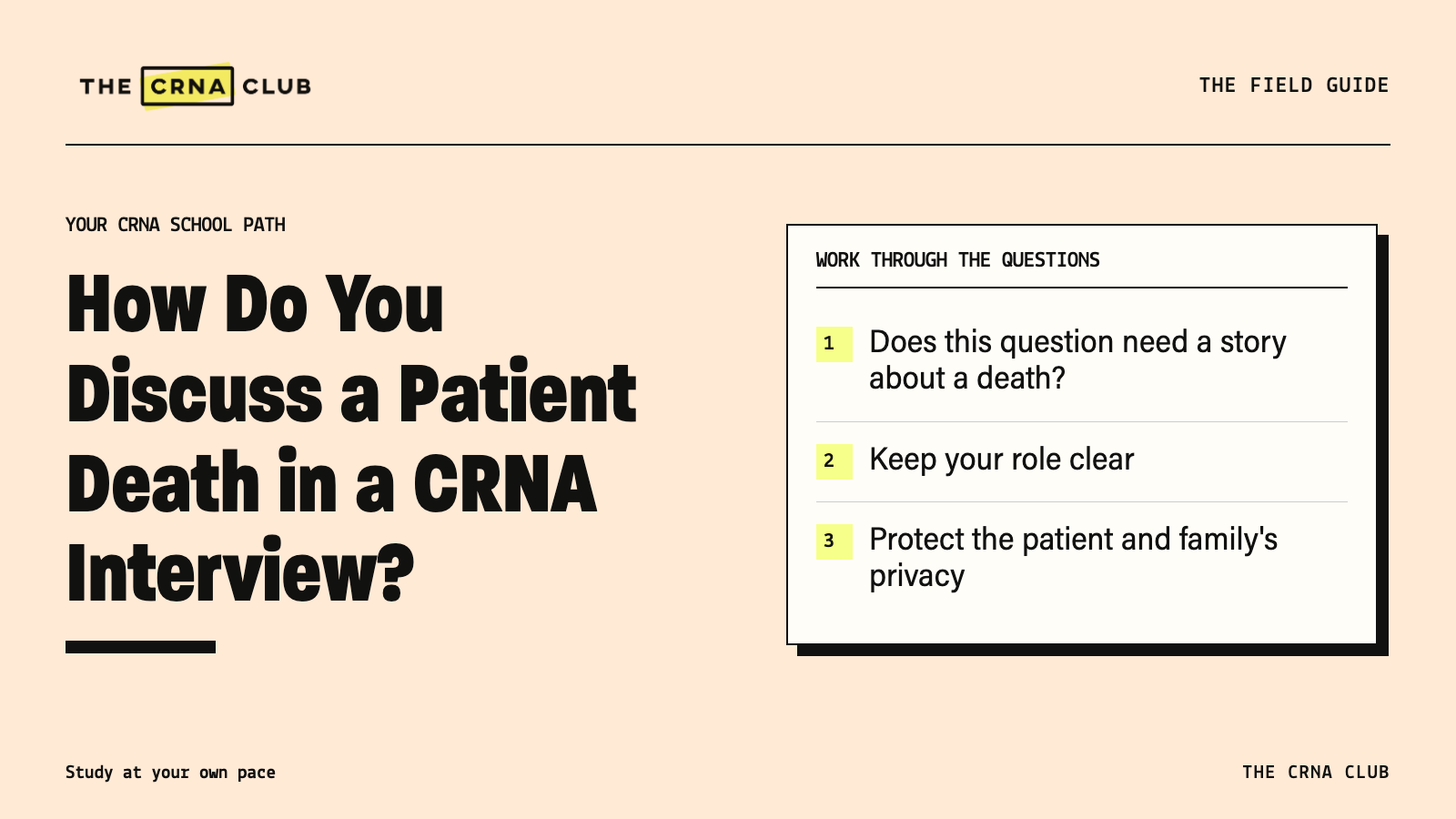
Does this question need a story about a death?
A question about a difficult patient experience doesn’t necessarily ask you to discuss a death. Think about what the question is asking before choosing the story. If it asks specifically about loss or end-of-life care, choose an experience where you understand what happened and can explain your own actions.
In our storytelling lessons, we come back to why you’re telling the story. Maybe this experience changed how you communicated with a family. Maybe you recognized where you needed help. Those give you something specific to explain. The seriousness of the outcome doesn’t do that explaining for you.
Keep your role clear
Keep coming back to your own role. Give enough context to understand your responsibility, then spend time on what you did. Who did you communicate with? What support did you provide or seek? What did you learn that affected your practice afterward?
Be accurate about the clinical facts and your part in the care. If you worked with other team members, explain that. Don’t claim you led a conversation or made a decision outside your role. Also avoid saying an intervention caused or prevented an outcome unless you have a basis for that claim.
When you practice in the Mock Interview Lab, listen for how much time goes into describing the patient compared with explaining your own actions. If the listener knows every detail of the case but still doesn’t know what you learned, bring the answer back to that point.
Protect the patient and family’s privacy
Removing a name isn’t always enough. A rare event, exact dates or a recognizable combination of details can still identify someone. HHS’s de-identification guidance explains why the concern goes beyond names. Follow your employer’s privacy rules and choose another example if the case remains recognizable.
Leave chart screenshots, private family communications and identifying details of a rare public event out of your preparation materials. The panel needs to understand your reflection without being able to identify the person.
What could a reflection sound like?
This fictional example focuses on communication:
“That experience made me pay closer attention to whether the family’s immediate questions were being answered. My role was [accurate responsibility]. I worked with [appropriate team members] to clarify the plan and provide support. Afterward, I thought about which communication helped and where I needed more preparation. I now ask earlier what the family understands and what they need clarified.”
Notice how the reflection connects to a change in practice. Then work with your own experience and wording. If your role was to recognize a need and ask someone else to help, explain that honestly. You don’t have to make yourself the person who did everything.
What if you become emotional?
You can pause, take a breath and decide whether to continue. You don’t need to act unaffected to discuss the experience professionally, and you don’t owe the panel every private detail.
During preparation, choose an example you feel able to talk through with enough space to explain the point. Another appropriate experience may be a better choice. If a death continues to trouble you, seek support from someone equipped to help; repeating an interview answer doesn’t have to be your only way of processing it.
Explain the change rather than claiming resilience
Saying “It made me stronger” leaves the listener guessing about what changed. Describing how you now check a family’s understanding or ask for help earlier gives them something concrete to follow.
Avoid blaming named colleagues or inventing a positive ending. Our interview storytelling guide can help you keep the answer focused on what happened, what you did and why the experience matters to your practice.
Our Final Thoughts
Give yourself room to choose an experience you feel able to discuss. Write a brief, nonidentifying account of your role and what you learned, then decide whether it’s a suitable example to rehearse. Another experience is an option when the question allows it. You don’t owe the panel a more painful story.
Prepare a respectful reflection at your own pace
Use nonidentifying material in the Mock Interview Lab when you’re ready to practice the answer. The seven-day platform trial includes interview and storytelling lessons for keeping the reflection focused.