How Do You Write a CRNA School Essay About a Setback?
A CRNA setback essay needs to show what you did after something went wrong. Name the setback, explain the part you owned and show what changed in your behavior. You don’t need a dramatic event. You need an experience you can reflect on honestly and use to answer the prompt.
Sachi, CRNA
CRNA
In This Article (7 sections)
Writing about a setback can feel like putting the least comfortable part of your record on display. Start with what you can explain honestly about your response, rather than trying to make the experience sound bigger or more dramatic.
Start with the essay lessons, then use Essay Critique for feedback on focus and structure where the school permits it. The seven-day platform trial adds the wider writing and application tools.
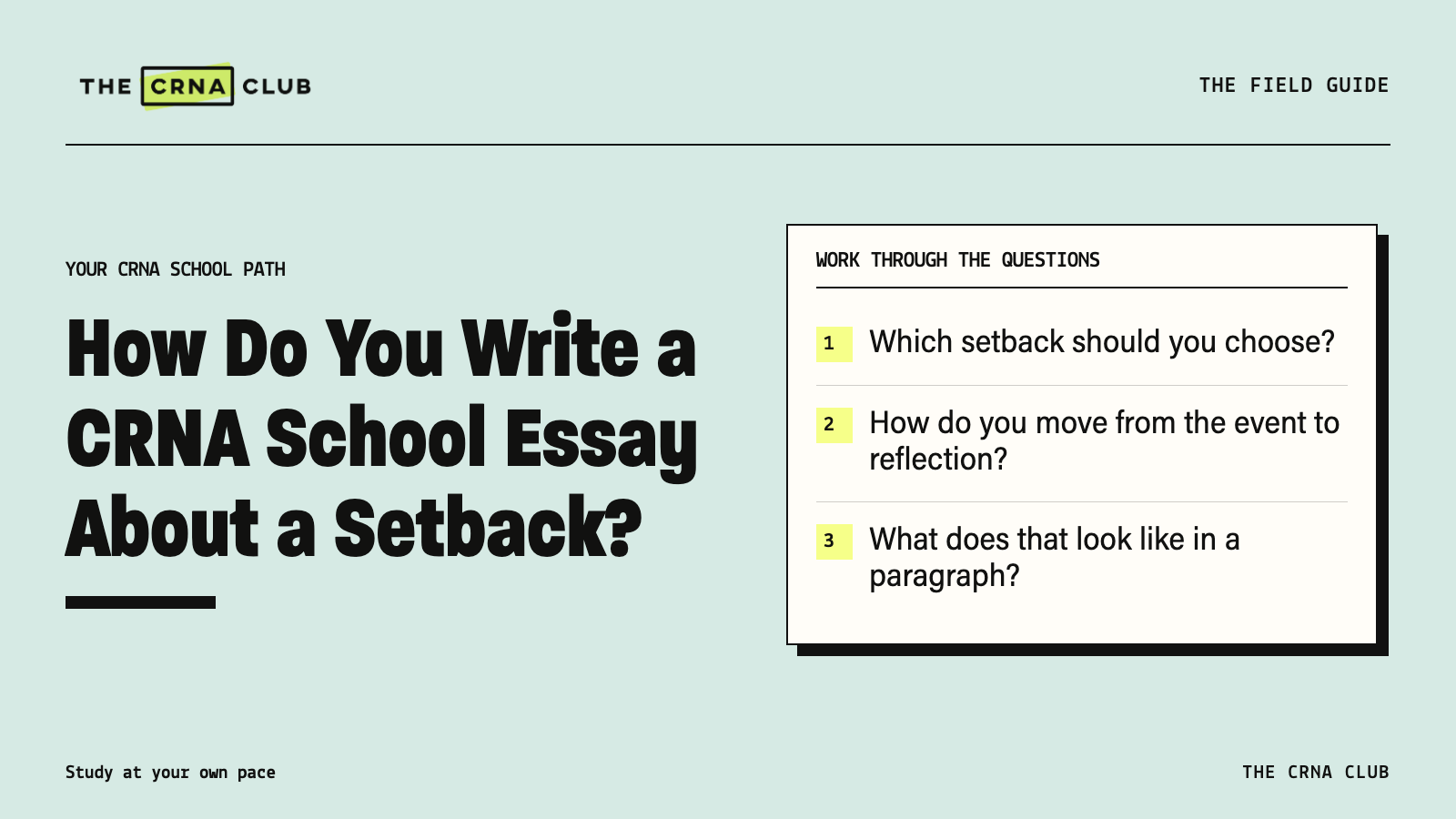
Which setback should you choose?
Check what the school asked for. Failure, adversity, feedback and an ethical difficulty aren’t interchangeable prompts. An academic struggle, project that didn’t work or professional challenge might fit, depending on the question.
Pick one you can discuss without sharing someone else’s private information. You don’t have to disclose trauma or choose the most upsetting experience you’ve had.
And give yourself something real to reflect on. “I worked too hard because everyone depended on me” usually leaves you looking faultless. What decision or approach actually needed to change?
Our personal statement examples help with the broader essay. Keep this response focused on the setback the prompt asks you to explain.
How do you move from the event to reflection?
Let’s work through what happened, how you responded and why it matters, as we do in our storytelling lessons. For this prompt, make your own part clear.
Start with enough context to understand the problem. Then explain what was under your control and what you changed. Did you seek feedback, ask for help or use a different approach? Show the completed action or result before explaining how you work differently now.
Use Essay Critique to check where you’ve spent the words. If most of the response explains what everyone else did, you might have left too little room for your own response.
What does that look like in a paragraph?
Here’s a hypothetical academic example to make that change in study habits concrete:
“I underestimated the amount of independent work in my first chemistry course and relied on reviewing notes before exams. After my early results showed that approach wasn’t working, I met with the instructor and changed to scheduled problem practice. In the next course, I used the same method from the first week and earned [actual result]. I now test whether I can apply an idea before deciding I’ve learned it.”
The reader can follow what wasn’t working, what the applicant tried and how they used it again. “I became resilient” wouldn’t explain those steps.
Use your own experience and actual results. If you’re still working on the improvement, say what you’ve completed and what’s still in progress. Don’t put an expected grade into the story as if you’ve earned it.
What should you leave out?
Cut the long account of unfair treatment. Remove identifying patient details and confidential workplace material. Keep the event long enough to understand, then give the response and learning more space.
You also don’t need to force a perfect ending. If an application separately asks about an academic or disciplinary event, answer that disclosure question directly. An essay about growth doesn’t replace a required disclosure.
How do you check whether the learning comes through?
Underline what you did. Then underline the evidence of change. If you’ve mostly written promises, go back to the experience and find the actions you’ve already taken.
Read it aloud. When you reach “This taught me perseverance,” ask what that means in your work. Maybe you ask for help earlier now. Maybe you practice applying a concept before an exam. Name the habit instead of leaving the reader with a trait anyone could claim.
Our Final Thoughts
Work with the experience as it actually happened, including anything you’re still improving. Choose a real experience and underline what you did after the first approach didn’t work. Build the reflection around those actions, using completed results and being honest about anything still in progress.
Work on the response in your setback essay
If the program allows AI feedback, use Essay Critique to review the focus and structure. The seven-day platform trial includes essay teaching to help you work through the draft in your own words.