Unit Projects That Strengthen a CRNA Application
In This Article (5 sections)
Updated August 2026
A leadership project on your unit is one of the most useful things you can do as a CRNA applicant, and almost nobody does it deliberately.
It works because it does two jobs at once. You genuinely improve something for your coworkers, and you show an admissions committee that you already think about anesthesia while working in critical care. Two birds.
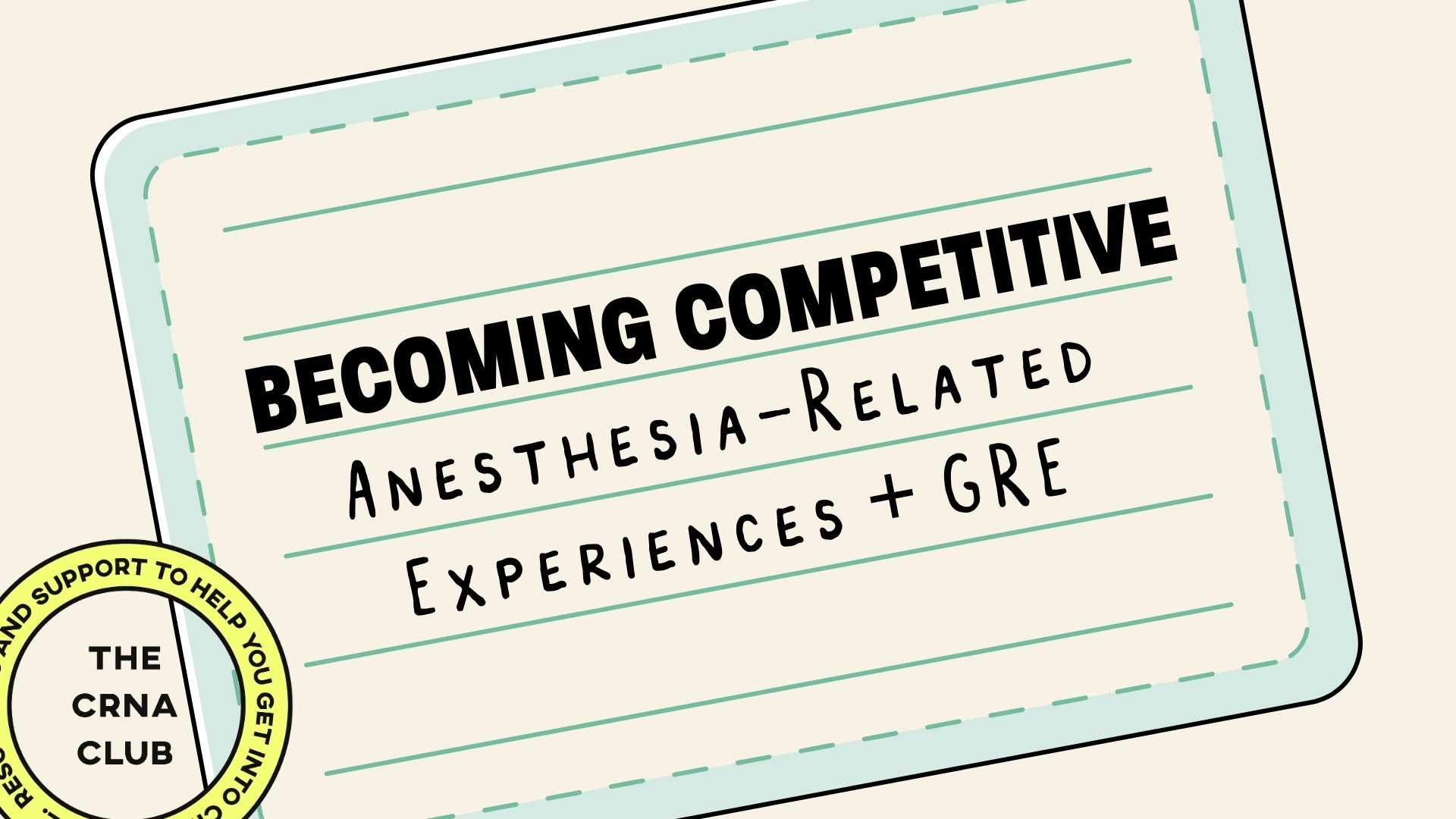
The full lesson: project ideas that bridge critical care and anesthesia, how many shadowing hours competitive applicants actually have, and the GRE decision.
Start with a free trial →Track every piece of your application. Free Application Checklist →
What makes a good unit project?
The trick is choosing something that sits naturally inside your ICU role. A purely anesthesia-focused side project looks bolted on, and your manager has no reason to support it. Something that solves a real ICU problem while touching anesthesia concepts gets you both support and a story.
Watch the explanation
CRNA Application Blind Spots: Evidence Beyond GPA
Read the full explanation and key takeaways· 7:17
 Unit Leadership Projects for a CRNA Application8:39
What unit projects actually work?
An emergency intubation checklist
Emergency intubations happen in the ICU constantly, and intubation is a core CRNA skill. Build a bedside checklist or quick-reference card your unit actually uses. Equipment, drugs, roles, backup plan.
It's directly useful, it's visible, and it puts you in the airway conversation on your unit.
An ICU-to-OR transport process
Taking a critically ill patient to the OR and getting them back safely involves a lot of moving parts and usually no standard process. Building one touches anesthesia handoffs directly.
A surgical handoff sheet
This is my favorite, because it forces you to learn what anesthesia providers care about. A structured handoff capturing the anesthetic type, estimated blood loss, total fluid volume, narcotics given, whether local was used, and when it wears off.
That last detail matters more than people think. Knowing a block wears off in 24 to 36 hours means you can anticipate when that patient needs pain management rather than reacting to it. Build that sheet and you'll understand the post-op picture better than most of your unit.
Need to time a project before you apply? Free Timeline Generator →
How do you use a unit project in an interview?
"Tell me about a time you showed leadership" is a near-guaranteed question, and most candidates reach for charge nurse shifts or precepting. Fine, but everyone says it.
A project you designed, implemented, and can describe the outcome of is a much better answer. It has a beginning, middle, and result, which is exactly the What-How-Why structure a good interview answer needs.
How many shadowing hours do you need?
Related, because both live under anesthesia-related experience on your resume.
Some programs specify a minimum of 8 hours. But where no minimum is published, competitive applicants typically have 20 to 40. Aim for at least 24, which is two or three full days.
One thing to check: whether your programs require shadowing a CRNA specifically rather than an anesthesiologist. The roles differ by practice setting, and an anesthesiologist may be supervising while the CRNA runs the room. Shadowing either teaches you something, but you need to confirm the requirement and be able to articulate what's distinct about the CRNA role.
- Application Checklist — track every piece of your application, including experience and leadership.
- Timeline Generator — work backward from your target date so a project finishes before you apply.
Our Final Thoughts
Start one project, finish it, and be able to say what changed because of it. That's worth more than three things you helped with.
And start it early enough to have a result by application season. "I'm currently working on" is a much weaker sentence than "we implemented it and here's what happened."
Members get 200+ lessons across leadership, ICU experience, interviews and essays, plus ReadyScore to track competitiveness as you go.
Membership includes 200+ video lessons across 14 modules, our database of 154 accredited programs, ReadyScore, mock interviews, essay and resume review, and the community forums.
Start your 7-day free trial →