How Can a New Graduate Nurse Get an ICU Job With CRNA School in Mind?
Sachi, CRNA
CRNA
In This Article (11 sections)
- How do you find employers that hire new graduates into ICU?
- What should you ask the recruiter?
- What experience can you honestly bring as a nursing student?
- How should your new-graduate resume read?
- What should you demonstrate in the ICU job interview?
- How do you evaluate the orientation offer?
- Should you mention that you want to become a CRNA?
- What if you only receive a non-ICU offer?
- How do you connect the first job with a realistic CRNA timeline?
- Our Final Thoughts
- Take the Next Step
To get an ICU job as a new graduate, identify employers that hire new RNs into critical care, learn how their application process works and show the clinical learning habits you already have. Compare orientation and support before accepting. CRNA school can be a long-term goal, while your immediate job is becoming a safe, thoughtful ICU nurse.
You don’t need to sound like an experienced critical-care nurse in the interview. You need to describe your real preparation, recognize your limits and show how you learn when something is unfamiliar.
We recommend our Preferred ICU Experience lessons while you’re comparing your first roles. They help you ask about the patients you’ll learn to care for, the support you’ll get and the training ahead. Explore them with the seven-day trial. For the job itself, ask the recruiter whether ICU hiring is part of a broader graduate-nurse posting or a separate application.
How do you find employers that hire new graduates into ICU?
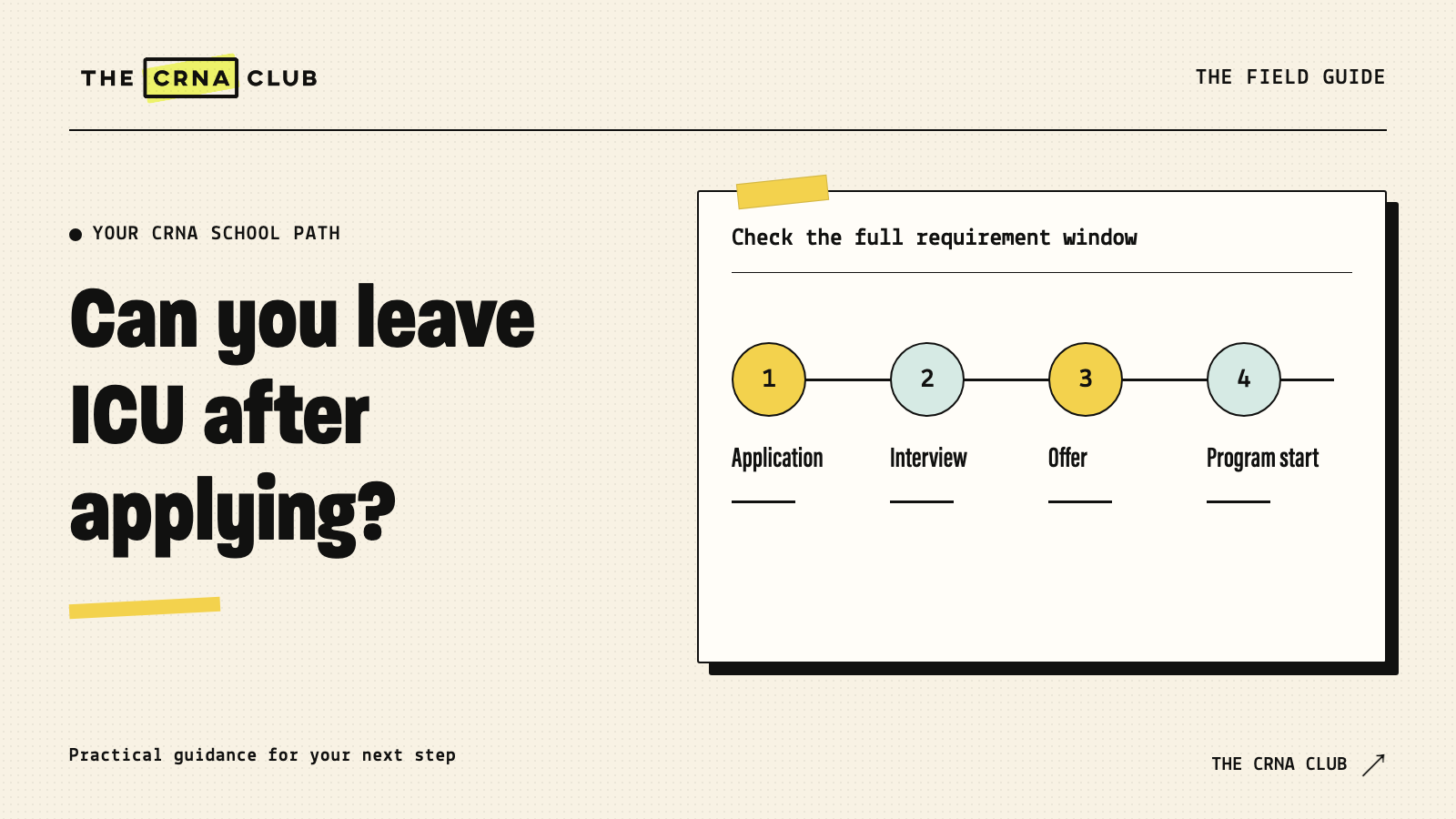
Start with official hospital career pages and new-graduate program information. Check whether critical-care units participate, when applications open and what graduation or licensure conditions apply. Then ask the listed recruiter about anything unclear. A general hospital hiring page doesn’t establish that every ICU is taking new graduates in that cycle.
Use a search log with columns for employer, program or posting, eligible units, application period, license timing and contact route. Add the source page and date you checked it.
Employer processes can look different. Duke Health’s graduate-nurse program page explains automatic residency enrollment for newly hired graduate nurses. That means finding the actual job is part of understanding the process, rather than assuming the residency always has a separate application.
UC Davis Health’s residency page directs applicants to its HR information for application instructions. Follow the employer’s current route instead of using an old cohort post or another hospital’s process.
Check the current postings for actual ICU openings.
What should you ask the recruiter?
Ask whether the current graduate-nurse process includes ICU positions and what you need to do to be considered for them. Clarify the correct posting, eligible graduation dates, licensure timeline and unit-selection process. A focused question saves you from spending hours applying through a route that doesn’t include the role you want.
For example:
I’m graduating from nursing school in May and am interested in a new-graduate adult ICU position. Does your current graduate-nurse application include ICU placements, or should I apply to a separate unit posting? I’d also appreciate clarification on when RN licensure is required and how applicants identify their preferred units.
Use the date and role that apply to you. Don’t contact every manager in the hospital with the same message when a specific recruiting route is provided.
If the answer is no for the current cohort, ask whether there’s an official alert list or future application period. You can record that option while continuing to investigate other realistic employers.
What experience can you honestly bring as a nursing student?
Describe the patient care, teamwork and learning you have actually done in clinical placements, employment, internships or externships. Explain your role accurately and give examples of responding to feedback. Student exposure can help you understand the setting, but it should not be presented as independent RN experience you haven’t completed.
You might have worked as a nursing assistant, helped a team communicate during a busy shift or completed a clinical project. Name what you did and what you learned.
A fictional example: “During my placement, I needed help organizing reassessments. I used my instructor’s feedback to build a written priority plan and reviewed it at the start of the next shift.” That shows a learning process without pretending you managed the whole situation independently.
An ICU externship can be useful when available, but don’t treat access to one as a universal hiring requirement. Read the actual posting and make the strongest truthful application from the opportunities you had.
How should your new-graduate resume read?
Make your licensure status, education, relevant placements, work and certifications easy to find. Use accurate role descriptions and follow the employer’s requested format. A new-graduate resume should help the recruiter understand your preparation without inflating student responsibilities to resemble an experienced ICU nurse’s job description.
For a placement, include the setting and your actual participation. For paid work, identify the employment role. Keep completed certifications separate from planned ones.
Don’t list yourself as “CCRN” because you intend to take the exam after gaining experience. A future credential belongs in your plan, not after your name as an earned certification.
If the application asks for examples of teamwork or learning, choose a real event and describe your own contribution. Avoid vague claims such as “expert at high-acuity care” when you’re applying for your first RN position.
What should you demonstrate in the ICU job interview?
Show that you can explain your thinking, recognize when you need help and respond constructively to feedback. Use examples from your actual experience. The interviewer knows you’re a new graduate. Trying to hide every uncertainty makes it harder to show the learning habits that will help you through orientation.
Prepare for questions about a difficult interaction, an error or near miss you learned from, competing priorities and why the ICU interests you. Keep patient information private and don’t present a fictional story as your own.
If you’re given a clinical situation you don’t fully understand, state what you do know and what you would need to assess or clarify. Don’t bluff a medication mechanism or intervention because you think uncertainty is disqualifying.
Our ICU learning plan for new graduates can help you see what ongoing development involves. Use it to choose questions for your educator and a realistic first learning goal.
How do you evaluate the orientation offer?
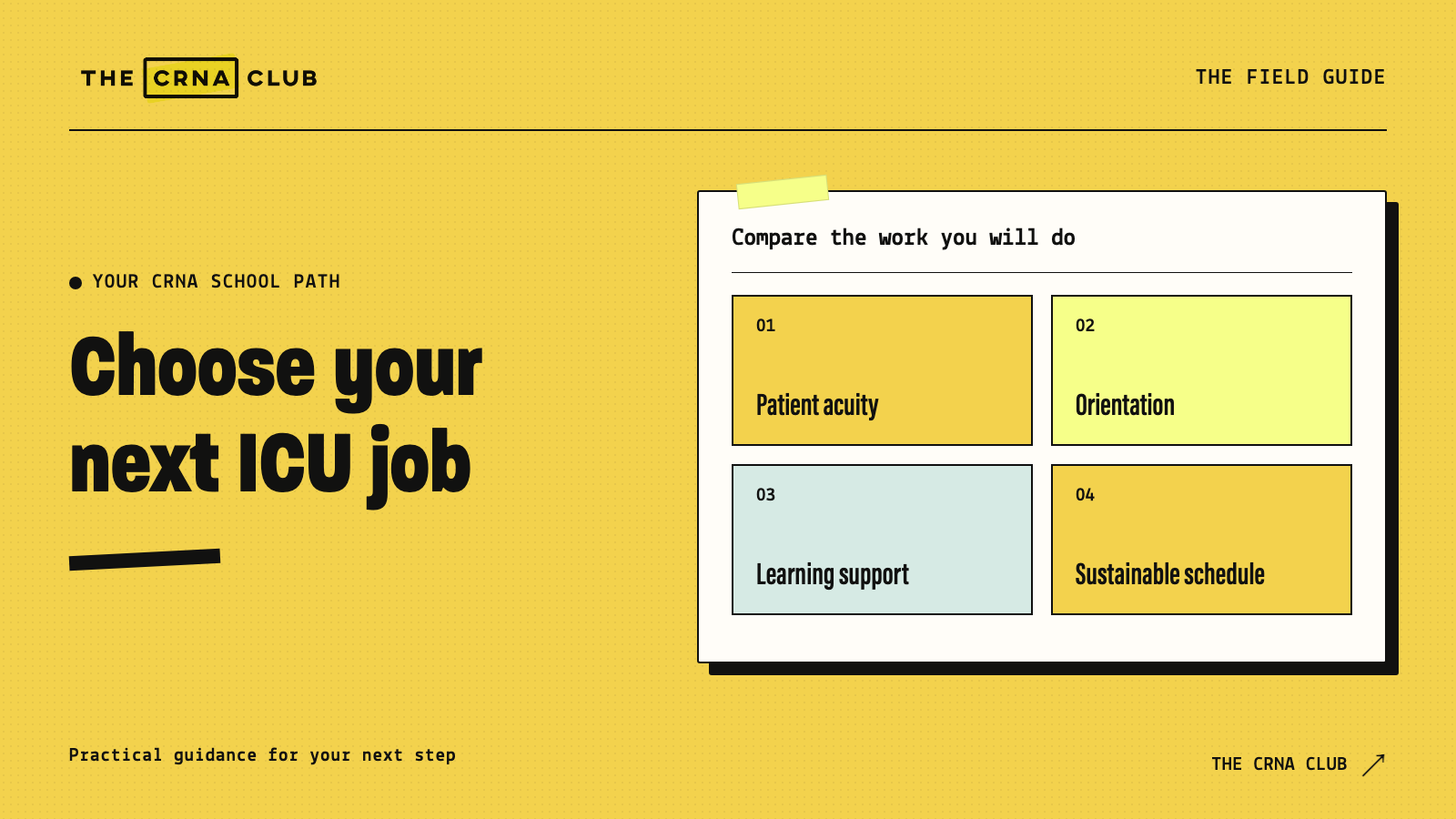
Ask about preceptors, classroom learning, progress reviews and the support available when you need more time. Find out how readiness for independent assignments is assessed. A stated orientation length is only part of the picture, especially when you’re comparing units with different patient populations or training pathways.
Useful questions include:
- Will I work with consistent preceptors, and how will they share feedback?
- What education is scheduled alongside clinical shifts?
- How are goals and progress reviewed?
- What happens if an orientee needs a different approach or more time?
- Who supports a new nurse after orientation ends?
AACN’s educator resources describe knowledge-gap assessment and readiness as part of critical-care orientation. Those are useful topics to ask about without assuming one exact orientation design fits every nurse.
We’d look closely at those answers before accepting. A unit name won’t make up for missing teaching when you’re learning critical care.
Should you mention that you want to become a CRNA?
Be honest about your long-term interest and clear about your immediate commitment to learning ICU practice. You don’t need to claim a guaranteed school start date or make a retention promise you already know is false. The conversation should explain why you want the role you’re interviewing for now.
A natural response could be, “I’m interested in advanced practice long term. My focus now is building a strong critical-care foundation, learning from feedback and becoming reliable in this role.”
Say what’s true for you. Don’t invent a different career ambition to make the answer sound more convenient.
You also don’t need to turn every job-interview answer into a CRNA discussion. The unit is hiring an ICU nurse. Your examples should show how you’ll learn and contribute in that job.
What if you only receive a non-ICU offer?
Evaluate the actual role and support rather than calling the experience wasted. You can learn assessment, communication and organization in other settings while continuing to investigate a path into critical care. But don’t assume a non-ICU job satisfies a CRNA program’s critical-care requirement. Those are separate questions.
Ask the employer about internal transfer eligibility and training routes if relevant. Get the actual policy rather than assuming you can transfer after a particular number of months.
A hypothetical graduate, Tessa, has no ICU offer but has a supported medical-surgical opportunity. She compares accepting that role with continuing a geographically limited search. She asks how internal moves work and keeps a realistic plan for developing skills now.
Someone with a strong ICU offer elsewhere might make a different decision. Neither choice needs a claim that the first job determines the entire career.
How do you connect the first job with a realistic CRNA timeline?
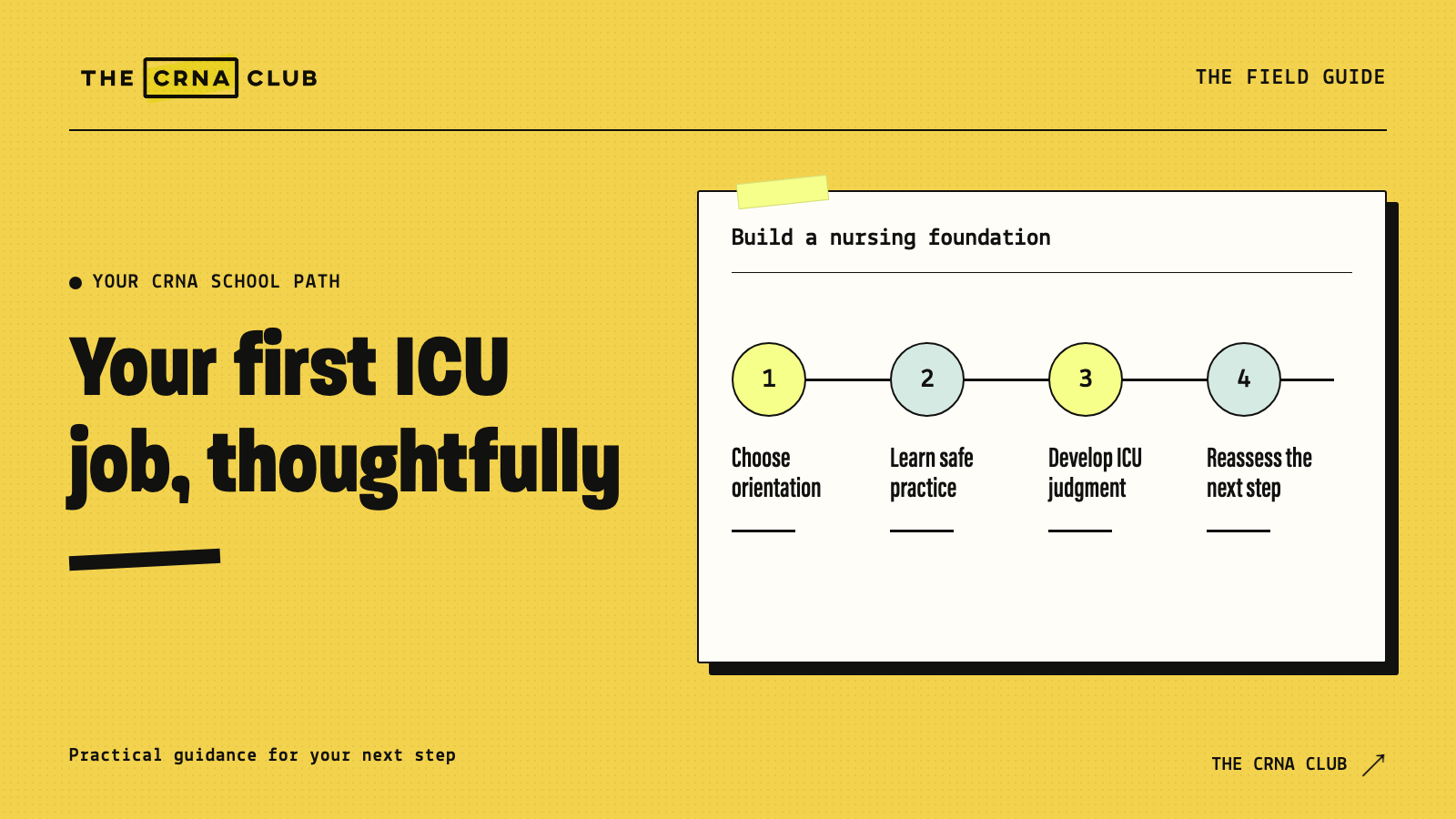
Begin learning the target programs’ requirements, then give your ICU development the time it actually needs. Keep employment dates, orientation and responsibilities accurate. Review courses and certification eligibility separately instead of assuming every preparation task should happen immediately after graduation.
Our ICU experience guide explains the questions to check with programs. The first-steps application guide can help you organize early planning without rushing the clinical foundation.
Once you start, use our Clinical Experience Tracker to log what you’re learning and the skills you’re building. Pair a learning question with the relevant ICU lesson, then review it with your educator. Your next goal can grow from what you learn there.
Our Final Thoughts
Find the correct hiring route for one employer and ask how its ICU orientation works. A supported first role gives you a place to build the clinical judgment you’ll need long before school begins.
Take the Next Step
Start with our Preferred ICU Experience lessons and write down three questions to ask about your next ICU opportunity. Explore the lessons and Clinical Experience Tracker with the seven-day trial. Our 9-Step Applicant Checklist helps you see the application steps ahead without trying to do all of them immediately.