How to Research a CRNA Program Before Your Interview
In This Article (6 sections)
Updated August 2026
The fastest way to stand out in a CRNA school interview is to know things about that specific program that other candidates don't. Not more clinical knowledge. Not a better story about a difficult patient. Just evidence that you actually looked into them before you showed up.
Generic answers signal mass-applying. Specific ones signal that this program is your first choice. And unlike most interview advice, this part is entirely within your control the week before.
First, though, take a second on what the invitation means: they already read your transcripts, your resume, your grades, and they believe you can do this. The interview isn't a trap. It's the part where they meet the person behind the file.
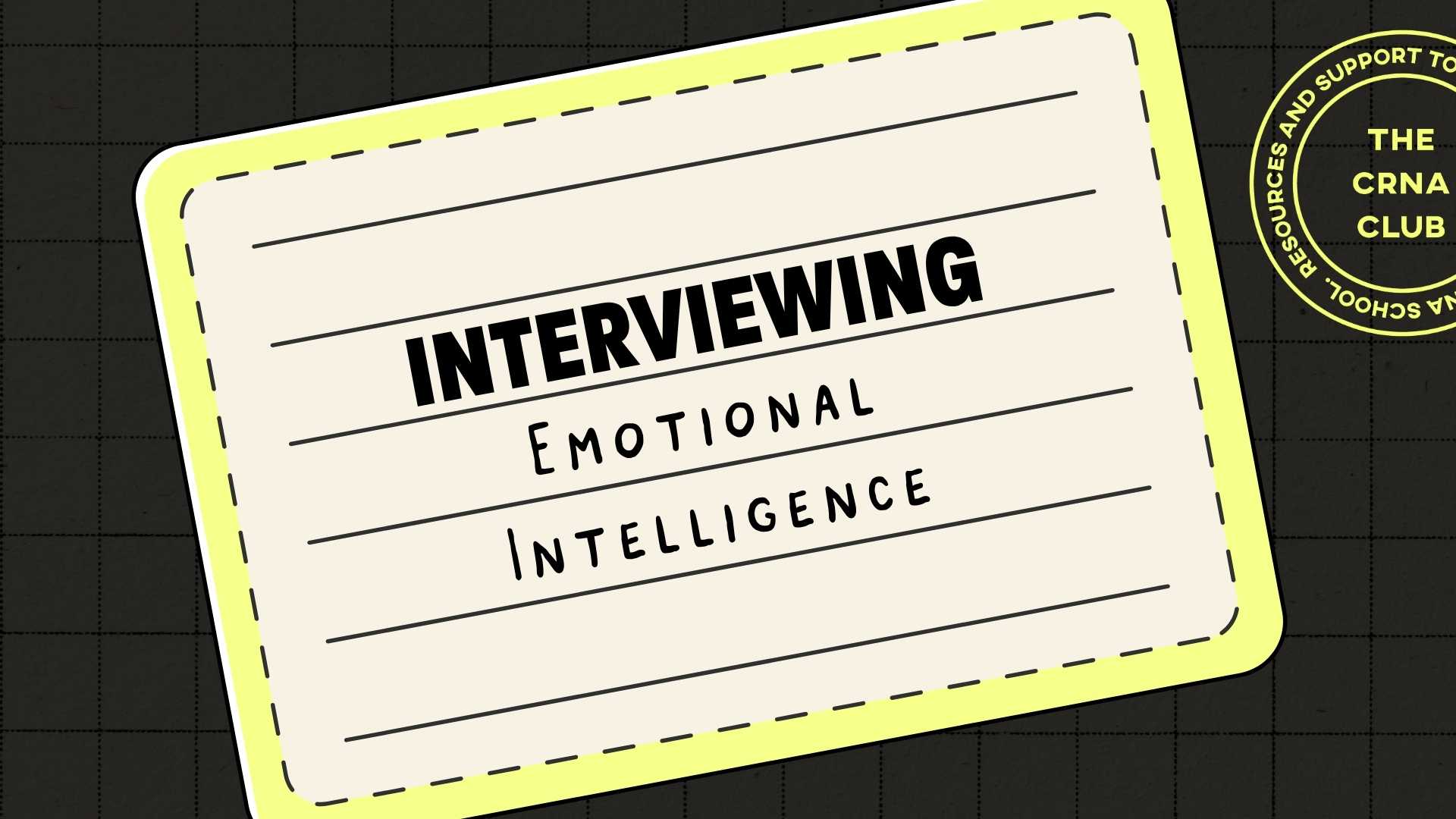
The full lesson: the four question categories every program draws from, how to build answers that survive follow-ups, and the mindset work that keeps nerves from running the room.
Start with a free trial →Pull the facts on any program in one place. Free School Database →
What should you know about a program before the interview?
Work through this list for every program that invites you. It takes about an hour per school.
- The mission statement. Read it, then figure out which of your actual experiences demonstrates it. If a program's mission centers on rural or underserved care and you've floated to a critical access hospital, that's your answer to "why us."
- The program director's name. Know it. Pronounce it correctly. Know who else is on faculty.
- Faculty research, publications, and awards. Every program is a doctorate now, which means a scholarly project. Knowing what faculty publish on tells you what projects get supported.
- When the program was founded and how long it's been accredited. A program founded in 1972 and one founded in 2019 are different propositions, and it's fine to be interested in either.
- The clinical sites. Not just the hospital names. What kinds of cases, what rotations, how far you'll drive.
- Front-loaded or integrated. Whether didactic work comes first or runs alongside clinicals changes your whole experience.
- The practice model at their clinical sites. Independent, care team, or a mix. This shapes what your training actually looks like.
Watch the explanation
Research CRNA Programs: Faculty, Clinical Sites and Policies
Read the full explanation and key takeaways· 11:47
 CRNA Application Strategies: Events, Open Houses and Classes6:27
Where to find this without wasting a week
Most of it is on the program's own site, in the places people skip:
- The "About" page for founding year and accreditation history.
- Faculty bio pages for publications and clinical backgrounds.
- The student handbook, which is usually a public PDF and is far more honest than the marketing pages. Search the program name plus "student handbook."
- The COA's public program list for accreditation status and dates.
- Current students on Reddit or AllNurses, for the parts nobody publishes.
You can pull the structural facts for all 154 accredited programs in The CRNA Club's free School Database, then spend your hour on the things a database can't hold, which is faculty and culture.
How do you use program research in your answers?
Don't recite it. Nobody wants to hear you list their own faculty back at them.
Use it as the second half of your answers. When they ask why you want to attend, the weak version is "your program has a great reputation." The strong version names something real and connects it to you: their simulation lab, a faculty member's work on opioid-sparing protocols, the fact that they rotate through a level one trauma center when your current unit doesn't see much trauma.
Same with your questions at the end. "What's a typical day like?" tells them you did no preparation. "I saw the program moved to an integrated curriculum a few years ago. How has that changed the first year for students?" tells them everything.
Want to practise before the real thing? Try a free mock interview →
What kinds of questions will they ask?
Nearly every CRNA interview draws from four buckets. Some programs live entirely in the first two and never touch clinical content. Others go deep on pathophysiology. Most mix.
- Behavioral. How you handled real situations. Conflict, teamwork, a time you were wrong.
- Emotional intelligence. Self-awareness, empathy, how you handle criticism.
- Clinical and pathophysiology. Your ICU knowledge and, more importantly, your reasoning.
- Program-specific and motivation. Why anesthesia, why now, why here. This is where your research pays off.
Prepare across all four and nothing blindsides you. We go deep on each elsewhere: the questions programs actually ask, emotional intelligence questions, and the mistakes that sink otherwise strong candidates.
One thing about nerves
Fear and excitement are physiologically identical. Same racing heart, same adrenaline, same everything. Your brain picks the label.
So when you're sitting outside that room with your heart going, tell yourself you're excited. It sounds like a greeting card and it genuinely works, because you're not fighting the feeling, you're relabeling it. Trying to calm down when your body has already committed is a losing battle.
- Mock Interview — run a live practice interview and get feedback on your answers, out loud, before it counts.
- School Database — pull the structural facts on any program in one place so your research hour goes to faculty and culture instead.
Our Final Thoughts
Every candidate walking in has decent grades and ICU experience. That's why they were invited. What separates people is whether they sound like they want to attend that program or any program.
An hour of research per school does more for your odds than another week of rereading pathophysiology. And it's the only preparation that's impossible to fake in the room.
Members get the full Interview Prep module, unlimited mock interviews with feedback, and worked answers to the questions programs actually ask.
Membership includes 200+ video lessons across 14 modules, our database of 154 accredited programs, ReadyScore, mock interviews, essay and resume review, and the community forums.
Start your 7-day free trial →